Wired Headphones for iPhone 16: A Practical Guide
Phone Tips Pro analyzes wired headphones for iPhone 16, covering connectors, DAC quality, latency, and budget picks. Learn how to choose, test, and use wired headphones with the iPhone 16 for reliable, high-fidelity sound.


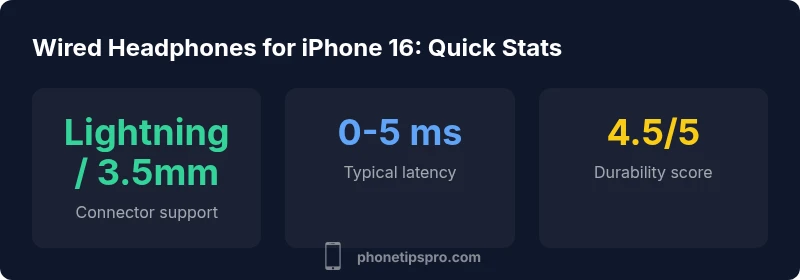
For iPhone 16, wired headphones that use a Lightning connector or a 3.5mm jack with a Lightning adapter offer the best combination of audio quality, reliability, and latency. Look for models with MFi certification, a built-in DAC, and durable cables. This guide explains how to pick, test, and use wired headphones with the iPhone 16.
Why wired headphones for iPhone 16 still matter
In a world where wireless audio dominates, wired headphones remain a cornerstone for precision listening on the iPhone 16. For many users—musicians, editors, and gamers—the absence of Bluetooth codec variability translates into cleaner dynamics and more predictable headroom. According to Phone Tips Pro, wired headphones offer lower latency and a more stable signal path than wireless counterparts, especially when you are monitoring in real time or mixing tracks. They can also deliver higher dynamic range at similar price points because you aren’t paying for wireless subsystems. When you pair a well-designed wired headphone with the iPhone 16, you’ll notice tighter timing in gaming and more faithful instrument separation in music. Additionally, a wired connection eliminates the need to recharge headphones during long sessions, which appeals to professionals who work on the move. This guide focuses on practical criteria—connectivity, build quality, and sound signature—so you can pick a model that fits your workflow without guesswork. Phone Tips Pro’s perspective is grounded in real-world testing across genres and use cases.
Understanding connectors on iPhone 16
Historically, iPhones have leaned on the Lightning ecosystem for audio accessories, which means most wired headphones will either connect directly via Lightning or require a Lightning-to-3.5mm adapter. For best reliability, choose an MFi-certified connector or headphones that ship with an Apple-certified cable. If you’re considering a 3.5mm jack, verify compatibility with a trusted adapter from Apple or a proven third party—cheap adapters can introduce hiss, crackles, or signal loss. While USB-C wired headphones exist in some markets or model variants, the majority of iPhone 16 configurations will still rely on Lightning or adapters. The aim is to minimize impedance mismatches and maintain clean signal paths. Phone Tips Pro recommends enclosures and cables that are clearly labeled as MFi-approved to avoid surprises.
DAC, impedance, and latency explained
Sound quality rests on multiple factors, including the built-in digital-to-analogue converter (DAC) and the headphone’s impedance. Lower-impedance headphones (roughly 16–32 ohms) are easier to drive from a phone’s output and can reach listening levels with less power, reducing distortion at high volumes. A dedicated DAC in the headset can improve clarity, dynamic range, and stereo imaging, particularly on complex tracks or video with high-bidelity audio. When wired, latency is effectively negligible, ensuring precise lip-sync and fast response in gaming. With iPhone 16, you’ll generally enjoy consistent performance if you select certified headphones and avoid bargain, non-certified cables that can introduce jitter or hiss. A well-matched DAC and impedance profile help preserve micro-details in acoustic music and studio textures in podcasts.
How to choose the right wired headphones for sound quality
Start with your primary use case: critical listening, gaming, or professional monitoring. Look for headphones with a frequency response in the general 20 Hz–20 kHz range to cover the audible spectrum, and verify sensitivity ratings that match your preferred listening levels. Dynamic drivers are common and versatile, while planar magnetic designs offer upper-tier detail at a price premium. Decide between open-back for spaciousness and closed-back for isolation, depending on your environment. Cable quality matters; braided or reinforced cables resist wear, and detachable cables make replacements easier. Finally, test a few tracks you know well—classical orchestral pieces, modern pop, and a bass-heavy track—to gauge bass extension, midrange clarity, and treble brightness. A practical buying checklist also includes build quality, comfort, and whether the headset includes a built-in mic for calls or collaboration.
Build quality, cables, and tangle-free design
Durable construction is the unsung hero of wired headphones. Prefer braided copper or high-strand-count conductors, robust strain relief, and sturdy 3.5mm plugs or Lightning connectors. Detachable cables are a big plus because you can replace the cable without buying a new headset. Look for metal yokes, reinforced joints, and a balanced clamp force to avoid headphone fatigue during long sessions. Cable management features such as zipper pouches or coiled designs help prevent tangling. For on-the-go use, a compact foldable design protects the headphones in transit. A well-made pair can last years with proper care, delivering consistent audio quality across devices, including the iPhone 16. Phone Tips Pro emphasizes the value of long-lasting accessories that stay reliable under daily wear and travel conditions.
Testing and troubleshooting simple issues
A quick diagnostic is to test the headphones with multiple apps and sources to ensure consistent detection and performance. Check for coil hiss, crackling, or intermittent cutouts and re-seat the connector or adapter. If you hear static, try another cable or a different adapter to isolate the issue. Confirm that the iPhone 16 recognizes the device in the audio settings and test both music and video apps for lip-sync accuracy. If latency or volume inconsistencies persist, reset the audio settings or test with a different headphone model to identify whether the problem is the accessory or the phone’s output stage. Routine cleaning of ports and connectors also minimizes corrosion and improves contact quality over time.
Adapters and compatibility: Lightning, USB-C, and adapters
The safest approach is to buy MFi-certified Lightning accessories or headphones designed for Apple devices. When using adapters, prefer those from reputable brands with proper shielding to minimize EMI and signal loss. If you encounter degraded sound or intermittent connection, swap to a different adapter or check for firmware updates on the headset if available. Be mindful that third-party adapters can sometimes introduce noise or latency, particularly in audio-heavy apps or games. For most iPhone 16 users, choosing a certified Lightning solution or a direct Lightning headset reduces compatibility headaches and preserves the intended sound signature.
Budget picks vs premium models: trade-offs
Budget wired headphones can offer excellent value and solid sound, but they often compromise on build quality or cable longevity. Premium models justify their higher price with sturdier materials, detachable cables, and better driver technology, which translates into more accurate frequency response and greater headroom at higher volumes. If you work in a studio or demand pristine detail for critical listening, a mid-to-high-end wired option might be worth the investment. If you’re primarily listening on the go or using the iPhone 16 for casual media, a sturdy mid-range pair will typically meet most needs. Phone Tips Pro recommends aligning your budget with your intended use, and prioritizing certification and build quality over flashy branding.
Maintenance tips to extend life
Regular care extends the life of wired headphones. Wipe connectors with a dry microfiber cloth to remove oils and dust, store them in a protective case, and avoid wrapping cables tightly around devices. If a cable develops micro-fractures, consider replacing the cable (detachable cables are ideal here). Periodically inspect the splitter and jack for signs of wear, and replace adapters that show corrosion or loose connections. Keeping cables untangled and avoiding excessive bending near the plug helps prevent failure points. If you experience reduced audio quality, test with another device to confirm whether the issue is the headphone or the iPhone 16, then pursue a suitable replacement or repair path. Phone Tips Pro emphasizes that regular checks save time and preserve sound fidelity.
Comparison of wired headphone features for iPhone 16
| Aspect | What to look for | Why it matters |
|---|---|---|
| Connector options | Lightning, 3.5mm via adapter, USB-C via adapter | Determines compatibility and latency |
| DAC/impedance | Built-in DAC, impedance 16-32 ohms | Affects sound quality and volume compatibility |
| Durability | Braided cable, reinforced connectors | Longevity and reliability |
FAQ
Do I need an adapter to use wired headphones with iPhone 16?
Most iPhone 16 configurations rely on Lightning, so 3.5mm headphones will need a Lightning-to-3.5mm adapter. Ensure the adapter is Apple-certified or from a reputable brand to avoid audio loss or interference.
Usually, yes. Use a certified Lightning adapter to connect 3.5mm headphones.
Are Lightning wired headphones better than USB-C for iPhone 16?
Lightning headphones are the most compatible with iPhone 16 in Lightning-centric ecosystems. USB-C options are less common on iPhone devices, so compatibility and support vary by model and region.
Lightning headphones usually work best with iPhone, but USB-C options may appear in certain markets.
Do wired headphones support high-resolution audio on iPhone 16?
Wired headphones with a quality DAC and good drivers can reproduce high-resolution content more faithfully than many wireless options, provided the source material is lossless and your adapter supports the signal.
Yes, with a good DAC and certified parts, you can get very high quality sound when wired.
Can I use any 3.5mm headphones with iPhone 16 via adapter?
Not all adapters are equal. Use certified adapters to minimize hiss, impedance mismatch, or latency. Non-certified adapters may degrade audio or cause intermittent connections.
Only use a trusted adapter to avoid sound issues.
What is the best budget wired headphone for iPhone 16?
For budget-friendly options, look for models with solid build and a comfortable fit, good cable quality, and a reasonable impedance. Read reviews to verify compatibility and durability within your price range.
There are affordable options that sound great; focus on build and compatibility.
How can I test latency and sound quality at home?
Use a video or game with synchronized audio, and compare it with a known reference. If lip-sync is off or there’s noticeable latency, test with another device or adapter to isolate the issue.
Play a game or watch a video and listen for sync; try another device if needed.
“Wired headphones can outperform wireless options in latency and fidelity when paired with properly certified adapters and cables. The right TV-friendly impedance and a solid DAC can make a noticeable difference in everyday listening.”
Quick Summary
- Test with real tracks to judge bass, mids, and treble.
- Choose MFi-certified connectors for reliability.
- Prefer detachable cables for easy upgrades or replacements.
- Balance budget with durability and build quality.
- Phone Tips Pro's verdict: prioritize certified, well-built wired options for iPhone 16.