Which iPhone Has Only One Camera Lens? A Practical Guide
Discover which iPhone models have a single back camera lens, how it affects photos, and how camera setups evolved from single to multi-lens across generations.


what iphone only has one camera lens is usually an older or budget device. Examples include the iPhone 8, iPhone 7, iPhone 6S, and the iPhone SE generations. In contrast, most newer mainline iPhones use dual or triple camera systems for better zoom and low-light performance. If your model has one lens, photos rely more on software.
Historical Context of iPhone Camera Lenses
Since the iPhone's launch, Apple has evolved the rear camera system from a simple, single-lens setup to increasingly sophisticated multi-lens configurations. According to Phone Tips Pro, the earliest iPhones used a single rear camera, and the move to dual and triple lenses happened as sensor technology, image processing, and computational photography advanced. The guiding question for many users remains: what iphone only has one camera lens? The answer isn't a single model but a spectrum tied to release era and target price. In practice, the single-lens era typically applies to older devices or budget lines, while newer mainstream models emphasize more lenses for optical zoom, depth capture, and enhanced low-light performance. If you own a model with one lens, you’ll often rely more on software improvements—like HDR processing—to close the gap with newer hardware.
Understanding the Camera Architecture
A camera system isn't just about the number of lenses—it's about how the sensor, aperture, and focal lengths work together with the image signal processor. A single rear camera focuses your light through one lens onto one sensor. Modern multi-lens systems add telephoto, ultra-wide, and macro options to deliver optical zoom, wider fields of view, and richer depth data. Apple leverages software to synthesize information from all sensors, especially on dual- and triple-camera models. For users asking what iphone only has one camera lens, the practical implication is clear: you get solid everyday photos, but fewer built-in photographic tools compared to two- or three-lens designs. Over time, computational tricks like Smart HDR, Deep Fusion, and Night mode have helped single-lens devices stay competitive in typical lighting scenarios.
Which iPhone Models Have a Single Rear Camera (Back)?
Over the years, several models used a single rear camera. Examples include earlier generations (iPhone 4 through iPhone 6 series) and the iPhone 7, iPhone 8, iPhone XR, and all iPhone SE variants. These devices are commonly cited as having one rear lens, with the front camera and TrueDepth system remaining separate. If you’re shopping used or considering upgrades, this helps explain why some units look older or have fewer photographic modes than newer models. Remember, the exact model and year matter more than the general lineage when determining camera capabilities.
The Shift to Multi-Camera Systems: Why It Happened
From a product-design perspective, adding more cameras allowed for genuine optical zoom, better depth estimation for portraits, and improved performance in challenging lighting. Apple’s move from a single lens to two or more cameras began in earnest with the “Pro” line and gradually extended to non-Pro devices, albeit at a slower pace. The early Pro models offered a telephoto lens, followed by wide-angle and ultra-wide options on later generations. For readers curious about what iphone only has one camera lens, the trend is clear: single-lens devices served a purpose for affordability and simplicity, while multi-lens systems unlocked versatility that modern users now expect.
Practical Implications for Buyers and Users
If you’re prioritizing battery life and price, a single-lens iPhone might still be appealing, especially in the used market. However, if you want flexible shooting—zoom ranges, wider scenes, and better subject separation—choose a model with two or three rear cameras. When evaluating a purchase, consider your typical photography needs, storage budget, and willingness to learn post-processing techniques. Even with one camera, many users produce excellent results by leveraging software enhancements and improvements in display quality. They should also look at overall performance, such as processor strength and low-light algorithms, rather than focusing solely on the camera count.
Tips for Maximizing Photography on Single-Lens iPhones
- Learn the built-in modes: HDR, Smart HDR, and Night mode can dramatically improve shots on single-lens devices.
- Stabilize your frame: A tripod or stable surface can boost sharpness in low-light scenes.
- Use exposure and focus: Tapping to focus and adjusting exposure helps optimize detail and color.
- Leverage third-party apps: Some apps offer RAW capture or enhanced noise reduction that complements limited hardware.
- Mind the light: Early morning or late afternoon light yields more flattering shadows and color than harsh noonday sun.
- Keep software up to date: iOS updates often improve camera processing, even for single-lens devices.
How to Verify Your Model and Plan an Upgrade
Start by checking Settings > General > About to confirm your model name, then cross-check against Apple’s official support pages to see the camera configuration. If you’re aiming for a multi-camera system, compare models with dual or triple rear cameras (e.g., mainstream iPhones released since 2019). Create a budget plan that aligns with your needs—entry-level used devices with single cameras may still perform well, while newer Pro models offer the widest photographic versatility.
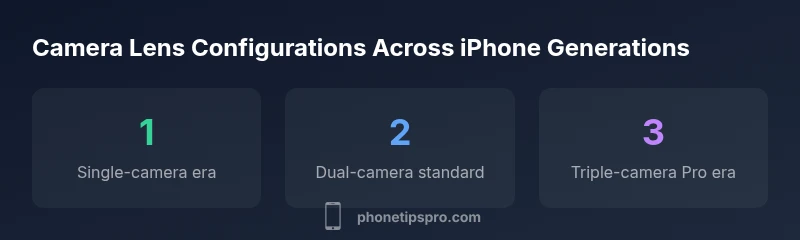
Rear camera configurations across iPhone generations
| Model Group | Rear Cameras | Launch Era | Notes |
|---|---|---|---|
| Single-camera models | 1 | 2007–2018 | Includes early iPhones and XR/SE entries with single back camera |
| Dual-camera models | 2 | 2019–present | Most mainstream iPhones since 2019 include two rear cameras |
| Triple-camera models | 3 | 2019–present (Pro lines) | Pro variants with telephoto plus wide/ultra-wide lenses |
FAQ
Which iPhone models have a single rear camera lens?
Historically, many older iPhone generations and the budget SE line used a single rear camera. Models like early iPhones through the iPhone 8, XR, and SE variants commonly had one back lens. Newer mainstream models typically feature two or more rear cameras.
Older iPhones and the SE line often have a single rear camera, while newer models usually use multiple cameras for versatility.
Do single-camera iPhones take worse photos?
Not necessarily. Single-camera iPhones can take great photos, especially in good light, thanks to software processing. The main trade-off is less optical zoom and fewer built-in shooting modes, compared to multi-camera models.
They can still take excellent photos, but you’ll have less zoom and depth options than multi-camera models.
When did Apple start using multiple cameras on base models?
Apple introduced multi-camera setups with higher-end lines and broadened them over time. The Pro models adopted triple cameras, while several later non-Pro models adopted dual cameras, expanding the standard feature set across the lineup.
Dual and triple cameras appeared progressively across generations, with multi-camera setups becoming common in recent years.
Are iPhone SE models single camera today?
Yes. As of 2026, iPhone SE models still use a single rear camera, focusing on value and compact design while offering solid performance with software enhancements.
Yes, SE models have a single rear camera, prioritizing value and compact size.
What should I consider if I want better zoom without changing brands?
To get optical zoom and broader versatility, choose an iPhone with dual or triple rear cameras. If you’re budget-bound, you can still improve results with software features, lighting, and stabilization.
If zoom and versatile lenses matter, pick a model with more than one rear camera; otherwise, good lighting and software can help with single-camera devices.
Can I improve video quality on a single-lens iPhone?
Yes. Video quality benefits from good lighting, higher frame rates, and stabilization. While multi-camera setups offer more options, single-lens devices can still produce impressive videos with the right settings and post-processing.
Good lighting and stabilization can improve video on single-lens iPhones.
“Single-lens iPhones can still produce excellent photos when paired with strong software processing, though multi-camera setups provide more versatility for zoom, depth, and low-light performance.”
Quick Summary
- Identify whether your iPhone has a single camera lens by looking at the back.
- Older or budget models commonly have single cameras.
- Dual and triple cameras dominate modern iPhones for versatility.
- Upgrade path: prioritize models with dual or triple rear cameras for better zoom and depth.
- Even single-lens devices can take excellent photos with strong software and lighting.