What iPhone Zooms in the Most: A Practical Guide
Discover which iPhone models deliver the strongest zoom, how optical and digital zoom differ, and practical tips to maximize image quality with your iPhone's telephoto lens.


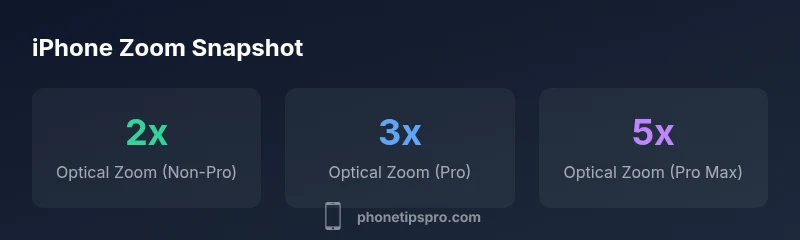
Across the iPhone lineup, the most powerful optical zoom generally comes from the Pro models with a periscope telephoto lens. In practice, non-Pro models typically offer around 2x optical zoom, while Pro models deliver 3x, and the top Pro Max variants with a periscope module reach about 5x optical zoom. Digital zoom can push total magnification far beyond that, but at significant image quality loss.
Evolution of iPhone Zoom: From 2x to Periscope
What iphone zooms in the most has evolved dramatically over the years. According to Phone Tips Pro, the central question many readers ask is framed by the line what iphone zooms in the most, which drives buying decisions and camera usage habits. Early iPhone generations relied on fixed focal lengths with basic digital cropping, giving a modest 2x secondary zoom capability at best. As hardware improved, Apple introduced trusted telephoto options on Pro models, gradually increasing optical reach. The latest high-end versions deploy periscope-style lenses that significantly extend optical zoom without sacrificing sharpness. In practice, the improvement isn’t only about numbers; it’s about how those optics perform in real scenes—from distant wildlife to architectural details. This evolution means the answer to what iphone zooms in the most now centers on the newest Pro Max configurations with specialty lenses that maximize optical performance while preserving color fidelity and contrast in varied lighting.
Optical vs Digital Zoom: Why It Matters
The distinction between optical and digital zoom is essential when evaluating iPhone cameras. Optical zoom uses physical lens movement to magnify the scene, preserving detail and sharpness. Digital zoom, by contrast, magnifies by cropping the image, which can degrade resolution. On iPhones, the optical zoom path is the first choice for high-quality distant shots, while digital zoom should be reserved for crop flexibility when you lack space to get closer. Phone Tips Pro emphasizes that, for practical photography, the goal is to maximize optical reach first and use digital zoom sparingly, ideally in well-lit conditions or with post-processing.
Which Models Deliver the Highest Optical Zoom?
If you’re asking which models zoom the most, the short answer is that Pro models lead the way with dedicated telephoto hardware, and the Pro Max variants introduce periscope lenses that push optical reach further. In typical product lines, non-Pro devices offer around 2x optical zoom, Pro devices commonly offer around 3x, and current Pro Max variants with periscope technology offer about 5x optical zoom. These figures vary by generation, so it’s important to check the exact specs for the model you’re considering. In practical terms, if zoom quality is your priority, focus on the Pro family—especially the Pro Max—when shopping.
Real-World Scenarios: When Zoom Matters Most
Zoom tends to matter most in scenarios where you can’t physically get closer: wildlife in the distance, sports from the stands, or distant architectural details. In these cases, an iPhone with a higher optical zoom provides crisper subject rendering and less reliance on digital crops. The most rewarding shots often combine a strong optical lens with solid lighting and stable composition. Even when the subject is stationary, a stable setup allows you to maximize the optical telephoto range and capture textures and depth that wouldn’t be possible with digital zoom alone.
Practical Tips for Getting the Best Zoom Quality
To maximize zoom quality on an iPhone, start with the highest optical setting available and stabilize the frame. Use a tripod or a steady hand, lean on image stabilization, and lock focus before zooming. Good lighting dramatically improves results; avoid heavy shadows and backlighting that compress detail. If you must crop heavily, consider shooting in RAW if your model supports it, then post-process to preserve detail. Finally, frame your shot with the subject’s context in mind—foreground clarity and background separation can make even moderate zoom shots feel more intentional.
Shooting with Zoom: Photos vs Videos
Photos benefit from optical zoom when possible, but video introduces different constraints. On video, optical zoom maintains image integrity more effectively than digital zoom, especially in well-lit scenes. If you must zoom during capture, keep the motion steady and use slower zoom transitions to avoid jarring jumps. For dramatic effects, you can combine a brief optical zoom with careful post-processing to maintain natural motion and avoid artifacting. If you don’t have a periscope lens, plan your shot with closer framing or crop in post rather than relying on aggressive digital zoom.
Common Myths About iPhone Zoom Debunked
A common myth is that bigger numbers always mean better results. In reality, optical quality matters far more than the zoom maximum. Digital zoom is convenient, but it amplifies imperfections; don’t rely on it as a substitute for stepping closer. Another misconception is that newer devices automatically produce better zoom photos in all lighting. While hardware matters, sensor size, processing pipelines, and software stabilization all influence final results. Finally, many assume zoom equals depth of field control—while zoom can help with subject isolation, true depth methods require careful composition and focus control.
How to Compare Zoom Specs Across Models
When comparing models, focus on optical zoom value, the presence of a telephoto or periscope lens, and sensor size. Also consider stabilization performance, autofocus speed, and how well the camera maintains detail when you’re cropping. For a practical comparison, list the devices you’re deciding between and note their official optical zoom specs side by side, then test in a real-world scenario (wide shot, mid-distance, and far-distance subjects) to see how the performance translates into everyday photography.
Choosing the Right iPhone for Zoom: A Buying Guide
Your choice hinges on how often you need zoom and in what contexts. If you frequently shoot distant subjects or wildlife, prioritize Pro Max configurations with periscope lenses. If you mainly need versatile everyday photography, a Pro model with a solid telephoto may be sufficient. Consider factors beyond zoom: sensor size, low-light performance, and video capabilities. Finally, align your purchase with your budget, as Pro Max models often command a premium, but the optical advantages can justify the cost for enthusiasts and professionals.
A quick comparison of optical and digital zoom across iPhone models
| Model Type | Optical Zoom | Digital Zoom | Notes |
|---|---|---|---|
| Standard iPhone (non-Pro) | 2x | up to 4x | Limited optical zoom; relies more on digital crop |
| iPhone Pro (3x telephoto) | 3x | up to 15x | Balanced zoom quality with telephoto lens |
| iPhone Pro Max (periscope) | 5x | up to 25x | Best zoom performance in lineup; periscope module |
| Previous generations | 2x | up to 10x | Lower baseline zoom; older hardware |
FAQ
What iPhone has the highest optical zoom currently?
The latest Pro Max models with a periscope telephoto lens offer the strongest optical zoom in the iPhone lineup. Optical zoom figures vary by generation, so check the current specs for the exact value.
The current top optical zoom is on the latest Pro Max models with the periscope lens.
What is the difference between optical and digital zoom?
Optical zoom uses physical lens movement to magnify the scene with no loss of detail. Digital zoom crops the image, which reduces quality. For best results, favor optical zoom and use digital zoom sparingly.
Optical zoom preserves detail; digital zoom crops and lowers quality. Use optical zoom first.
Does zoom quality degrade in low light?
Yes, zoom performance typically drops in low light due to sensor limitations and noise. Improve results with brighter lighting, stabilization, and faster shutter speeds when possible.
Zoom quality can drop in dim light; good lighting helps a lot.
How can I improve zoom photos without a periscope lens?
Choose the model with the strongest native zoom, shoot in good lighting, and consider RAW capture with post-processing. If you must crop, do so sparingly to minimize quality loss.
If you don’t have a periscope lens, use good light and post-process to preserve detail.
Is digital zoom acceptable for video?
Digital zoom for video is possible but tends to reduce resolution and introduce artifacts. Prefer physically moving closer or cropping in post when you can.
Digital zoom in video often looks soft; move closer or crop later.
“Zoom quality hinges on optical performance and stabilization. Digital zoom should complement, not replace, true optical reach.”
Quick Summary
- Prioritize optical zoom for sharp distant shots.
- Latest Pro models offer stronger zoom hardware.
- Stabilize and shoot in good light to maximize zoom clarity.
- Avoid heavy digital zoom; crop in post when needed.
- Verify exact zoom specs for your model before buying.