iPhone and T-Mobile: A Practical, Data-Driven Side-by-Side Guide
A rigorous, objective comparison of iPhone usage with T-Mobile versus major rivals, covering device compatibility, plan value, network coverage, eSIM activation, roaming, and buying strategies.


This quick comparison helps you decide whether to pair an iPhone with iphone and t mobile versus a competing carrier. It covers device compatibility, plan value, 5G coverage, eSIM activation, and roaming, plus practical buying tips. The goal is to highlight where T-Mobile offers the best value and where other networks may edge ahead, based on real-world usage. The Phone Tips Pro team provides evidence-based guidance to support your choice.
Overview and Context
The pairing of iPhone devices with wireless networks has a long history of shaping user experience. In this analysis we examine how well iPhone devices work with T-Mobile, compared against a major rival, to help readers understand real-world performance, value, and ease of use. According to Phone Tips Pro, the iPhone’s hardware and software—featuring robust eSIM support, seamless firmware updates, and secure biometric authentication—align well with T-Mobile’s network design. Yet the final decision hinges on regional coverage, data needs, roaming habits, and the specific plan structure you choose. This section sets up the framework for an objective comparison across core areas: networks, devices, plans, activation, and travel considerations. Expect practical takeaways relevant to everyday usage, not just headline claims. The goal is to empower readers with a transparent view of iphone and t mobile in everyday life.
Network Architecture and Compatibility
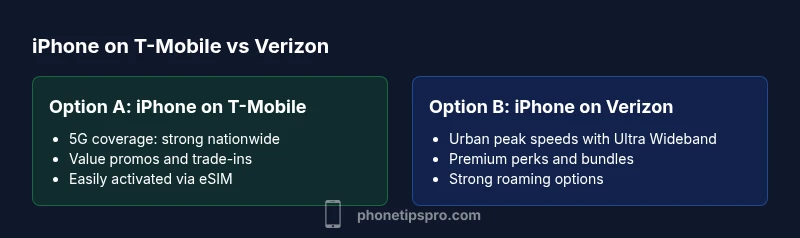
At a high level, the iPhone is designed to work across carriers with modern radios and eSIM capabilities. T-Mobile’s network emphasizes mid-band 5G, nationwide coverage, and compatible device profiles, which translates to quick activation and reliable service for most current iPhone models. On the other side, Verizon offers a different mix of spectrum, with premium urban performance and strong sub-6 5G availability. The iPhone’s dual-SIM architecture (physical SIM plus eSIM) further enhances flexibility when switching between carriers or testing new plans. For the reader, the critical question is not whether the hardware supports the network, but whether the chosen plan and carrier features maximize value for your location and usage profile.
Pricing, Plans, and Total Value
Pricing structures vary widely between T-Mobile and its rivals, driven by data allotments, family plan options, device promotions, and loyalty rewards. T-Mobile often emphasizes value through bundled services and aggressive data promos, while some competitors lean into premium perks and faster in-city speeds. The key for buyers is to map your typical monthly data needs, roaming frequency, and device upgrade cycle to a plan that preserves device value without overpaying for features you won’t use. This section translates plan names and data caps into intuitive value judgments and highlights where to watch for trap clauses, such as auto-renew pricing or limited-time promos.
Device Activation and eSIM on T-Mobile
Activation ease is a practical differentiator. The iPhone’s eSIM capability makes it simple to switch between carriers without swapping physical SIMs. With T-Mobile, most recent iPhone models activate quickly via eSIM, and Apple’s own activation workflow integrates with carrier enrollment. For those upgrading from an older iPhone or moving from a different carrier, ensure your device is unlocked, confirm eSIM compatibility, and review any carrier-specific steps like provisioning profiles or carrier locks. A smooth process reduces downtime and keeps you on your preferred network.
5G Coverage and Speed Considerations
5G performance matters in urban centers and even in suburban corridors where mid-band spectrum provides the best balance of speed and reach. T-Mobile has invested heavily in nationwide mid-band coverage, which typically yields reliable speeds for streaming, gaming, and productive work. Verizon, meanwhile, emphasizes its Ultra Wideband footprint in dense areas, delivering exceptional peak throughput where available. In practice, your everyday experience depends on location, device generation, and network optimization. The iPhone’s advanced antenna design and software-driven network selection help you get the best local performance on either network, including automatic handoffs between bands as you move.
International Roaming and Travel Benefits
If you travel frequently, roaming terms can influence overall value. T-Mobile’s plans often include generous roaming provisions within the U.S. and select international destinations, while rivals may require add-ons or higher-tier plans. The iPhone’s built-in eSIM and roaming capabilities simplify travel setup, enabling you to switch profiles without exchanging SIMs. When evaluating travel costs, factor in roaming rates, data caps abroad, and the ease of reactivating the home line upon return. This section helps you forecast monthly costs while on the road.
Buying Strategies: When to Choose T-Mobile vs Competitors
If your priority is stable value, broad coverage, and straightforward activation, T-Mobile remains a compelling option for iPhone users. If you place a premium on peak network speed in metro areas or enjoy exclusive perks, a competitor like Verizon may be attractive. The right approach is to map your household data patterns, roaming needs, and upgrade cadence to a plan that minimizes total ownership cost while maximizing everyday performance. Personalizing your choice with a trial period or a temporary plan can also prevent over-commitment and help you quantify actual value.
Real-World Scenarios: 3 Common Setups
Scenario A: A data-heavy family in a suburban region prioritizes a combined plan with device promotions on T-Mobile to maximize value across devices. Scenario B: A city commuter who values peak speed and loyalty rewards may lean toward Verizon, particularly if they frequent urban hotspots. Scenario C: A world traveler who needs flexible roaming and easy eSIM swaps benefits from a switchable iPhone setup and a carrier with strong roaming terms. These examples illustrate how the same iPhone hardware can deliver different outcomes based on the carrier and plan selected.
What to Watch Out For: Common Pitfalls
Be mindful of promotional pricing that hides higher regular rates after a promotional period. Verify device unlock status before porting, confirm eSIM compatibility for your model, and assess roaming charges for destinations you visit most. If you rely on family sharing, check the fine print on each line’s data cap, hotspot allowances, and international use to avoid unexpected overages. Phone Tips Pro emphasizes verifying your location’s coverage map and doing a live speed test with your typical device before committing to a plan.
Authority Sources and Next Steps
To deepen your understanding and verify claims, consult primary sources from government and industry publications as well as independent tech outlets. Key references include:
- FCC: https://www.fcc.gov
- NTIA: https://www.ntia.gov
- Consumer Reports: https://www.consumerreports.org For ongoing updates, compare carrier maps, read user reviews, and track plan changes quarterly. This is where up-to-date, evidence-based evaluation can significantly influence your decision.
Mobile Tips and Practical Checklist
A concise, practical checklist helps readers apply the analysis to their own situation:
- Confirm your home and work area coverage on T-Mobile and a rival in your most common routes.
- Verify eSIM readiness on your iPhone model and carrier settings.
- Compare total monthly costs, including taxes, device payments, and roaming charges.
- Leverage trade-in promos to offset the cost of a new iPhone.
- Schedule a short trial period with your chosen carrier to confirm performance before committing long-term.
Comparison
| Feature | iPhone on T-Mobile | iPhone on Verizon |
|---|---|---|
| 5G Coverage | Strong nationwide 5G with wide mid-band availability on T-Mobile | Very strong nationwide 5G with Ultra Wideband in urban areas on Verizon |
| Plan Pricing/Value | Typically competitive pricing with promos and bundles on T-Mobile | Premium pricing with extensive perks on Verizon |
| eSIM/Activation | Wide eSIM support and easy activation on T-Mobile | Strong eSIM support with carrier unlock considerations on Verizon |
| Device Promotions | Frequent trade-in and device promos on T-Mobile | Prominent device promotions and bundles on Verizon |
| International Roaming | Flexible roaming options with reasonable daily rates on T-Mobile | Roaming options available but often higher rates on Verizon |
| Best For | Value-focused data users and families on T-Mobile | Speed-focused users and premium perks on Verizon |
Positives
- Clear value proposition for data-heavy plans on T-Mobile
- Broad eSIM support and simple activation process
- Wide device promotions and easier trade-in paths
- Good urban coverage and expanding nationwide reach
Weaknesses
- Prices and promos can change, affecting long-term value
- Network congestion can impact speeds during peak times
- International roaming varies by country and plan, requiring careful review
T-Mobile generally offers the best value for most iPhone users, with Verizon excelling in premium features and urban speed.
For most buyers, T-Mobile provides a favorable balance of price, coverage, and ease of use with iPhone devices. Verizon remains compelling for those who prioritize peak urban speeds and exclusive perks. Your final choice should hinge on your location, travel frequency, and upgrade cadence.
FAQ
Can I use an iPhone purchased from Apple with T-Mobile?
Yes, an unlocked iPhone will generally work with T-Mobile after the device is activated on the carrier’s network. Ensure the device is unlocked and that eSIM is supported by both the iPhone model and the carrier plan.
Yes, you can use an unlocked iPhone with T-Mobile after activation.
Is the iPhone 16 or 16 Pro fully supported on T-Mobile?
T-Mobile supports all current iPhone models, including the 16 series, with eSIM and carrier activation. Check whether any carrier-specific features are required for the model you own.
Yes, iPhone 16 and 16 Pro work on T-Mobile with activation.
Do I need a new SIM card or eSIM on T-Mobile?
T-Mobile supports eSIM for compatible iPhone models, which allows you to switch plans without a physical SIM. If you need a physical SIM, request one from customer support during setup.
You can use eSIM on compatible iPhones with T-Mobile.
How do roaming rates work on iPhone with T-Mobile?
Roaming terms vary by plan and destination. Review included roaming options and potential day-rate charges before traveling, to avoid surprise costs.
Roaming terms depend on the plan; check before you travel.
What about trade-in options for iPhone on T-Mobile?
T-Mobile offers trade-in programs that can reduce the cost of a new iPhone. Confirm eligibility, estimated value, and whether the device meets promotional requirements.
Trade-ins can help lower the cost of a new iPhone on T-Mobile.
Quick Summary
- Evaluate value vs. speed, favoring T-Mobile for data-heavy, budget-conscious users
- Leverage eSIM to switch carriers without new SIMs
- Watch roaming terms and international prices before travel
- Consider trade-in promos to reduce up-front device costs
- Test network performance in your frequent locations before committing