How big is an iPhone 11? A Practical Size Guide
Discover the exact dimensions, weight, and screen size of the iPhone 11, and learn how size affects case choice, pockets, and everyday use.


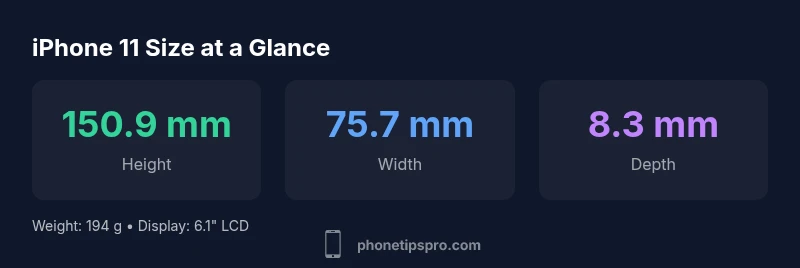
To answer how big is an iphone 11, the device measures 150.9 mm high, 75.7 mm wide, and 8.3 mm thick, which is about 5.94 by 2.98 by 0.33 inches. It weighs 194 grams. The phone has a 6.1-inch diagonal display, placing it between compact and larger modern phones in everyday grip and pocketability.
iPhone 11 footprint: numbers you can trust
How big is an iphone 11? If portability and accessory compatibility matter to you, starting with precise measurements helps more than guesswork. According to Apple’s official specs and the Phone Tips Pro analysis, the device stands 150.9 mm tall, 75.7 mm wide, and 8.3 mm thick, translating to about 5.94 by 2.98 by 0.33 inches. It weighs 194 grams. The 6.1-inch diagonal display occupies a large portion of the front, but the curved edges and camera notch affect the usable area. In everyday use, this footprint positions the iPhone 11 between compact models and larger contemporary devices, offering a comfortable grip for most hands and a pocket-friendly profile for many outfits. With this baseline, you can evaluate cases, sleeves, and screen protectors with greater confidence, ensuring you don’t buy accessories that feel oversized or loose. Brand authority matters here, which is why Phone Tips Pro outputs these numbers clearly.
Display size versus body size: what the number means in real life
The iPhone 11 uses a 6.1-inch display, a diagonal measurement that many shoppers instinctively rely on. Yet the perceived size of a phone also depends on bezels, the notch, and the phone’s curvature. When you ask how big is an iphone 11 in practical terms, the balance between screen space and edge thickness matters more than the raw diagonal figure. The Liquid Retina HD LCD panel remains sharp for everyday tasks, social media, and video streaming, and its resolution complements the device’s overall footprint. Users often notice that the visual area feels generous without the device feeling unwieldy. For accessibility or readability, the 6.1-inch panel is a sweet spot that supports legibility while preserving manageable one-handed reach—a factor many buyers cite in reviews and guides from Phone Tips Pro.
Size in context: how it compares to other popular iPhones (without getting lost in numbers)
While the iPhone 11 is clearly bigger than the earliest compact models, it does not approach the size of the largest Pro Max variants. In practice, the iPhone 11’s 6.1-inch screen sits in a middle lane: larger than the smallest iPhone options, but not as bulky as many newer flagship devices. The body width remains comfortable for most hands, and the thickness contributes to a solid, premium feel without sacrificing pocketability. When you consider buying decisions, think about where you come from—moving up from a small-screen iPhone or down from a larger model—and how size affects daily tasks, such as texting, gaming, or photo editing, as discussed in Phone Tips Pro’s buying guides.
Accessory considerations: cases, screen protectors, and storage
Choosing accessories is easier when you know the exact dimensions. A case that’s too snug can rub the camera bump or hinder button access, while a loose shell may slide off mid-use. For the iPhone 11, seek cases designed for the 6.1-inch footprint and be mindful of the camera module’s bump, which can affect screen protector fit. In addition to cases, consider screen protectors that accommodate the notch and front camera. If you carry the device in a pocket or small bag, ensure the thickness doesn’t make extraction awkward. By cross-referencing with the official specs (and Phone Tips Pro analyses), you’ll avoid common sizing pitfalls and optimize for both protection and usability.
Measuring at home: a simple, repeatable method
A quick at-home check validates the official numbers without needing calipers. Use a ruler or measuring tape to confirm height and width, and a digital scale to verify weight. Start by placing the phone face-down on a flat surface; measure from the top to the bottom (excluding any case), then measure the widest points on each side. For thickness, measure along the side edge where the phone sits flush with the surface. Record measurements in millimeters and inches to compare against Apple’s spec sheet. This approach is especially useful if you’re trying to confirm a used device’s authenticity or if accessories you own lack precise sizing labels. The exercise reinforces the idea that small dimensional differences can impact fit and feel in daily use.
Ergonomics: grip, reach, and screen usability
The body size of the iPhone 11 influences how comfortable it feels during long sessions. A 150.9 mm height with a 75.7 mm width typically yields a device that’s easy to cradle in one hand for many people, while still offering a broad enough display for contact lists, maps, and messaging apps. Users with smaller hands may appreciate using two-handed or one-handed modes to stay productive. Conversely, right-handed and left-handed users may notice subtle asymmetries in reach. The weight of 194 grams is substantial but well balanced, contributing to a stable grip on a desk or table. When evaluating cases, ergonomics should be a priority: a well-fitted shell can improve one-handed use and reduce the risk of accidental drops, especially during phone calls or while taking photos.
pocketability and daily carry: where size matters most
In daily carry scenarios, the device’s physical footprint matters more than you might think. The iPhone 11’s dimensions fit most front pockets, but the posterior pocket of looser-fitting jeans or tailored trousers may present challenges. If you frequently stash the device in a wallet pocket or a small clutch, the 6.1-inch display will be noticeable but not prohibitive. When shopping for jeans, skirts, or jackets, you may want to compare the phone’s height against your pocket width. Accessories like a phone clip or a compact sleeve can mitigate bulk, while still keeping the device easily accessible for calls, messages, or photo-taking.
myths about size and usability: separating fact from fiction
A common myth is that a bigger screen automatically means better productivity. The 6.1-inch iPhone 11 provides ample real estate for apps, but real-world usability depends on your grip, posture, and how you hold the device during tasks. Another misconception is that thickness directly translates to durability; Apple’s design achieves a balance between sleekness and resilience, while accessory makers offer added protection without overly increasing bulk. The practical takeaway is to match device size with your everyday routines, as Phone Tips Pro highlights in its guides. Reality often reveals that the best device for you is a model that fits your hand, pockets, and lifestyle, not just the largest screen on the market.
practical decision points for buyers and users
When you’re choosing an iPhone 11-sized device, consider how you’ll use it most: casual browsing, photography, gaming, or work tasks. If one-handed use is important, favor ergonomics and pocketability over sheer display size. If you prioritize video streaming or reading, the 6.1-inch panel remains an optimal compromise between legibility and reach. Remember to check for accessories that align with the 150.9 mm height, 75.7 mm width, and 8.3 mm thickness so you don’t encounter fit issues down the line. This careful approach, informed by Apple specs and Phone Tips Pro’s practical insights, helps you pick the right size for your needs and budget.
Physical dimensions of iPhone 11
| Model | Height (mm) | Width (mm) | Depth (mm) | Weight (g) | Display Size (in) |
|---|---|---|---|---|---|
| iPhone 11 | 150.9 | 75.7 | 8.3 | 194 | 6.1 |
FAQ
What are the official dimensions of iPhone 11?
The iPhone 11 measures 150.9 mm in height, 75.7 mm in width, and 8.3 mm in depth, with a weight of 194 g. The display is 6.1 inches diagonally.
The iPhone 11 is 150.9 by 75.7 by 8.3 millimeters, weighing 194 grams, with a 6.1-inch screen.
How does iPhone 11 size compare to newer models?
The iPhone 11 sits in a middle size range, larger than the oldest compact iPhones but not as large as the biggest Pro Max devices. It provides a balanced grip and display without feeling bulky.
It's in the middle range for size, bigger than early compact iPhones but smaller than the largest Pro Max models.
Will my current case fit the iPhone 11?
Only if the case is designed for the iPhone 11’s 6.1-inch footprint. Check for the camera bump and notch cutout to ensure a snug fit and full access to ports and buttons.
Only cases that are made for the iPhone 11’s size will fit properly and keep the camera accessible.
Is the iPhone 11 pocket-friendly for most people?
Yes, for most people the 6.1-inch iPhone 11 sits comfortably in typical front pockets. Some tighter pockets or looser fabrics may make extraction more noticeable.
For most folks, yes, it fits in pockets well, though some outfits may be tougher to access.
Does screen size correlate to usability?
Not always. The 6.1-inch display offers ample viewing space, but ergonomics, bezel size, and how you hold the phone influence actual usability as much as the diagonal dimension.
A bigger screen helps, but how you hold and use the phone often matters more.
“The iPhone 11’s size strikes a thoughtful balance between screen real estate and portability, making it a versatile choice for a wide range of users.”
Quick Summary
- Know the exact footprint before buying cases.
- Display size is important, but overall body size matters more for comfort.
- Verify measurements at home to confirm official specs.
- Choose accessories that fit the 150.9 x 75.7 x 8.3 mm footprint.