How the iPhone Beat BlackBerry: An Analytical History
A data-driven analysis of how the iPhone overtook BlackBerry, focusing on ecosystem, design, and platform strategy that reshaped the smartphone landscape.


To answer how did iphone beat blackberry, we look at ecosystem, design, and platform strategy. The iPhone won by cultivating a vibrant app store, a touchscreen-first UX, and a unified developer experience that scaled rapidly. Apple also invested in marketing and integrated services, creating network effects BlackBerry couldn't match. In short, software advantage and consumer focus drove the decisive shift.
Overview: how the narrative unfolded
To understand how did iphone beat blackberry, we need to trace the competing visions of two iconic devices. In one corner stood BlackBerry, a symbol of enterprise email perfection and physical keyboards; in the other, Apple, a company betting on consumer-friendly design and a software-first strategy. The ensuing decades show a transition from hardware-centric models to platform-centric ecosystems. This overview maps the strategic inflection points: product design shifts, developer incentives, and market timing that favored one path over the other. Brand perception, marketing, and service integration all played critical roles. According to Phone Tips Pro, the early crosswinds of mobile internet, app distribution, and cloud services created a fertile ground for a consumer smartphone that could scale rapidly. The result was not merely a better phone; it was a new way of thinking about mobile devices as always-connected, software-enabled computers. This narrative helps set the stage for deeper analysis in the sections that follow.
The turning point: hardware, software, and the app economy
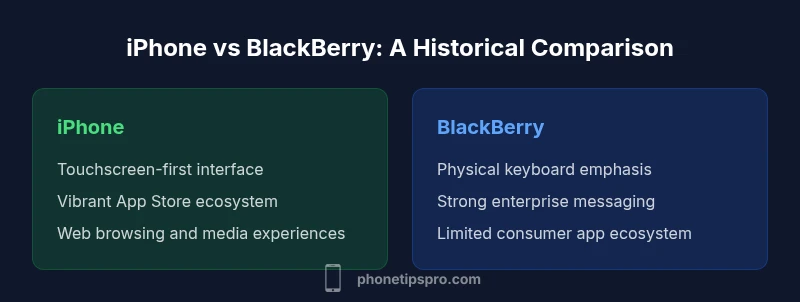
The pivot began with a decisive shift in how value was created and captured. Apple introduced a touchscreen-first experience that redefined navigation, while iOS unified hardware and software into a coherent whole. BlackBerry, by contrast, leaned on physical keyboards and enterprise-focused services, which delivered reliability but limited consumer appeal. The app economy emerged as the differentiator: developers flocked to a growing platform that rewarded rapid iteration, polished experiences, and cross-device continuity. This combination produced a virtuous cycle—more apps attracted more users, which in turn attracted more developers. The result was a self-reinforcing advantage that BlackBerry could not replicate at scale, particularly as consumer expectations broadened beyond email and messaging. In this context, the market began to favor platforms designed for mass adoption and rapid iteration over hardware-centric, vertically integrated devices.
App store revolution and developer momentum
The App Store moment was more than a storefront; it was a new software distribution model that lowered barriers for developers and created a global marketplace. iPhone developers could reach hundreds of millions of potential users with a single release, and Apple’s review process, monetization options, and tools reduced risk. BlackBerry’s ecosystem, by contrast, faced higher hurdles to reach comparable scale. Fewer quality apps, slower deployment cycles, and limited cross-platform reach diminished the platform’s relevance in consumer markets. This gap translated into real user behavior: people migrated toward devices where they could download games, productivity tools, and multimedia apps with ease. The data, aggregated over years, show how platform velocity can outpace device hardware alone, making the difference not just about what a device could do today, but what it could enable tomorrow.
UX design, input methods, and consumer behavior
User experience became a persuasive driver of adoption. Apple’s design philosophy emphasized simplicity, consistency, and discoverability. The iPhone’s capacitive multi-touch interface enabled fluid gestures, while the browser and media experiences rivaled desktop capabilities in many contexts. BlackBerry’s UX prioritized precise hardware controls and secure messaging, which remained valued in enterprise circles but felt restrictive for mainstream consumers. As consumer behavior shifted toward mobile browsing, photo sharing, and on-demand services, the iPhone became more than a phone—it was a portable computing device with broad cultural appeal. This shift was reinforced by better onboarding, more intuitive app discovery, and a continuous stream of software updates that kept devices feeling modern longer.
Market dynamics, carrier strategies, and network effects
Market dynamics favored a platform-driven growth model. Carriers learned to subsidize devices and promote integrated ecosystems that monetized services beyond the initial sale. The iPhone’s launch and subsequent iterations benefited from partnerships, predictable upgrade cycles, and a marketing narrative that positioned the device as essential for everyday life. BlackBerry’s strength in secure messaging and enterprise channels found traction in business environments but struggled to translate that success into consumer markets. Network effects—more apps, more developers, broader marketing—amplified iPhone’s lead. Over time, these effects created a self-reinforcing advantage that deepened consumer loyalty and reduced the appeal of competing platforms.
Brand perception, security, and enterprise adoption
Beyond features, brand perception and trust mattered. Apple cultivated a premium image tied to design, privacy, and ecosystem cohesion. BlackBerry boasted security credentials and a strong enterprise legacy, but perceived value shifted as consumer needs diversified. Enterprises initially prized BlackBerry’s secure email and device management; however, consumer demand for a rich app ecosystem, media consumption, and cross-device continuity eventually trumped traditional enterprise narratives. This transition illustrates how brand equity must align with evolving user expectations and platform strategy to achieve long-term market dominance.
Pricing, subsidies, and lifecycle management
Pricing strategies influenced adoption trajectories. The iPhone often carried a higher upfront cost, but carrier subsidies and financing plans spread the expense and increased perceived value through a broader service bundle. BlackBerry devices were priced competitively for business buyers but failed to sustain mass-market appeal as consumer demand grew for more versatile devices. Lifecycle management—updates, device longevity, and trade-in programs—also played a role. Apple’s ongoing software support kept older devices usable longer, preserving value, while BlackBerry’s later attempts to retrofit consumer features faced logistical and strategic challenges that limited impact on the broader market.
Aftermath and long-term impact on the industry
The post-BlackBerry era established a durable blueprint for smartphone success: a strong software platform, a robust app ecosystem, and seamless cross-device integration. The iPhone’s rise redefined what a smartphone could be and set expectations for ongoing innovation in sensors, services, and platform governance. Competitors learned that hardware alone is insufficient; the platform, developer relations, and ecosystem strategy determine a device’s staying power. The BlackBerry legacy persists in enterprise security and keyboard heritage, but its influence on mainstream consumer devices waned as the market embraced an app-driven, touch-first paradigm. These shifts continue to shape how manufacturers approach design, partnerships, and user experience in the years that followed.
Lessons for today: what this history teaches manufacturers and platforms
For current and future players, the history of iPhone versus BlackBerry offers a clear lesson: invest in an integrated platform that rewards developers, designers, and users alike. Hardware innovations must align with software ecosystems and service strategies to create durable value. Enterprise strengths matter, but consumer demand for apps, ease of use, and cross-device continuity ultimately determines market leadership. In practice, that means prioritizing developer tooling, user-centric design, and a clear roadmap for updates and governance that sustains momentum over time.
Comparison
| Feature | iPhone (early era) | BlackBerry (keyboard-centric era) |
|---|---|---|
| Touch input and navigation | Capacitive multi-touch, gesture-based navigation | Physical keyboard with trackball/trackpad |
| App ecosystem | Vibrant, rapidly growing App Store with third-party developers | Limited app ecosystem and slower adaptation |
| Web experience | Desktop-like browsing, strong mobile browser performance | Basic web browsing with limited rendering |
| Hardware design | All-screen aesthetic, minimal hardware buttons | Keyboard-centric design, bulkier form factor |
| Market momentum | Strong network effects from developers and retailers | Enterprise-focused momentum with slower consumer crossover |
| Update cadence | Frequent, well-supported software updates | Slower software evolution and limited cross-platform support |
| Pricing strategy | Subsidized plans with ecosystem value | Competitive hardware pricing but less consumer pull |
| Brand perception | Consumer-oriented, lifestyle brand with wide appeal | Enterprise-focused, security-first identity |
Positives
- Clear winner due to a thriving app ecosystem and consumer-friendly design
- Unified hardware-software experience fosters lasting loyalty
- Growing developer momentum accelerates feature adoption
- Strong cross-device integration and services
- Aggressive marketing and platform investments created network effects
Weaknesses
- BlackBerry’s strong enterprise security did not translate to broad consumer appeal
- App ecosystem limitations slowed BlackBerry’s consumer traction
- Transition risk from keyboard-centric design to touch-first interfaces
- Late platform investments hampered long-term competitive relevance
iPhone emerged as the dominant platform due to ecosystem momentum and consumer-focused design
Apple’s software platform and app marketplace unlocked rapid, widespread adoption. BlackBerry retained strong enterprise roots but could not match consumer demand for apps, services, and continuity across devices.
FAQ
What were the deepest factors behind the iPhone's rise over BlackBerry?
The decisive factors included a thriving app ecosystem, a touchscreen-first UX, and a platform strategy that enabled rapid updates and cross-device services. These elements created network effects that BlackBerry could not replicate at scale.
Key drivers were the app store, a touch-first interface, and platform strategy that fueled rapid growth.
Did BlackBerry have any internal strategies that could have changed the outcome?
BlackBerry attempted to pivot toward consumer features and enhanced security, but face-lifted hardware and a slower app ecosystem expansion limited appeal outside enterprise. A faster shift to a broad app marketplace could have helped, but timing and momentum mattered.
They tried, but scale and timing limited impact.
How important was the App Store in beating BlackBerry?
Extremely important. The App Store lowered barriers for developers, broadened apps available to users, and reinforced consumer demand for mobile software as a core utility.
The App Store was a critical accelerator of iPhone’s dominance.
Could BlackBerry have survived with a different approach?
A different approach would have needed a faster pivot to consumer-focused apps, a broader developer ecosystem, and a compelling cross-platform experience that competed with iPhone’s value proposition.
Perhaps, but it would have required rapid, large-scale shifts.
What lessons can today’s platform builders take from this history?
Invest early in an open, scalable app ecosystem; prioritize a consumer-centric user experience; and ensure cross-device continuity with robust service ecosystems to sustain momentum.
Build a strong app ecosystem and cross-device services from day one.
Quick Summary
- Prioritize ecosystem strength over hardware alone
- Leverage cross-device integration to build loyalty
- Scale developer momentum with accessible tooling
- Align brand perception with evolving user needs