iPhone 15 sizes comparison: which model fits you best?
A detailed, analytical comparison of iPhone 15 sizes across all models, focusing on display, portability, battery, cameras, and price to help you pick the right fit.


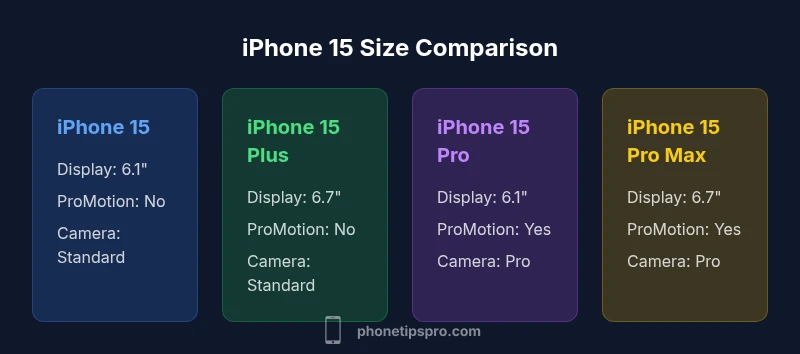
The iPhone 15 sizes comparison comes down to portability versus display area. The 6.1-inch standard models (iPhone 15 and iPhone 15 Pro) prioritize one-handed use and pocketability, while the 6.7-inch options (iPhone 15 Plus and iPhone 15 Pro Max) offer larger canvases for media and productivity. Pro models also add ProMotion and bigger camera modules, which subtly affect heft and handling.
Size spectrum across the iPhone 15 lineup
The iphone 15 sizes comparison reveals two core compromises that shape everyday use: display real estate and device footprint. Apple maintains four models with two core size targets: compact and large. The standard iPhone 15 and iPhone 15 Pro share a 6.1-inch display, while the iPhone 15 Plus and iPhone 15 Pro Max use a 6.7-inch panel. That difference in diagonal translates into noticeable changes in how apps scale, how text wraps, and how comfortable the device sits in your hand for long sessions. Beyond the screen, the larger models tend to be taller and slightly heavier, which can affect pocketability and one-handed reach. When you read this iphone 15 sizes comparison, remember that the choice isn’t only about screen area—it's about how you balance readability, portability, and the physical feel in your grip. In practical terms, think about your daily tasks: reading on the commute, typing long emails, browsing photos, and playing games. The size you pick should align with those core activities.
Display technology and real-world impact
Display quality and refresh rate play a pivotal role in perceived size. The non-Pro iPhone 15 models typically use a standard 60 Hz OLED panel, which keeps power consumption modest and UI motion smooth for everyday tasks. By contrast, the iPhone 15 Pro and Pro Max incorporate ProMotion with up to 120 Hz refresh rates, delivering buttery smooth scrolling and more responsive swipes. This higher refresh rate can make a 6.1-inch device feel more capable for tasks like design work or gaming, while a 6.7-inch model can feel overwhelming for one-handed use yet excel at immersive media consumption. In this iphone 15 sizes comparison, you’ll notice that display performance often correlates with price and premium materials, but the practical difference for casual use depends on how much you value fluid scrolling and high-refresh interactions.
Ergonomics: one-handed use and pocketability
One of the most tangible differences in any size comparison is how the phone sits in your hand. The 6.1-inch models tend to be easier to reach across the screen with a thumb, reducing fatigue during long scrolling sessions. The 6.7-inch models, while offering more screen real estate for productivity and media, require more hand stretch and may feel bulkier in a tight pocket. For users who commute by bike or train, holding a larger device one-handed can be awkward; for those who often consume video in bed or on a couch, the larger display enhances comfort. This section of the iphone 15 sizes comparison underlines that ergonomics aren’t one-size-fits-all: test both sizes in real-world scenarios to see which model aligns with your grip and reach.
Camera bumps and size implications
The Pro models push the envelope on imaging hardware, and the camera bump is a subtle but measurable factor in overall size. The iPhone 15 Pro and Pro Max carry larger camera modules than their standard counterparts, which translates to a taller device silhouette and a slightly different balance when held. If you frequently shoot with zoom or use advanced modes, the Pro models’ larger camera systems may justify the extra heft for many users. For casual photography, the standard models retain excellent performance with a more compact form factor. In this iphone 15 sizes comparison, the camera hardware is a critical dimension driver that intersects with display size to affect the total footprint.
Weight and grip experience across models
Weight distribution matters once you pick a size. The 6.7-inch models, especially the Pro Max, feel more substantial when held for long sessions, yet they can balance well in the hand if you use two hands for tasks like typing or editing photos. The 6.1-inch options feel lighter and more agile, which benefits all-day navigation and quick taps. Even with identical materials, the Pro variants tend to feel heavier due to larger components. The takeaway in this iphone 15 sizes comparison is that perceived weight influences comfort over the workday, and the right choice balances screen real estate with ergonomic handling.
Battery life and display size correlation
Battery performance often tracks with display size and usage. In general, the larger 6.7-inch models consume more power with the bigger panel, but they can accommodate larger batteries or more efficient hardware in Pro configurations. Practical battery experiences depend on brightness, ProMotion usage, and network activity. If you stream video or run long sessions in graphics-intensive apps, the larger devices can offer longer endurance under heavy loads. For lighter users, the 6.1-inch models provide ample all-day stamina with typical daily usage. This iphone 15 sizes comparison highlights that battery life is a function of both display size and chipset optimizations.
Accessory fit and cases across sizes
Accessory ecosystems typically support all four models, but cases, screen protectors, and mounts often vary by size and camera layout. The 6.1-inch devices share more accessories with older generations due to similar footprint, while the 6.7-inch devices demand larger sleeves and wider mounts. If you already own accessories, check compatibility lists and confirm cutouts for camera modules and buttons. In this iphone 15 sizes comparison, the accessory question becomes practical: size influences how protective gear fits your daily carry and how often you reach for a new case.
Practical decision guide by user type
- If you value portability and one-handed use: lean toward the 6.1-inch models. They fit into pockets more easily and are easier to operate with a single thumb.
- If you prioritize media, productivity, and a bigger display: the 6.7-inch models are worth considering. They provide a more expansive canvas for reading, editing, and watching videos.
- If camera capabilities and display smoothness matter most: the Pro models (6.1-inch and 6.7-inch) deliver ProMotion and superior sensors, often justifying the size premium.
- If budget is a concern: standard models give a more accessible entry point, while Pro Max often commands the premium price. This section consolidates the iphone 15 sizes comparison into practical, scenario-based guidance.
How to measure and compare in your own hand
In-store testing is the fastest way to understand how these sizes feel. Hold each model and simulate your daily tasks: unlock, type, navigate, and watch a video. Pay attention to reachability of the top-left corner, edge grip, and weight swing when you lift the device. If you frequently use your phone with one hand, the 6.1-inch models will usually feel more controllable. For hands-on decision-making, bring your own tasks into the test: note how long it takes to type a message, scroll through a long webpage, and tilt the device for a photo grid.
Price and value context by size
Price is a practical guide to sizing up your purchase. Generally, larger models and Pro variants carry higher price tags due to display tech, sensors, and materials. The 6.1-inch standard models often sit at the lower end of the spectrum within the lineup, while the Pro and Pro Max escalate the price with premium features. When evaluating value, consider how the extra screen real estate, faster refresh rates, and camera capabilities contribute to your workflow and entertainment needs. This iphone 15 sizes comparison helps you map feature benefits to perceived value.
Common myths about device size
Myth: Bigger is always better for productivity. Reality: screen real estate is helpful, but ergonomics and actual task types matter more. Myth: A lighter phone is always easier to carry. Reality: a lighter phone can slip more easily during activities if the size is larger. Myth: Battery life only improves with a larger model. Reality: processor efficiency and display tech influence endurance as much as panel size. This final block of the iphone 15 sizes comparison debunks these ideas and encourages a balanced approach.
Buyer's checklist and next steps
- List your top tasks (reading, typing, gaming, video).
- Compare display sizes against pocketability and grip comfort.
- Confirm access to ProMotion and camera features if you lean toward Pro models.
- Check your budget and expected accessory compatibility.
- Visit a store or demo the devices side by side to confirm your preferred size before buying. These final checks ensure the iphone 15 sizes comparison translates into a confident purchase.
Feature Comparison
| Feature | iPhone 15 | iPhone 15 Plus | iPhone 15 Pro | iPhone 15 Pro Max |
|---|---|---|---|---|
| Display Size | 6.1-inch | 6.7-inch | 6.1-inch | 6.7-inch |
| System refresh rate | 60 Hz (standard) | 60 Hz (standard) | 120 Hz (ProMotion) | 120 Hz (ProMotion) |
| Camera bump impact | Standard module | Slightly larger module | Larger Pro module | Largest Pro module with extra sensors |
| Battery life emphasis | Balanced performance | Potentially longer endurance due to larger display | Premium efficiency & Pro features | Highest endurance with Pro Max battery strategy |
| Price range | Lower entry | Mid-range | High (Pro) | Higher (Pro Max) |
| Weight feel | Lighter feel | Slightly heavier | Heavier due to Pro components | Heaviest among the four |
Positives
- A size for every lifestyle, from pocketable to media-ready
- Larger displays enhance multitasking and media viewing
- Smaller models support easier one-handed use and portability
- Pro models justify higher price with advanced cameras and tools
Weaknesses
- Larger models can be harder to carry and use one-handed
- Price difference grows with model size and features
- Accessory sizing varies by model and camera layout
- Pro Max may feel bulky for everyday tasks in tight spaces
Choose the size that aligns with your daily tasks: compact for portability, large for productivity and media.
If portability matters most, pick the 6.1-inch models. If you want a bigger canvas for work or entertainment, go with the 6.7-inch options, especially the Pro variants for ProMotion and advanced cameras.
FAQ
Which iPhone 15 size is best for portability?
For portability, the 6.1-inch models typically offer the lightest, most compact form and easiest one-handed use. If you prioritize pocketability and reach, these are usually the better fit. Consider your hand size and daily tasks when deciding.
For portability, the 6.1-inch models are usually the easiest to manage one-handed and slip into pockets.
Do Pro models differ in more than just size?
Yes. The Pro models include ProMotion with higher refresh rates, enhanced cameras, and often a higher price. These features impact usability and performance beyond mere dimensions, especially for photography and gaming.
Yes—Pro models add ProMotion and better cameras, affecting both feel and performance.
Is there a noticeable difference in display smoothness between sizes?
Display smoothness depends on ProMotion availability, not solely size. The 6.1-inch Pro variants and all 6.7-inch Pro models offer up to 120 Hz, while standard non-Pro models typically run at 60 Hz. Your perception will vary with tasks like scrolling and gaming.
Yes. Pro models offer up to 120 Hz, while non-Pro models typically stay at 60 Hz.
Will the 6.7-inch models fit in pockets for everyday use?
The 6.7-inch models are larger and may not slide into tighter pockets as easily as the 6.1-inch options. If pocketability is a priority, test how it sits in your typical pocket and consider one-handed reach.
The 6.7-inch models are bigger and may be harder to fit in tight pockets.
How does size affect price and value?
In general, larger sizes and Pro configurations command higher prices due to enhanced features. Value depends on how much you value the extra screen space, faster refresh, and camera capabilities.
Bigger sizes and Pro features usually mean a higher price, justified by extra capabilities.
Do all sizes share the same storage options?
Storage options are typically available across sizes, but some configurations may be limited by model tier. There is no inherent storage restriction tied strictly to display size.
Storage options vary by model tier, not strictly by size.
Are accessories like cases interchangeable between sizes?
Cases are not interchangeable across all four models due to different camera module sizes and overall footprint. Always verify compatibility before purchasing a case or screen protector.
Cases aren’t always interchangeable; check your model’s footprint and camera layout.
Quick Summary
- Prioritize display size alongside ergonomics and grip.
- ProMotion is a differentiator on Pro models, not just size.
- Larger models offer more screen real estate but are bulkier.
- Consider case and accessory compatibility when choosing size.
- Test devices in-store to confirm your comfort with reach and weight.