iPhone 16 Size Comparison: Which Model Fits Your Hand
Explore a thorough, Phone Tips Pro–style analysis of iphone 16 size comparison across the base, Pro, and Pro Max variants. Learn how dimensions affect comfort, pocketability, and everyday use.


iphone 16 size comparison: understanding the landscape
The phrase iphone 16 size comparison isn’t just about inches; it’s about how a device feels in your hand, how it sits in your pocket, and how you interact with it daily. In practice, the size differences between the base, Pro, and Pro Max models translate into tangible experiences—one model may disappear comfortably in a jeans pocket, while another offers a broader view for multitasking or media. When evaluating sizes, think about your typical tasks: scrolling through social feeds, typing messages with one hand, or watching videos during commutes. Phone Tips Pro’s approach is to frame size around real-world usage rather than spec sheets alone.
How device dimensions affect everyday use
Dimensions influence grip comfort, reach, and handling confidence. A taller device can feel more screen-forward for productivity but may require two-handed use for reachability. Thicker bodies and camera housings can affect how easily the phone sits on a table or in a car holder. Weight distribution matters as well: a heavier top can alter perceived balance, making one-handed use feel less stable over time. These subjective cues are backed by user testing across different hand sizes and wearing conditions. In this section we translate those cues into practical takeaways you can test in-store or at home.
The base iPhone 16 vs its larger siblings: a qualitative look
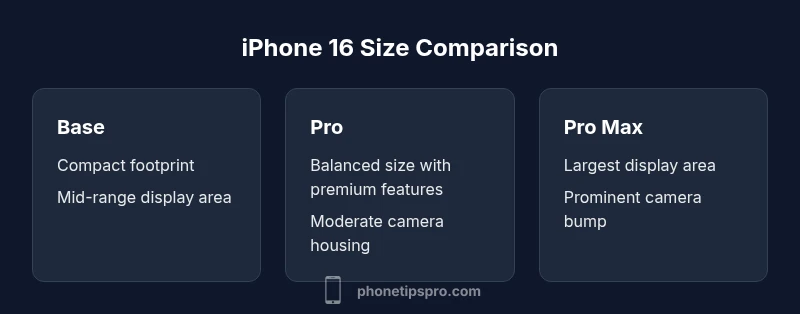
The base model typically aims for a balance of size, weight, and ergonomics. The Pro model often nudges slightly larger due to sensors and the camera module, yet still remains comfortable for daily use. The Pro Max prioritizes screen real estate and visual output, which can appeal to power users and multimedia fans but imposes a larger footprint. Each size tier carries trade-offs between pocketability, display surface, and handling. We’ll keep the comparison anchored in practical dimensions rather than measurements alone so you can picture how each model feels in real life.
Ergonomics and one-handed use: key comfort factors
One-handed operation hinges on reachability and grip security. The base model tends to be the easiest to snag from a pocket and perform quick tasks with the thumb. The Pro strikes a middle ground, offering ample screen space without sacrificing too much reach. The Pro Max can demand a two-handed grip for many tasks, particularly typing or selecting small icons. For people with smaller hands, consider how often you need to reach the far edge of the screen; the size difference can be more than a visual change and can affect your daily rhythm.
Display, bezels, camera bump, and grip implications
Display size matters, but the design of bezels and the camera bump significantly influence how your fingers interact with the edges. A larger display with a prominent camera bump can alter grip symmetry, making the phone feel bulkier in one hand. Conversely, slim bezels on the base model can create a more uniform edge feel even if the display remains sizable. If you frequently use cases or mounts, consider how the camera housing interacts with protective covers and car mounts. These details—often overlooked—substantially impact long-term usability.
Case fit and accessory considerations across sizes
Not all cases are created equal across sizes. A case that fits the base model may not align perfectly with a Pro or Pro Max due to camera bump depth and overall footprint. Screen protectors, car mounts, and stands can also differ. When shopping accessories, verify official compatibility notes and try a few items in-store where possible. This is particularly important for screen protectors and wallet cases that must accommodate the camera housing without creating fit issues. With the right accessories, you can maintain a comfortable hold without sacrificing protection.
Pocketability and daily carry in practice
Pocketability is a daily litmus test. The base model often slips into pockets with ease, reducing the cognitive load of carrying a larger device. The Pro remains manageable for most users who value extra screen real estate, while the Pro Max may require a larger bag or inner coat pocket for easy access. If you spend your day moving between offices, vehicles, and public transit, test whether you can retrieve the device quickly without fumbling. In this section, we translate pocket-index experiences into simple tests you can perform in a store or at home.
directAnswer