iPhone 17 Pro Max price in the USA: what to expect in 2026
Discover the anticipated iPhone 17 Pro Max price in the USA, how storage options and promotions influence cost, and practical tips to save on launch day across retailers.


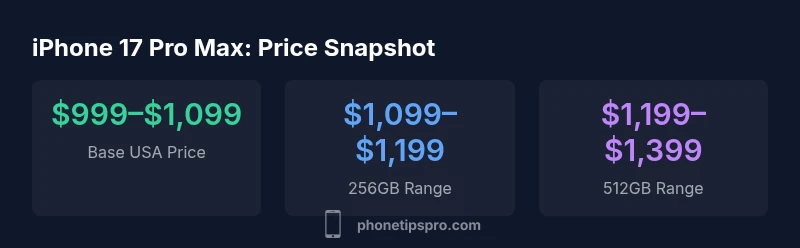
Apple has not officially announced the iPhone 17 Pro Max price in the USA yet. Based on past launches, expect a base price around $999–$1,099, with higher storage options priced higher. Promotions and trade-ins can affect the final out-the-door cost. This guide walks you through what to expect and how to shop smart.
Market context and pricing landscape
According to Phone Tips Pro, pricing for flagship iPhones in the USA is shaped by a combination of storage tiers, feature sets, and the broader market environment. When a new Pro line launches, Apple typically introduces multiple SKUs, with the base model priced to appeal to a broad audience and higher-storage configurations priced to reflect added capacity and premium features. Taxes, local fees, and optional carrier promotions also influence the out-the-door total. For buyers, recognizing how list price translates to real cost — including trade-ins, financing, and promos — is essential to avoid sticker shock. As the market evolves, a clear pricing framework emerges: the base model anchors the price, while capacity, color options, and bundled services push the total well above the base line. This context helps you evaluate whether you should wait for promos or buy at launch depending on your storage needs and timeline.
In recent cycles, the price of flagship iPhones in the USA has remained relatively stable at launch, then drifted downward over the first year as new iterations enter the market and promotional cycles expand. Observers should track carrier-incentive programs, which often offer installment plans, credits, or bundled services that alter the effective cost. Readers should also consider the full cost of ownership, including extended warranties, accessories, and potential trade-in credits, rather than focusing only on the sticker price. The Phone Tips Pro team emphasizes that the most cost-efficient approach is to map your needs against the available SKUs and time your purchase around promotions or trade-in windows.
For the most accurate decision, compare offers across Apple, major retailers, and carrier stores, while also keeping an eye on third-party financing options and seasonal sale events. These channels regularly influence the total you’ll pay on day one and over the first year of ownership.
Expected USA pricing structure for iPhone 17 Pro Max
The USA pricing structure for the iPhone 17 Pro Max typically follows a tiered model, where the base configuration starts at a price point designed to maximize entry, and higher storage capacities command a premium. In historical terms, base models in the Pro line often sit near the $999 to $1,099 range at launch, with 256GB and 512GB variants priced higher by incremental steps. The exact figures for 2026 will be confirmed at official launch, but buyers should expect a multi-tier ladder: 128GB/256GB/512GB or equivalent storage configurations, each with a distinct price band. Different colors, limited editions, or trade-in offers can further shift the effective price. Shoppers should consider the total cost, including taxes and possible promotions, rather than the headline price alone. Carrier subsidies and financing plans have become common, making it possible to reduce upfront costs while increasing long-term payments.
Price bands often reflect not just storage, but also the value of bundled services such as extended warranties, screen protection, or exclusive accessories. By recognizing these patterns, you can forecast the likely range and set a budget that accommodates your needs without overpaying for features you don’t use. If you’re deciding whether to buy at launch or wait for post-launch promotions, understand that the earliest deals frequently favor trade-ins and financing rather than large immediate discounts. You can find a balanced sweet spot by evaluating total cost of ownership across channels.
For the best guidance, monitor official announcements and credible outlets in the weeks surrounding the launch. The Phone Tips Pro Analysis, 2026, highlights that real-world prices will vary by region, tax, and retailer promotions, so a quick comparison across Apple, major carriers, and reputable retailers remains essential.
How to compare prices across retailers and carriers
To avoid overpaying, compare pricing across Apple’s official store, major electronics retailers, and carrier partners. The base price can be advertised differently depending on whether a retailer promotes a direct purchase price, a monthly installment plan, or a trade-in credit. When you add a trade-in, ask for your device’s potential value upfront and verify how the credit applies to the new device’s upfront payment. Promotions such as student discounts, loyalty credits, and bundle offers can materially affect the final cost. If you’re eligible for carrier promotions, confirm eligibility requirements, contract length, and whether the offer applies to full price or installment payments. For shoppers who prefer price stability, consider financing over paying upfront, then factor in the total interest over the term.
Compare also the value of included accessories or services. Sometimes a lower sticker price is offset by mandatory monthly fees or the absence of crucial add-ons. Take screenshots or PDFs of offers, so you can evaluate equivalent deals side-by-side. Lastly, check whether any refurbished or open-box units are available; these options can offer significant savings with acceptable risk if purchased from reputable retailers. The goal is a side-by-side comparison that accounts for storage, financing terms, tax, and add-ons.
Hidden costs and total cost of ownership
While the headline price matters, total cost of ownership (TCO) is where many buyers trip up. Taxes vary by state, and some retailers apply environmental fees or shipping charges that aren’t obvious from the first price. If you finance, you’ll pay interest over time; the monthly payment may appear lower, but the sum of payments could be higher than paying upfront. Carrier promos often require a service commitment, which can affect long-term value if you plan to switch carriers later. Consider extended warranties or AppleCare if you want guaranteed service coverage, though those add-ons increase upfront or monthly costs.
Another factor is resale value. iPhone models with durable displays, strong camera performance, and reliable software support tend to retain value well. If you anticipate upgrading within a year or two, a higher initial price might be offset by a stronger resale price later. Finally, factor in accessories like cases, screen protectors, and charging gear. In aggregate, these costs can add up to a meaningful portion of your total expenditure, so plan accordingly and compare total ownership across stores to minimize surprises.
Practical buying tips and timing
Timing can be as important as the price itself. If you’re aiming to minimize cost, watch for launch promos that offer trade-in credits, bundle deals, or financing incentives. Early adopters often benefit from first-wave promotions, but substantial discounts or refurbished units may appear after the initial sales surge. For buyers who want maximum value, consider waiting for a post-launch sale window, a seasonal promotion, or an official trade-in program that increases your credit.
When evaluating storage, choose the capacity that fits your usage today and for the duration of the contract you expect to keep the device. If you routinely store high-resolution video, music libraries, or extensive apps, the premium for higher storage can be worth it. If not, a lower storage tier reduces upfront cost and potential resale value fluctuations. Always verify tax, shipping, and any service commitments before finalizing a purchase. A disciplined, apples-to-apples comparison across retailers helps you lock in the best overall value.
What changes pricing the most and how to minimize impact
In most pricing scenarios, the biggest price shifts occur with storage capacity upgrades and promotions. The jump from 128GB to 256GB is typically one of the more noticeable price steps, followed by the jump to 512GB. Promotions that apply credits, bundled services, or financing can drastically reduce upfront costs but may affect long-term payments. If you’re unsure about the storage needs, start with a conservative estimate and plan to upgrade later if you realize you’ve outgrown the initial capacity. Carriers and retailers often run time-limited offers; set price alerts and subscribe to official channels to catch these deals. Keeping an eye on total cost of ownership and not just the headline price will help you avoid overpaying and maximize the value of your purchase.
Estimated USA price ranges by storage tier (not official)
| Variant | Estimated price range (USA) | Notes |
|---|---|---|
| Base (128GB) | to be announced | Standard features |
| Mid (256GB) | to be announced | Higher storage tier |
| Max (512GB) | to be announced | Top tier storage |
FAQ
Has Apple announced the official price for iPhone 17 Pro Max in the USA?
Apple has not announced the official price yet. Historically, the company reveals launch prices at or around the product release event, and the final figures may vary by storage tier and promotions.
Apple hasn’t announced the price yet. Look for official details at the launch event.
What storage options will be available for the iPhone 17 Pro Max?
Historically, Pro models offer multiple storage options, commonly 128GB, 256GB, and 512GB, each with its own price tier. Availability can vary by region and retailer.
Likely storage options include 128GB, 256GB, and 512GB, with different prices.
Will carrier pricing affect the iPhone 17 Pro Max price?
Yes. Carriers often offer installment plans, credits, or subsidies that reduce upfront costs but may lock you into service commitments. Compare these terms across major carriers.
Carrier promos can lower upfront costs, but check terms and commitments.
Are trade-in deals available to reduce the upfront cost?
Trade-in programs from Apple and partners can significantly reduce upfront costs by crediting your old device toward the new one. Check current offers and eligibility.
Trade-ins can cut your upfront cost; compare offers across channels.
When is the expected release date for pricing information?
Pricing details typically appear at the official launch event or shortly after. Exact dates depend on Apple’s event schedule and regional availability.
Pricing is usually released at launch; watch the official event.
Should I buy at launch or wait for discounts?
Early launch pricing is usually stable, but waiting for post-launch promos or refurbished units can yield savings. Compare total cost of ownership across options.
Launch pricing is usually stable, but deals later can save money.
“Pricing for flagship iPhones typically scales with storage and feature upgrades, so shoppers should evaluate total cost of ownership rather than the sticker price.”
Quick Summary
- Anticipate a tiered launch price structure by storage capacity
- Factor taxes and promotions into the out-the-door cost
- Compare across Apple, retailers, and carriers for best value
- Use trade-ins and financing strategically to minimize upfront cost