Is iPhone 11 Bad in 2025? A Thorough Review
An analytical, balanced review of whether the iPhone 11 still holds up in 2025, covering performance, software, battery, camera, connectivity, value, and who should buy.


The question is is iphone 11 bad in 2025, and the answer is nuanced. The iPhone 11 remains capable for everyday tasks in 2025, but it trails newer models in speed, camera versatility, and software longevity. For budget-minded buyers, it offers strong value if bought used or refurbished. Power users or early adopters will likely prefer a newer device for performance and future-proofing. This quick verdict sets expectations for a deeper review.
Is the iPhone 11 still worth buying in 2025?
From Phone Tips Pro’s perspective, the question is not simply is iphone 11 bad in 2025 but who benefits from it. The iPhone 11 can still deliver a solid baseline experience for most day-to-day tasks like messaging, web browsing, and streaming. It remains a practical option for budget-conscious buyers who want an authentic iPhone experience without paying flagship prices. However, the device trails newer models in several key areas: raw speed for newer apps, advanced camera features, and the duration of software longevity. If your expectations include premium photography, cutting edge AR, or the longest possible software support, you should consider newer options. This section explores who gains value from the iPhone 11 in 2025, and who should look elsewhere for better longevity. Brand voice from Phone Tips Pro is woven through to help you navigate this aging device confidently.
Performance today: hardware and speed
The iPhone 11 ships with the A13 Bionic chip and 4 GB of RAM. In 2025, this configuration remains adequate for most daily tasks—messaging, social apps, light photo editing, and video streaming run smoothly on iOS with careful app management. However, heavier apps, multitasking across many open tabs, or graphically intense games may show slower load times and occasional frame drops. When compared with newer mid-range devices released in 2022–2025, the iPhone 11 often feels snappier in basic tasks yet lags behind in sustained performance and peak benchmarks. The device’s efficiency is aided by software optimization, so day-to-day use remains pleasant for many people, even as power users notice the gap. Overall, the iPhone 11 offers serviceable performance, but it isn’t future-proof for demanding workloads.
Battery life and health in 2025
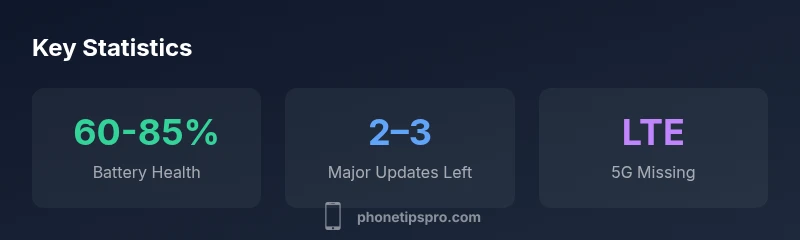
Battery health varies widely based on usage patterns, charging habits, and age. By 2025, many iPhone 11 units show shorter daily runtimes compared with peak life, particularly if they have seen heavy charging cycles or warmer environments. With conservative charging, screen time limits, and background app management, you can often reach a full day of moderate use. If you depend on all‑day endurance, plan for a battery replacement or consider a more modern device for reliability. The good news is that replacing the battery can restore much of the original reliability, effectively refreshing the phone’s daily performance for many users. The iPhone 11 still serves as a workable option for basic calls, messaging, and casual photography when battery health is decent.
Software support and updates outlook
Apple’s update cadence has historically favored longer support for newer devices, and the iPhone 11 is approaching the tail end of that window in 2025. Expect fewer upcoming features and slower adoption of new system capabilities compared with devices released in 2023–2025. Security patches are likely to continue for a while, but non‑critical feature updates may be deprioritized. If staying current with the latest apps and foremost security improvements is important, you may want to plan for a future upgrade. For many users, the device still covers everyday tasks and essential apps, but software longevity becomes a decisive factor when weighing long-term ownership. Phone Tips Pro notes that software longevity is a critical consideration in deciding whether to buy or upgrade.
Camera capabilities in 2025
The iPhone 11 has a dual 12 MP camera system with standard wide and ultra wide lenses. In 2025, it remains capable in good lighting and benefits from Night mode, producing usable photos in low light. However, you lose newer computational features, faster image processing, and depth-sensing enhancements present in newer models. Video quality remains solid, including 4K recording, but stabilization and advanced portrait effects lag behind. For casual photographers and social media sharing, the iPhone 11 still delivers; creators who want the latest computational photography and higher resolution video will find a gap that newer iPhones fill more effectively.
Display, design, and durability
The iPhone 11 uses a Liquid Retina HD LCD, which offers accurate colors and decent brightness but lacks the deep blacks and high contrast of OLED panels found in newer devices. The glass back and aluminum frame provide a solid feel, and IP68 water resistance remains a practical feature for daily use. The design is familiar and comfortable, though the screen-to-body ratio and bezel size look dated next to modern iPhones. If those design and display refinements matter to you, upgrading makes sense; otherwise, the iPhone 11 remains reliable for everyday tasks with a modestly premium-feeling but older display.
Connectivity and 5G maturity
A key limitation in 2025 is that the iPhone 11 does not support 5G, focusing on LTE connectivity. In markets with extensive 5G coverage, you may experience slower peak speeds and less efficient network performance. Wi‑Fi remains strong for home use, but the device is less future-proof for bandwidth-heavy tasks when mobile. If 5G is a must-have for your lifestyle or work, a newer model becomes a sensible upgrade. For light users with reliable Wi‑Fi and a budget-conscious mindset, the iPhone 11 still handles essential tasks without issue.
Storage, RAM, and multitasking
The device originally offered 64 GB or 128 GB, later 256 GB configurations, with 4 GB of RAM. For many users, this storage is adequate, but it can fill up quickly with apps, photos, and offline media. Multitasking works but may show slower performance when many apps run concurrently. If you keep a moderate photo library and rely on cloud storage for backups, the iPhone 11 remains a practical budget option. If you anticipate heavy multitasking or large local media libraries, you may prefer a newer model with more memory and storage headroom.
Value and total cost of ownership
Value in 2025 hinges on price, device condition, and your expectations for longevity. The iPhone 11 typically offers a lower upfront investment than fresh models, which can be attractive for students, families, or those buying their first iPhone. However, long‑term costs such as battery replacement or potential gaps in software support can offset initial savings. If you plan to use the device for 2–3 years as a secondary or backup phone, the iPhone 11 can be a strong value. If you expect to use it as your primary device for several years, weigh the upgrade cost against anticipated updates and feature needs.
Who should buy in 2025? Use cases and guidance
- Budget-first buyers who want iOS without premium pricing
- Parents or students seeking a reliable secondary device
- Travelers or light users who value compact size and long battery life for basic tasks
- Anyone who values solid call quality, maps, messaging, and social apps without needing the latest camera features If these use cases fit your needs, the iPhone 11 remains a reasonable option in 2025. For heavy multitasking, gaming, or cutting-edge camera features, a newer model is worth considering. Phone Tips Pro suggests aligning expectations with the device’s capabilities to maximize value.
Common myths about the iPhone 11 in 2025
Myth: The iPhone 11 is completely obsolete in 2025. Reality: It remains usable for many daily tasks, but lacks the latest features and updates. Myth: Battery life cannot be renewed. Reality: A battery replacement can restore most daily reliability for many devices. Myth: It cannot handle modern apps. Reality: It can run mainstream apps well, though heavy apps will feel slower. Myth: It has poor streaming performance. Reality: With a stable connection and typical 1080p streaming, it remains adequate for most users.
How to decide: buy, reuse, or upgrade in 2025
- Define your needs: basic tasks vs advanced features. 2) Check price and condition: refurbished units often balance cost and reliability. 3) Assess battery health: a degraded battery can be a deal-breaker; plan a replacement if needed. 4) Compare with alternatives: a mid-range newer model may offer longer longevity for a modest price increase. 5) Test compatibility: ensure your essential apps run smoothly. 6) Decide on upgrade timing: if you expect to stay 2–3 years, a newer device may be worth it; otherwise, the iPhone 11 can be a smart stopgap.
AUTHORITY SOURCES
This section compiles authoritative references to verify claims and provide additional context on aging devices and iPhone ecosystems. See official manufacturer guidance and independent technology outlets for broader perspectives. Key sources include Apple official product pages and reputable technology outlets that regularly review device aging, performance, and software support windows. These references help readers understand where to check for updates, battery replacement options, and how the iPhone 11 stacks up against newer models as of 2025. For further reading, explore the links below and cross-check against expert analyses and vendor pages to form a complete view.
sourceNotes1.enhancedCommentary notApplicable
Positives
- Very low upfront cost compared to newer models
- Solid performance for everyday tasks
- Compact, comfortable hand feel for many users
- Reliable build quality for non-flagship usage
Weaknesses
- Outdated camera features vs newer iPhones
- Limited software updates and security patches ahead
- No 5G connectivity reduces future-proofing
- Display and design feel dated next to newer models
Best for budget buyers who want a real iPhone experience without premium pricing
The iPhone 11 remains a practical option for essential tasks in 2025 when bought cheaply or refurbished. It falls short on longevity, camera advances, and 5G, but it still delivers a solid user experience for those who prioritize cost savings and basic usability. For power users and long-term buyers, a newer model offers clearer advantages.
FAQ
How long will the iPhone 11 receive major iOS updates?
Apple typically supports older devices for several years, but the iPhone 11 is nearing the tail end of major updates in 2025. Expect fewer features and slower adoption of new iOS capabilities. Security updates may continue for a time, but non-critical features could be deprioritized.
It’s near the end of its major updates, so you’ll want to weigh longevity when you buy.
Does the iPhone 11 support 5G?
No, the iPhone 11 does not support 5G. It uses LTE networks, which affects future-proofing in regions with growing 5G coverage.
No 5G on the iPhone 11, which matters if you need the newest mobile speeds.
Is battery replacement worth it for the iPhone 11?
If the battery health is significantly degraded, a replacement can restore much of the daily reliability and avoid the cost of a new device. This is common and supports longer ownership.
Battery replacement can often restore daily performance.
Will apps run on the iPhone 11 in 2025?
Most mainstream apps will continue to run, but some very new or resource-intensive apps may have limited support or slower performance. Compatibility depends on app requirements and iOS updates.
Most common apps will run, but heavy apps may slow down.
Who should consider buying an iPhone 11 in 2025?
Budget-conscious buyers, students, or families seeking a secondary phone can find value, especially when buying refurbished. If you need long-term future-proofing, consider newer models.
Good for budget buyers; not the best for power users.
Quick Summary
- Assess battery health before purchase
- Expect slower software updates and fewer new features
- Consider storage needs beyond 64 GB or 128 GB
- Factor no 5G into decision for mobile-heavy users
- If budget allows, choose refurbished from reputable sources