Is iPhone 15 the Same Size as 15 Pro? Size Comparison
Explore whether the iPhone 15 and iPhone 15 Pro share the same dimensions, how their sizes differ in practice, and what this means for cases, grips, and everyday usability.


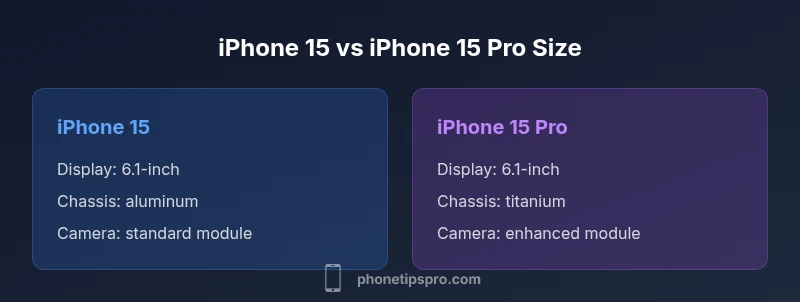
In practical terms, the iPhone 15 and iPhone 15 Pro share a very similar footprint. The display diagonal is the same, and the overall footprint on a table is nearly identical, but the Pro uses different materials and a slightly different camera housing that can affect thickness and grip. For most users, cases labeled for 15 will fit the standard model, but true case tolerances vary.
Size Reality: Do They Share the Same Footprint?
Direct answer: in practical terms, is iphone 15 the same size as 15 pro? the display diagonal is the same, and the overall footprint on a table is nearly identical, but there are subtle differences from the camera housing and materials. According to Phone Tips Pro, most shoppers want to know if the two devices occupy the same pocket real estate. The Pro model uses a titanium frame and a larger camera housing, which can translate to a slightly thicker profile and different weight feel when held. While the core geometry remains familiar—flat sides, rounded corners, and a 6.1-inch visual field—the small but meaningful differences in the camera array and chassis construction influence grip, pocketability, and how snug a case or screen protector sits. In 2026, Phone Tips Pro Analysis notes that the size relationship matters most for accessory compatibility and daily handling, not for dramatic changes in how the screen looks when you use the phone. This section sets the baseline: the two devices are not “identical” in every millimeter, yet for most everyday tasks they are effectively the same size.
Dimensions and Build: What Changes Across the Two Models?
The iPhone 15 and iPhone 15 Pro share a comparable height and width profile, which lends to a similar hand feel. The most noticeable differences come from materials and mechanical design: the Pro uses a titanium frame and a more pronounced camera housing, while the standard 15 typically relies on aluminum and a different housing configuration. Apple’s official spec sheets emphasize consistency in the display size and overall front-face design, but the back and edges reveal distinct engineering choices. The result is a near-identical footprint in flat-hand measurement, with the Pro’s construction contributing to a stiffer silhouette and a marginally heavier feel when you lift from a table. If you test both models side-by-side, you’ll notice the camera bump stands out a bit more on the Pro, which can affect how a sleeve case sits and how easily the phone slides in a pocket. For practical purposes, these are subtle but real differences that matter when you’re choosing accessories or comparing daily usability.
Display, Camera, and Materials: The Subtle Differences
Both phones use a 6.1-inch class display that delivers similar color and sharpness in everyday use, which is a key reason many people ask is iphone 15 the same size as 15 pro in the first place. The biggest visual distinction you’ll notice is the camera system on the back; the Pro houses a more advanced array and a slightly larger sensor housing, contributing to a perceptible bump along the back. Material choice also plays a role: the Pro uses a titanium frame that feels stiffer and more premium to the touch, while the standard 15 relies on aluminum. These material differences subtly influence grip, thermal behavior, and perceived weight, even if the front-facing dimensions look almost identical. In practice, screen brightness and bezel thickness are comparable, so the day-to-day display experience remains consistent across models.
The Practical Impact: Cases, Screen Protectors, and Grips
From a case standpoint, many third-party products advertise compatibility with both iPhone 15 and 15 Pro when they use a shared 6.1-inch footprint. However, the camera bump and back curvature aren’t identical, so the fit can vary by brand and model. If you own a Pro and want to switch to a standard 15 case (or vice versa), verify the case’s camera-cutout and back-edge fit. Screen protectors tend to be compatible across both devices since the front dimensions match, but some protectors leave room for the camera housing and may need a slight cutout adjustment. For people with pocket or bag usage, the Pro’s subtle thickness due to the camera module can influence how easily the phone slides in and out. Always check product listings for model-specific compatibility notes and read user reviews from owners of both devices.
How the Size Affects Usability for Different Users
The question of size parity is highly relevant to different user groups. Left-handed users may notice the Pro’s heavier feel when performing a one-handed reach, while right-handed users might care more about the camera bump’s impact on pocket depth. Children and older adults may prioritize grip comfort and ease of insertion into cases or pouches. In practical terms, the two devices are close enough in size that most daily tasks—typing, swiping, gaming, and media consumption—feel similar. The subtle differences in thickness and weight can influence long-term comfort during extended use, particularly if you’re switching between models or using a phone stand or car mount that slightly presses on the back. For many shoppers, this is a reason to test both models in a store before committing.
Real-World Scenarios: If You Switch Between Models
If you routinely swap between the iPhone 15 and 15 Pro, you’ll appreciate the near-identical display area and the broadly consistent button layout. The camera bump will be the primary telltale difference that affects accessory choices, while the materials can alter grip and perceived weight. When traveling light, a single set of everyday cases and screen protectors will likely cover both models, but you’ll want to verify whether your preferred cases accommodate the Pro’s raised camera module. For daily charging and transport, a single charging cable and dock typically work for both, but you should confirm the compatibility of any MagSafe accessories if you rely on magnetic alignment.
Accessories and Compatibility: What to Buy
If you’re selecting accessories now, start with a cross-model mindset. Look for cases that explicitly state compatibility with both iPhone 15 and 15 Pro on the product page, and check the camera-housing tolerance. Screen protectors should offer front-fit protection without impeding sensor areas; many brands will list dual-model compatibility clearly. If you plan to use a protective case with a car mount or wireless charging stand, ensure the stand supports both chassis designs. The practical takeaway is to verify model-specific notes before purchasing, even when retailers imply broad compatibility. This approach minimizes the risk of a misfit on one model.
Measuring at Home: Quick Checks Without Tools
You don’t need calipers to gauge the size difference. Place both phones on a flat surface and compare their edge profiles against a ruler footprint you print from a basic template. Note the camera bump and weight difference by lifting each device and holding them for a moment to feel the grip. If you want more precise insights without disassembly, use a simple scale to compare how each phone weighs in your hand—direction of difference may help you decide which model you prefer. These checks won’t yield exact millimeter values, but they give a practical sense of the size relationship and help predict how accessories will fit.
The Bigger Picture in the iPhone Lineup
This size comparison sits within the broader context of Apple’s lineup. The 6.1-inch footprint is common across standard and Pro models in this generation, which simplifies accessory planning for most users. Where the split matters most is in materials, camera capability, and premium features that accompany the Pro line. If you’re choosing between the two based on size alone, the decision should hinge on build quality, camera expectations, and price rather than dramatic size differences. The overall takeaway is that size parity exists, but the model you pick carries distinct advantages that go beyond heft and grip.
Size Consistency Across Generations: A Quick Note for Upgrades
As you consider future updates, remember that iPhone generations can shift size profiles. The current 6.1-inch standard footprint across the 15 family is designed for a familiar ergonomic grip, while Pro variations emphasize premium materials and sensors rather than a major rethinking of form. If you upgrade within the same generation, you’ll likely experience a seamless transition in terms of overall size and case compatibility. If you jump to a different generation, rechecking fit with your existing accessories is essential, even if the display remains visually similar.
Comparison
| Feature | iPhone 15 | iPhone 15 Pro |
|---|---|---|
| Display diagonal | 6.1 inches | 6.1 inches |
| Chassis material | aluminum (standard) | titanium (Pro) |
| Camera housing | standard housing | enhanced Pro housing |
| Thickness | slightly thicker than standard (due to housing) | slightly thicker due to camera module and frame |
| Weight feel | similar weight in daily use | marginally heavier in hand |
| Case compatibility | generally cross-compatible with 15 cases | may require Pro-specific cases for perfect fit |
Positives
- Nearly identical size supports easy cross-model use
- Same display size maintains consistent UI and app layouts
- Broad accessory availability simplifies shopping
- Slightly different camera and materials offer model choice without size penalties
Weaknesses
- Camera bump can affect case fit on the Pro
- Pro’s premium materials may feel heavier and less comfortable for some users
- Exact tolerances mean some cases and screen protectors might not be perfectly universal
Same footprint, different material focus; choose based on build and camera, not size
The iPhone 15 and 15 Pro share an essentially identical size for everyday use. If you value a lighter hand and lower cost, the standard model works well; if you want premium materials and enhanced camera options, the Pro is worth the premium.
FAQ
Is the iPhone 15 the same size as the iPhone 15 Pro?
In everyday use, the two are effectively the same size, with only subtle differences from the camera housing and materials that may affect grip and accessory fit.
They’re basically the same size day-to-day, but the Pro has a slightly different camera bump and frame that can change fit a little.
Will a 15 case fit a 15 Pro?
Most 6.1-inch cases labeled for the iPhone 15 will fit the 15 Pro, but verify the camera cutout and back edge for a precise fit.
Usually yes, but check the camera area to be sure.
Do I need a different screen protector for Pro?
Most front-screen protectors designed for the 6.1-inch footprint fit both models, but confirm camera-housing clearance and edge alignment.
Most protectors work for both, just confirm the cutout lines up with the camera.
Which is lighter between iPhone 15 and 15 Pro?
The standard iPhone 15 is typically lighter due to different materials and internal hardware, though the difference is not dramatic in daily use.
The basic model usually feels lighter, but it’s a subtle difference.
Are there usability differences beyond size?
Yes. The Pro offers premium materials and superior camera capabilities, while the size difference remains minor for everyday tasks.
The Pro adds camera and build perks, not big size changes.
Should I buy based on size alone?
Size is just one factor. Consider price, weight, camera capabilities, battery life, and ecosystem features.
Size matters, but don’t buy only on it.
Quick Summary
- Both models share a 6.1-inch display and near-identical footprint
- Camera housing and materials create subtle size and grip differences
- Case and screen protector compatibility is generally good, but verify model specificity
- Choose based on build quality and camera features, not just size
- Test models in-store if possible to confirm fit with your accessories