Used iPhone 14 Buyer's Guide: Prices, Checks, Longevity
Discover how to buy a used iPhone 14 with confidence: price ranges, battery checks, authenticity, scams to avoid, and care tips to extend longevity.


Used iPhone 14 prices in 2026 typically fall in the low-to-mid hundreds, influenced by storage, battery health, and carrier status. 64GB models are cheaper than 128GB or 256GB variants, while devices with active warranties or AppleCare transfer hold more value. Always verify activation lock, battery health, and screen condition before buying.
Market overview and buyer psychology
In 2026, the used iPhone market remains active, with buyers seeking reliable devices at lower costs. The depreciation curve for the iPhone 14 is steady, but demand persists for devices that still offer strong camera performance and iOS longevity. According to Phone Tips Pro, prudent buyers start by confirming Activation Lock status, battery health, and service history because these factors predict the device’s real-world value more than the listed price. Consider whether you want an unlocked unit or a carrier-specific model, as this choice affects resale value and future compatibility with updates. This section lays the groundwork for a rational, data-informed purchase rather than chasing the lowest sticker price.
Price ranges and value by storage and condition
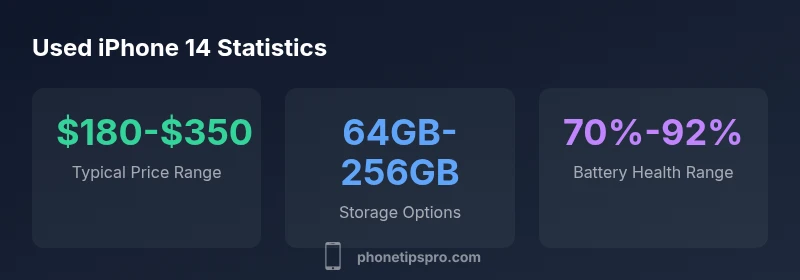
Prices vary by storage (64GB, 128GB, 256GB), cosmetic condition, color, and whether the device is unlocked or contracted with a carrier. In 2026, typical asking prices sit in the low-to-mid hundreds, with 64GB models usually cheaper than higher-storage configurations. If a listing mentions AppleCare transfer eligibility or a remaining warranty, it can add value. Don’t forget to factor taxes, shipping, and any potential refurbishment costs when comparing offers. A methodical price comparison across multiple marketplaces is essential.
Key factors affecting resale value
Battery health is a primary driver of resale value; devices with higher Maximum Capacity tend to sell faster and at better prices. Storage capacity remains an obvious price lever (128GB and 256GB usually command more). Carrier status matters: unlocked devices generally appeal to a broader pool of buyers and often fetch higher prices. Cosmetic condition (screen scratches, dents, and frame wear) can shrug off small flaws but will erode value quickly if significant. Finally, color and included accessories (charging cable, box, headphones) can tip minor price differentials in competitive markets.
How to inspect a used iPhone 14 before buying
Before handing over money, perform a hands-on inspection. Verify the device’s serial and IMEI against Apple’s coverage checker, and confirm Activation Lock is disabled. Test the display for dead pixels and touch responsiveness; inspect the frame for damage; check cameras, speakers, microphones, and the Face ID sensor. Run a quick battery health check in Settings > Battery > Battery Health (Maximum Capacity). If possible, run a full demo: place calls, test Wi-Fi, Bluetooth, and the camera across photo and video modes. If a seller resists any test, walk away. Always request recent service history receipts and a clean IMEI/UDID record.
How to verify authenticity and avoid scams
Ask for the original receipt or proof of purchase when possible. Check the serial number on Apple’s site and confirm activation status on Find My iPhone and iCloud. Be wary of unusually low prices or listings that refuse to provide clear photos of the device’s serial or box. Avoid devices with water damage indicators triggered or those that have a blacklisted IMEI. If you’re buying from a marketplace, choose reputable sellers with positive feedback and a clear return policy. These practices reduce the risk of counterfeit units or devices with hidden issues.
Buying options: carrier, unlocked, refurbished
Unlocked devices offer maximum flexibility for future carriers and resales, while carrier-locked models may be cheaper upfront but restrict future buyers. Consider certified refurbished units from reputable sources—these often include some form of warranty and a fresh battery. When evaluating refurbished items, review the refurbishment process, testing standards, and whether the device carries a new outer shell or battery. A balanced approach blends price considerations with a credible warranty and transparent history.
Common issues to test during a demo
Test every essential function during a live demo: screen responsiveness, brightness, and color accuracy; camera stabilization across photos and video; Face ID reliability; microphone and speaker clarity; charging port and cable compatibility; and wireless charging performance if available. Check for any unusual heat during charging or extended use. Run a speed test by launching a few apps and observing approximate load times. Finally, verify the device reboots cleanly and is running a recent iOS version without activation hurdles.
Post-purchase care and longevity tips
After purchase, enable Battery Health monitoring and install the latest iOS update to maximize security and performance. Use a reliable case and screen protector to minimize cosmetic wear. Regularly back up data and keep receipts for warranties or trade-in programs. Battery replacements can extend device life and resale value, so consider budget-friendly options if the Maximum Capacity drops below 80% before the next planned upgrade.
Negotiation tips and safe purchasing steps
Set a target price range based on storage and condition, and use competing listings to justify your offer. Meet in a public place, ideally with visible device testing, and bring a charger for on-site demos. Use secure payment methods and request a return window. If a deal sounds too good to be true, walk away and report suspicious listings to the marketplace.
Used iPhone 14 price and condition snapshot
| Variant | Typical Price Range | Common Issues | Battery Health Range |
|---|---|---|---|
| 64GB | $180-$260 | Scratch-prone display, cosmetic wear | 70%-85% |
| 128GB | $230-$320 | Screen lift unlikely, minor scuffs | 75%-90% |
| 256GB | $260-$350 | Rare battery swelling signs | 80%-92% |
FAQ
Is it safer to buy from major retailers versus private sellers?
Yes. Reputable retailers or official refurbishers typically offer return windows and some warranty. Private sellers can be risky, so request proof of purchase and a recent maintenance history, and insist on testing the device in person.
Generally safer to buy from reputable sources with a return policy. Inspect the device in person and review the seller’s history before paying.
What checks should I run on a used iPhone 14?
Run battery health tests, check for Activation Lock, test all cameras and speakers, ensure Find My iPhone is disabled, and verify that the device powers on normally and runs the latest iOS supported by the model.
Test battery health, activation lock, cameras, speakers, and ensure it boots normally.
How can I check whether Activation Lock is on?
Go to Settings > [Your Name] > Find My and confirm that Find My iPhone is turned off. If you can’t turn it off without the original Apple ID, avoid buying the device.
Check Find My iPhone is off before purchase.
Should I buy carrier-locked or unlocked?
Unlocked devices are more versatile for future carriers and resale. Carrier-locked devices can be cheaper upfront but limit buyer options and resale value.
Unlocked usually offers better future flexibility and resale value.
What is AppleCare+ coverage like for used devices?
AppleCare+ can transfer with the device if still active at the time of sale. Verify coverage status with Apple’s site using the device’s serial number before purchase.
Check AppleCare+ transferability with the serial number.
How to avoid scams when paying?
Use traceable payment methods, request a written bill, and avoid wiring money or anonymous transfers. Meet in person where possible and avoid large upfront deposits for devices with thin photos or vague histories.
Use traceable payments and meet in person with a clear return policy.
“A used iPhone 14 can be a solid value if you verify battery health, Activation Lock, and overall condition; price is driven by storage and carrier status.”
Quick Summary
- Check Activation Lock before any offer
- Prioritize battery health and storage when evaluating price
- Compare unlocked vs carrier-locked pricing
- Test the device thoroughly during a demo
- Buy from trusted sources and keep receipts