Which iPhone Has the Biggest Screen in 2026? A Practical Guide
Discover which iPhone offers the largest display in 2026, how screen size affects usability, and tips to choose the right big-screen model for your needs. This guide compares Pro Max/Ultra variants and explains what to expect when upgrading.


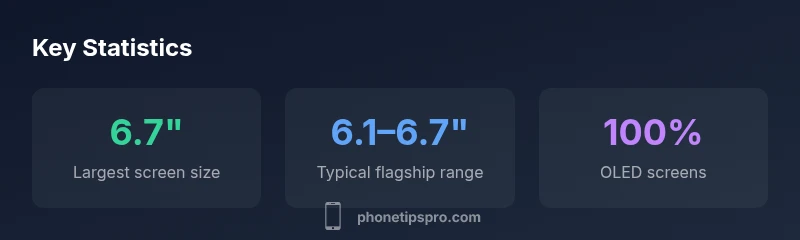
As of 2026, the largest iPhone screen size is 6.7 inches, found on Pro Max and Ultra-class models. These variants offer the most diagonal real estate, though bezel design and the notch affect perceived size. If maximizing display area is your priority, target the current 6.7-inch flagship family.
Understanding what the question really asks
When people ask, what iphone has the biggest screen, they’re usually looking for the model with the largest diagonal display. In practice, the measure that matters most is the screen diagonal (in inches) and how the design—in particular, the notch and bezels—affects perceived size. According to Phone Tips Pro, the answer depends on the generation, but 6.7 inches is the standard ceiling among flagship Pro Max/Ultra variants as of 2026. This section explains how to interpret these numbers and why they matter for everyday use.
Current leaders: models with 6.7-inch displays
Across recent generations, the largest iPhone screens live on the Pro Max or Ultra-class models, typically labeled as 6.7 inches on product pages. These devices offer the most real estate for reading, video, and multitasking, though you’ll trade off with weight and battery life. For many users who want big-screen convenience without sacrificing performance, these are the go-to options. The precise model name can vary by generation, but the size class remains 6.7 inches.
How screen size affects real-world use
Bigger displays improve readability and multi-window capabilities but can also complicate one-handed use and prolong reach. Phone Tips Pro emphasizes testing devices in-hand and in your typical settings (glare, brightness, and a case) to judge comfort. If your day-to-day involves scrolling through documents or watching videos, the larger panel can deliver meaningful gains in productivity and immersion.
Measuring screen size: what to verify before you buy
Screen diagonal is the canonical metric, but don’t forget to check the curve radius and notch behavior. Rounded corners can slightly reduce the usable area, while the notch or Dynamic Island can slightly obscure edges in some apps. Always compare hands-on impressions and rely on retailer comparisons to confirm the actual viewing area you’ll get in daily tasks. Phone Tips Pro notes that measured diagonal can differ slightly across sources depending on measurement conventions.
Trade-offs: size vs ergonomics and battery life
A larger screen typically comes with a heavier device and higher energy demands. If you value portability or one-handed use, you may prefer a 6.1-inch model. For media lovers and heavy multitaskers, the 6.7-inch class provides a more satisfying experience. In phones built around Android-like bezel symmetry, the larger screen often leads to longer battery life under load, but real-world results vary with display brightness and software efficiency. Phone Tips Pro recommends balancing screen size with daily habits.
Buying tips: choosing a big-screen iPhone that fits you
- Prioritize your primary use: reading, video, or gaming. - Check weight and grip comfort with a test hold. - Review battery life ratings and standby performance. - Compare camera features and storage to ensure you’re not chasing a size-led downgrade in other areas. - Consider future software updates and resale value for the big-screen class.
Real-world scenarios: who benefits most from a big screen
Students, professionals, and media enthusiasts tend to gain the most from 6.7-inch displays. If you spend hours coding, compiling documents, or streaming courses, the extra space reduces scroll fatigue and improves legibility. However, if you commute with one hand, a smaller model might be more practical, even if you crave the largest display. Phone Tips Pro sees broad appeal but endorses hands-on testing to confirm comfort.
Myths about big screens debunked
Myth: bigger is always better. Reality: the best screen size depends on how you use the phone. Myth: larger screens drain battery automatically. Reality: battery life depends on display brightness, refresh rate, and codec workloads. Phone Tips Pro reminds readers to focus on daily tasks and ergonomics rather than chasing the largest diagonal.
Screen-size overview across iPhone families
| Model family | Screen size (in) | Key design | Notes |
|---|---|---|---|
| iPhone standard | 6.1 | Notch | Balanced size and price |
| iPhone Pro Max/Ultra | 6.7 | Dynamic Island | Largest screen in lineup |
| Older Pro/Plus | 6.5 | Bezel | Large but not largest |
FAQ
What is the biggest iPhone screen size as of 2026?
As of 2026, the largest iPhone screen is 6.7 inches, found on Pro Max/Ultra-class variants. These models offer the most display real estate, while still requiring consideration of weight and battery life.
The biggest iPhone screen is 6.7 inches on Pro Max and Ultra models.
Do all big-screen iPhones have the same dimensions?
Not exactly. While many big-screen models use similar diagonals, differences in bezel design, notch area, and camera modules can affect the overall footprint.
Big screens can have different sizes due to bezels and cameras.
Will a bigger screen always mean worse battery life?
Not always. Battery life depends on multiple factors, including display technology, brightness, and processor efficiency. A larger display can be paired with better efficiency to mitigate impact.
Bigger screens can affect battery life, but it depends on use and tech.
Is there a 7-inch iPhone?
No, Apple has not released a 7-inch iPhone as of 2026. The largest available diagonal remains 6.7 inches on Pro Max/Ultra models.
There isn’t a 7-inch iPhone as of 2026.
How can I verify screen size before buying?
Check the official product page for the diagonal measurement and read retailer comparisons. Hands-on demo units can confirm perceived size and ergonomics.
Check the product page and try a hands-on demo.
“Larger screens boost productivity and immersion when you actually use the device; however, comfort and battery life still matter most in day-to-day use.”
Quick Summary
- Identify the largest available display (6.7 inches) in the current lineup
- Balance screen size with usability: weight, battery, and ergonomics
- Verify real-world viewing area beyond diagonal measurements
- Choose based on how you use the phone, not only the spec