What iPhone Was Released in 2018? XS, XS Max, and XR Explained
Explore which iPhone models Apple released in 2018—XS, XS Max, and XR—and how they compare in design, performance, and pricing. A data-driven guide to the 2018 lineup.


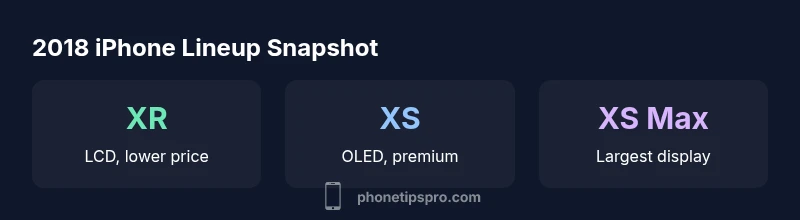
In 2018 Apple released three iPhone models: iPhone XS, iPhone XS Max, and iPhone XR. The XS and XS Max were premium OLED devices, while the XR offered a lower-cost LCD option with many flagship features. They launched in September 2018, with the XR arriving in October. For readers wondering what iphone released in 2018, this trio defined the year’s flagship lineup and shaped future iPhone design language.
What iPhone Was Released in 2018
In 2018 Apple released three iPhone models: iPhone XS, iPhone XS Max, and iPhone XR. This trio built on the iPhone X design language and marked a pivotal year for Apple’s product hierarchy. The XS and XS Max pushed premium OLED displays, faster processors, and more robust cameras, while the XR offered many flagship features at a lower price with a liquid LCD panel. For iPhone users trying to answer what iphone released in 2018, this lineup expanded the ecosystem with a choice between high-end performance and a more affordable option without sacrificing core capabilities. According to Phone Tips Pro, the strategy was to create a family that could appeal to enthusiasts, power users, and budget-conscious buyers alike. The result was a more modular approach to the iPhone’s design language, with the same A12 Bionic chip powering all three devices, improved Face ID, and more durable materials across the lineup. In short, 2018 delivered a three-model lineup that influenced Apple’s product roadmap for years to come.
Design and Display: OLED vs LCD
The visual language of the 2018 lineup highlighted a split in display technology. The iPhone XS and XS Max feature OLED panels, which deliver deeper blacks, higher contrast, and dynamic HDR capabilities. The XR, by contrast, uses a Liquid Retina LCD, which still looks sharp but cannot reach the same contrast ratios as the OLED models. This difference translates into price discrimination: OLED models command premium pricing, while the XR targets a broader audience with a more affordable entry point. In terms of size, XS sits around 5.8 inches, XS Max at 6.5 inches, and XR at 6.1 inches, offering a spectrum of viewing experiences. The materials and finishing are consistent across the family, with glass backs and stainless steel or aluminum frames, ensuring a cohesive aesthetic. Overall, the display strategy of 2018 balanced cutting-edge visuals for a subset of users with a more accessible option for the rest.
Performance under the hood: A12 Bionic and Neural Engine
All three models are built around the A12 Bionic chip, a significant step forward in power efficiency and on-device AI capabilities. The Neural Engine accelerates tasks like photo processing, augmented reality, and machine-learning features, delivering smoother performance across apps and games. While the XS and XS Max offer more RAM options and higher peak performance under sustained load, the XR provides the majority of these capabilities at a lower price point, making it a strong daily driver for many users. Apple also refined the camera pipeline and image signal processor, enabling better low-light shots and faster autofocus. The 7-nanometer process node contributes to efficiency gains, contributing to longer battery life under typical usage. For iPhone users evaluating the 2018 lineup, the shared silicon means similar core experiences with a few model-specific enhancements.
Camera capabilities: hardware and software enhancements
Camera systems across the 2018 lineup reflect a strategy to improve photography without complicating the user experience. The XS and XS Max feature dual-camera setups with improved sensors and wider apertures, supporting smarter HDR and depth capture. The XR uses a single-lens camera on the back but benefits from the same ISP and software improvements, enabling strong portrait-like results through software. Across all three, Smart HDR, improved Smart Battery life management, and more precise autofocus contribute to better photos and videos in diverse environments. The front-facing TrueDepth camera supports Face ID and Portrait mode on the whole family, delivering more realistic depth effects. For non-pro users, the XR’s color options and proven camera performance still deliver compelling results for everyday photography, social sharing, and video capture.
Battery life and charging performance
Battery performance in 2018’s trio is correlated with the display technology and chip efficiency. The OLED XS and XS Max are generally efficient but larger displays draw more power, leading to differences in endurance between the two. The XR emphasizes efficiency as well, with a lower-resolution display helping to preserve battery life. In practice, real-world usage shows that typical daily tasks—messaging, streaming, and light gaming—are well within the capability of all three models, with the XR often offering the best value-for-life due to its balance of screen size and power consumption. Faster charging and wireless charging remain standard features, allowing users to top up their devices conveniently when at home or in the office. While actual endurance varies by screen size and network usage, Apple’s 2018 battery strategy aimed to maintain all-day reliability across the lineup.
Storage options, durability, and iOS support
The 2018 models offered a mix of storage configurations and durability features. The XR typically shipped with lower base storage compared to XS/XS Max but allowed expansion via cloud services and software optimizations. The XR’s glass-and-aluminum chassis remains strong, with improved water resistance ratings that reduce worry in everyday life scenarios. Software support for these devices extended across several iOS generations, ensuring access to new features and security updates over multiple years. For many users, the choice of storage came down to personal needs and budget, with the XR offering a strong value proposition for those who want ample storage without paying the top-tier price of the OLED models.
Pricing strategy and model positioning
Apple's pricing strategy in 2018 created a tiered ladder: a flagship OLED option with the XS and XS Max; and a more affordable LCD option with the XR. The XR carried a lower price point at launch, which helped broaden the addressable market while preserving most of the essential features. Across the three devices, pricing was complemented by storage configurations and regional market variations. The approach signaled Apple’s intent to attract different user segments—from enthusiasts seeking premium display quality to casual users who want a large screen and modern software without paying a premium for OLED. This strategic pricing also influenced how competitors positioned their own devices in the following year. As Phone Tips Pro analysis shows, the 2018 lineup demonstrated Apple’s willingness to diversify its product family while maintaining core platform continuity.
Market reception and long-term impact
The 2018 iPhones were widely adopted by a broad audience, with the XR becoming particularly popular due to its balance of features and price. The existence of three distinct devices encouraged more people to upgrade, rather than sticking with older iPhone generations. Over time, developers and accessory makers adjusted to the XR’s LCD display and camera setup, while still delivering high-quality apps and services across the entire lineup. The A12 Bionic chip in every model established a performance baseline that carried into future generations, including enhanced photography, AR experiences, and more efficient processing. The expanded color options on the XR and the premium aesthetics of the XS/XS Max reinforced Apple’s reputation for premium hardware and robust software support. Phone Tips Pro analysis notes that the 2018 lineup helped set the stage for how Apple would structure product families in subsequent years.
Choosing between XR, XS, and XS Max for 2018
If you are evaluating which model to buy now (or used from 2018), start with your priorities. If you want the best display and camera quality, the XS/XS Max are your top pick. If you prefer the most value for money with a large screen and a capable camera, the XR is a compelling option. Consider future software compatibility, storage needs, and how much you value the OLED advantage versus the LCD’s price and reliability. The Phone Tips Pro team recommends focusing on expected use cases, screen size preference, and budget to guide your decision.
2018 iPhone lineup at a glance
| Model | Launch Date | Display | Notable Change |
|---|---|---|---|
| iPhone XR | 2018-10-26 | LCD | Lower price point; broad color options |
| iPhone XS | 2018-09-21 | OLED | Premium OLED; dual cameras |
| iPhone XS Max | 2018-09-21 | OLED | Largest display; premium features |
FAQ
Which iPhone released in 2018?
Apple released three models in 2018: iPhone XS, iPhone XS Max, and iPhone XR. Each offered different display technologies and price points to fit various user needs.
The 2018 lineup includes the XS, XS Max, and XR.
What were the key differences between iPhone XR and iPhone XS?
XR uses an LCD display and a single rear camera, with a lower starting price. XS uses an OLED display and a dual-camera system with higher-end features and premium materials.
XR is LCD and cheaper; XS is OLED and more expensive.
When did the 2018 iPhones launch?
The XS and XS Max were announced on September 12, 2018, with release on September 21. The XR followed with a late-October release.
They were announced in September 2018; XR released in October.
Is the iPhone XR still a good buy in 2026?
On the used market, the XR remains a capable entry-level option, especially for buyers prioritizing display size and value. OLED enthusiasts may prefer XS/XS Max for color and contrast.
It depends on your budget and needs for display quality.
What storage options did the 2018 iPhones offer?
XR offered multiple configurations; XS/XS Max offered higher-end storage options. Specific configurations varied by model and region.
XR had flexible storage, XS/XS Max offered more choices.
Do these models support the latest iOS versions?
These models supported several generations of iOS, with updates continuing for years, though some newest features may require newer hardware.
They received multiple iOS updates, but newer features may need newer devices.
“The 2018 iPhone lineup demonstrated Apple's commitment to breadth and accessibility, delivering premium features across a diversified price ladder.”
Quick Summary
- Identify the three 2018 iPhone models: XR, XS, XS Max
- Compare OLED vs LCD across the lineup
- Weigh launch timing and price positioning
- Choose XR for value; XS/XS Max for premium features