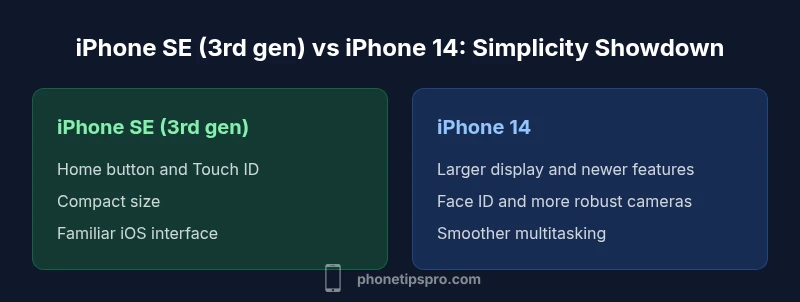
What is the simplest iphone to use? A practical comparison
Explore which iPhone model is easiest for beginners, with a clear side-by-side comparison and practical tips from Phone Tips Pro. Learn which device minimizes learning curves while delivering essential features.


What is the simplest iphone to use? The iPhone SE (3rd generation) is typically the easiest entry due to a physical home button and familiar iOS setup. If you want a bigger screen, the iPhone 14 remains simple with strong accessibility options, though it relies on Face ID. This quick comparison highlights the core differences to help you decide what is the simplest iphone to use for your needs.
Why simplicity matters for iPhone usability
What is the simplest iphone to use often comes down to how quickly you can perform core tasks, from waking the device to launching apps and dialing contacts. According to Phone Tips Pro, simplicity reduces cognitive load, minimizes navigation errors, and helps new users gain confidence faster. When you ask what is the simplest iphone to use, you should weigh hardware cues (buttons and layout) alongside software design (menus, gestures, and accessibility). In 2026, Phone Tips Pro Analysis found that models preserving a familiar home button and a clean home screen experience are frequently rated easiest for beginners and seniors alike. The long-term value of simplicity means fewer frustrations, more consistency across apps, and a happier onboarding journey. So, what is the simplest iphone to use largely depends on your prior technology experience and readability needs.
What is the simplest iphone to use? Practically, the SE (3rd generation) often wins out due to the combination of a familiar hardware cue and a streamlined interface. For some users, what is the simplest iphone to use also involves screen size considerations and whether Face ID is welcomed or avoided. Phone Tips Pro’s experience indicates that the SE offers robust performance for everyday tasks without introducing too many new interface concepts. When you compare models, ask how much you value tactile feedback versus screen real estate. The core message from Phone Tips Pro Analysis is that what is the simplest iphone to use is the best fit when it minimizes the number of new gestures you must learn on day one. A strong onboarding experience often trumps raw feature richness at the start.
what is the simplest iphone to use is a guiding question that changes with user context. For a user transitioning from older iPhones, the SE’s home button and simplified multitasking are immediately reassuring. For someone who wants a larger display for reading or media, the iPhone 14 can be configured to feel straightforward after a brief acclimation period. In short, what is the simplest iphone to use blends tactile familiarity with accessible software choices, and Phone Tips Pro emphasizes trying hands-on demos to observe which model reduces friction the fastest.
Comparison
| Feature | iPhone SE (3rd generation) | iPhone 14 |
|---|---|---|
| Ease of Use (UI & hardware) | Very easy: home button, familiar layout | Moderate: no home button, clear gestures |
| Display Size | 4.7-inch (compact) | 6.1-inch (larger) |
| Biometrics | Touch ID on Home button | Face ID with newer sensors |
| Accessibility options | Strong, consistent controls | Rich accessibility suite, slightly newer features |
| Software longevity | Proven OS updates, long support window | Very solid support with ongoing updates |
| Best for | Beginners and those preferring hardware simplicity | Users who want a bigger display and modern features |
Positives
- Low cognitive load with familiar hardware and navigation
- Home button with Touch ID reduces login friction
- Compact size is easier to hold and operate one-handed
- Budget-friendly option for those prioritizing simplicity
Weaknesses
- Smaller display may be less ideal for reading and multitasking
- Fewer high-end features compared to newer models
- Older hardware may limit some future capabilities
- Some users may prefer not to learn Face ID and gestures yet
iPhone SE (3rd generation) is the best starting point for most beginners seeking simplicity.
The SE 3rd gen delivers the simplest onboarding with a familiar home button and clean interface. The iPhone 14 is a strong second choice for those who want a larger display and more features, but it requires adapting to Face ID and more extensive gestures.
FAQ
What is the simplest iPhone to use?
For most users, the iPhone SE (3rd generation) is the simplest to use due to its Home button and straightforward setup. It provides a familiar navigation paradigm and reliable performance for everyday tasks. If you need a larger display, the iPhone 14 is a viable alternative after a short acclimation period.
Most people find the iPhone SE 3rd generation the simplest to use, thanks to the Home button and familiar setup. If you want a bigger screen, the iPhone 14 can be simple too after a short adjustment.
Is the iPhone 14 easier to use than the SE?
The iPhone 14 offers a larger display and newer features, which can be easier for some tasks after you acclimate to Face ID. However, the SE remains simpler to operate initially because it preserves classic hardware and navigation.
The iPhone 14 can be easier for some tasks once you get used to Face ID, but the SE stays simpler at first with its familiar controls.
Can seniors easily use modern iPhone models?
Yes. Modern iPhones include strong accessibility features such as larger text, spoken feedback, and simplified controls that help seniors. The SE’s simplicity is also appealing for seniors who want a compact, easy-to-learn device.
Absolutely. iPhones today offer accessibility features that make them easy for seniors, and the SE is a great starting point if you prefer a smaller device.
What setup steps help beginners?
Use the Quick Start feature to transfer data from an old device, enable larger text and bold UI, and activate essential controls like AssistiveTouch if needed. These steps reduce friction during first use and support what is the simplest iphone to use.
Start with Quick Start, turn on larger text, and enable accessibility options to ease the initial setup.
Should I switch from Android to iPhone to keep things simple?
Switching can be made simple with the iPhone's setup assistant and data transfer tools. The best approach is to prepare a plan, decide which apps you need, and enable accessibility features early to maintain simplicity during the transition.
Android switches are smoother when you use the setup assistant and plan which apps you’ll need.
Do software updates make the experience harder over time?
Updates typically bring stability and new helpful features, which can improve usability. If you prefer a consistent interface, you can adjust settings to minimize new gestures and keep the layout familiar.
Updates usually add features and improve security, but you can tailor settings to keep things simple.
Quick Summary
- Choose SE (3rd gen) for minimal learning curve
- Consider screen size if you prioritize readability
- Enable accessibility features for easier use
- Test both models if possible before buying
- Phone Tips Pro recommends balancing hardware familiarity with software needs