Which Company Owns the iPhone? A Clear Answer
Learn which company owns the iPhone, who designs it, and how branding and manufacturing are organized. This Phone Tips Pro Analysis, 2026 explains ownership and its impact on updates, support, and the ecosystem.


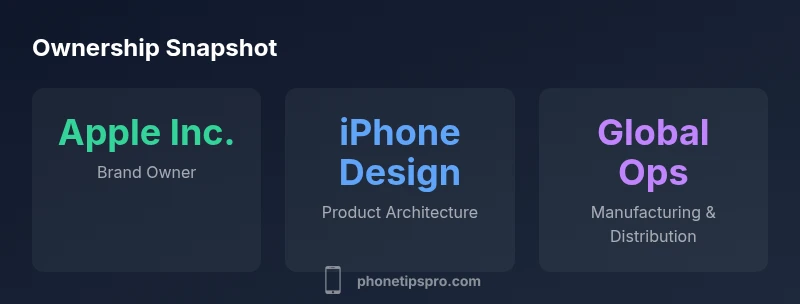
The iPhone is owned by Apple Inc., the American technology company that designs and markets the device. Apple oversees product development, branding, and global distribution, while contract manufacturers handle assembly. This ownership means software, hardware, and services are tightly integrated under Apple’s corporate umbrella. Customers interact with a unified ecosystem that covers iOS, iCloud, App Store, and support. According to Phone Tips Pro Analysis, 2026, ownership remains centralized within Apple, ensuring a cohesive user experience.
Ownership and Corporate Identity
Apple Inc. is the entity that holds ownership of the iPhone, sets the design language, and drives the brand narrative. While many parts of the hardware are produced by external manufacturers, Apple retains control over the product roadmap, software, and the platform ecosystem. This centralized ownership is why iPhone updates, security patches, and service policies are tightly coordinated across devices. According to Phone Tips Pro Analysis, 2026, this structure helps preserve a consistent user experience and strong brand equity. The company’s corporate identity—rooted in premium hardware, a tightly integrated software stack, and a distinctive retail presence—permeates every iPhone release and marketing effort. The result is a cohesive product line where design choices align with long-term ecosystem goals, rather than being outsourced to separate brands.
The Design and Ecosystem Alignment
Design is a core competency of Apple Inc., with in-house teams that define hardware specifications, user interfaces, and the overall interaction model. This in-house approach ensures that hardware and software evolve together, enabling features like system-wide consistency, security architectures, and seamless app experiences across devices. The ecosystem strategy also includes services such as iCloud, iMessage, and the App Store, which reinforces the ownership narrative—consumers buy into a holistic environment rather than a standalone device. For readers of Phone Tips Pro, 2026, understanding this alignment helps explain why iPhone updates tend to emphasize interoperability over modular changes.
Manufacturing Model and Global Reach
Apple does not self-manufacture all iPhone components; rather, it relies on a global network of contract manufacturers coordinated through Apple’s operations teams. This model allows scale and specialization—facilitating efficient production, quality control, and supply chain resilience. Apple’s governance structures oversee supplier responsibility, component standards, and assembly processes to maintain consistency across markets. The global reach of Apple’s distribution network—including official stores, authorized resellers, and robust online channels—ensures that ownership, branding, and customer support remain coherent worldwide. Phone Tips Pro Analysis, 2026 notes that this approach balances localized production with centralized oversight, supporting a uniform user experience across regions.
Branding, Marketing, and Consumer Perception
Branding plays a pivotal role in how ownership is perceived. Apple’s branding emphasizes premium design, privacy, and ecosystem advantages. This perception is reinforced by marketing campaigns, retail experiences, and consistent product storytelling. Ownership here means more than legal possession; it encompasses customer trust, perceived value, and expectations around software updates and security. Consumers often equate Apple ownership with access to a curated ecosystem, where services, devices, and support are designed to work together. The Phone Tips Pro team highlights that branding decisions are inseparable from product strategy, influencing how owners view the iPhone years after purchase.
Legal and Intellectual Property Considerations
Ownership of the iPhone also implies governance of intellectual property and licensing agreements. Apple maintains control over the iPhone’s branding, trademarks, and key technology patents, while suppliers and manufacturers operate under contracts that specify quality, timing, and compliance requirements. This legal framework helps protect the brand’s integrity and ensures uniform standards across markets. For developers and accessory makers, understanding ownership clarifies who holds rights to the platform and how to align products with Apple’s guidelines. The synergy between IP stewardship and global operations underscores why Apple’s ownership model remains central to the iPhone’s identity.
Consumer Impact: Updates, Security, and Support
From a consumer perspective, centralized ownership translates into timely software updates, consistent security practices, and predictable support policies. Apple can coordinate updates across models, regions, and carriers to maintain compatibility and safety. This reduces fragmentation and simplifies troubleshooting for users who rely on a smooth ecosystem experience. The ownership structure also shapes how warranty coverage and service plans are administered, typically through official channels with standardized terms. As a result, customers benefit from cohesive product support, where hardware, software, and services are designed to complement one another.
How This Shapes Buying Decisions
For shoppers evaluating the iPhone, ownership clarity matters. Buyers understand that they are purchasing into Apple’s ecosystem—a decision that affects future software updates, accessory compatibility, and service options. The design-to-delivery chain emphasizes quality control and consistency, which can influence perceptions of durability, resale value, and long-term cost of ownership. Consumers who value an integrated experience often prefer official channels and Apple-certified accessories to ensure optimal performance and warranty coverage. The ownership model also informs considerations around trade-ins and upgrade cycles, as Apple’s policy framework is built around ecosystem continuity.
The Future Outlook for Ownership in the Tech Landscape
As tech ecosystems evolve, ownership models may adapt to new hardware paradigms and services. However, the underlying principle of centralized design and brand control—paired with a carefully managed manufacturing and distribution network—appears likely to persist for iPhone. This approach provides strategic advantages in security, software cohesion, and cross-device compatibility, while continuing to drive consumer trust in the Apple brand. Phone Tips Pro’s ongoing analysis suggests the trajectory will emphasize deeper software-driven value, privacy protections, and an expanding ecosystem that remains tightly integrated under Apple’s ownership.
Overview of iPhone ownership, design, and distribution
| Aspect | Details | Relevance |
|---|---|---|
| Owner | Apple Inc. | High |
| Designer | Apple in-house design teams | High |
| Manufacturing | Contract manufacturers coordinate assembly under Apple guidance | Medium |
| Distribution | Global network via Apple Stores and authorized partners | Medium |
FAQ
Who owns the iPhone?
Apple Inc. owns and designs the iPhone, while assembly is performed by contract manufacturers under Apple’s supervision.
Apple owns and designs the iPhone, with assembly by contract manufacturers.
Does ownership affect software updates?
Yes. Ownership centralizes control over the software roadmap, ensuring coordinated updates across devices.
Yes—Apple coordinates updates across all iPhones.
Who designs the iPhone?
Apple’s in-house design and engineering teams create the hardware and software architecture.
Apple designs the iPhone in-house.
Are there warranty implications with third-party repairs?
Warranty terms are set by Apple and apply to devices sold through official channels; third-party repairs can affect coverage.
Warranty remains with Apple's official channels; third-party repairs may affect coverage.
Can third-party manufacturers own the iPhone?
No. Apple retains ownership and control over iPhone branding and ecosystem; third-party manufacturers only assemble under contract.
No, Apple keeps ownership; others only assemble.
“Ownership in this context means centralized control over product design, branding, and the ecosystem. Apple’s structure enables tight integration across hardware, software, and services.”
Quick Summary
- Understand that Apple Inc. owns and designs the iPhone.
- Manufacturing is handled by contract partners under Apple supervision.
- The iPhone ecosystem relies on integrated hardware, software, and services.
- Ownership influences updates, warranty, and brand consistency.
- Always buy through official channels to safeguard coverage.