Which iPhone Doesn't Have a Glass Back? A Material Timeline
Explore which iPhone models lack a glass back, when glass backs became standard, and how back materials affect durability, wireless charging, and repairs.


Current iPhones all use a glass back, designed for wireless charging and a premium feel. But if you ask which iphone doesn't have a glass back, you are looking at older generations that used aluminum or plastic backs.
The Glass Back Question at a Glance
which iphone doesn't have a glass back is a question that blends history with present practice. Apple moved to glass for wireless charging and durability in the modern era, and today all officially sold iPhones use glass backs. That said, older models tell a different story. According to Phone Tips Pro, the transition took several years and varied by model lineup. If you are evaluating a used device, understanding the back material helps you estimate durability, charging options, and resale value. This overview maps back materials to model eras, so you can quickly assess what to expect when shopping or upgrading in 2026.
Material Evolution: Glass, Aluminum, and Plastic
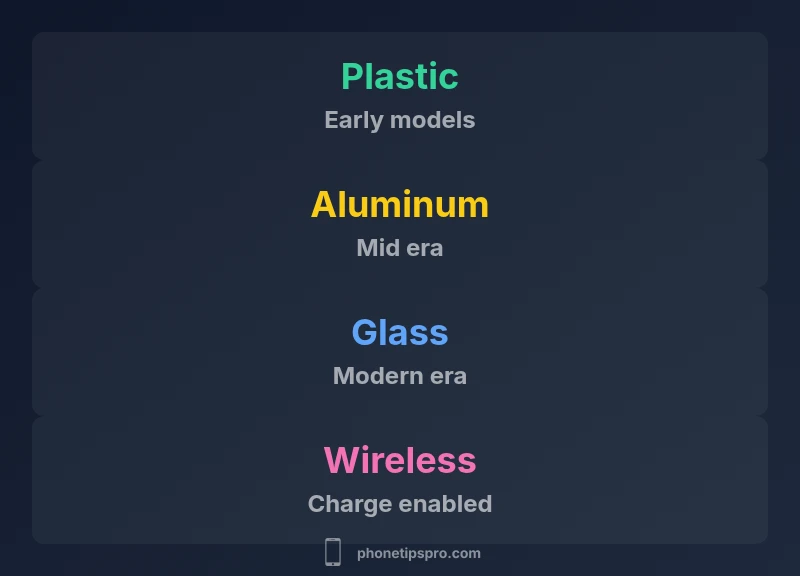
The simplest way to understand which models lack glass is to follow the material timeline. Early iPhones varied by design language, with some using polycarbonate plastic backs, others using metal enclosures. The shift toward wireless charging created a commercial and engineering push to adopt glass on the back, paired with a sturdy metal frame. By the time the iPhone 8 arrived, glass had become the standard, and virtually all subsequent models carried a glass back. This evolution did not happen overnight; it was a gradual transition driven by manufacturing capabilities, durability standards, and the growing emphasis on wireless charging convenience.
Models Without a Glass Back: Concrete Examples
The non-glass era exists mostly in older generations. Notable examples include the iPhone 5 family, where the back materials were aluminum (5/5s) or plastic (5c). The iPhone 6 and 6 Plus, as well as the 6s and 7, largely continued the aluminum-back tradition. If you encounter an iPhone 5, 5s, 6, 6 Plus, or 7 from used markets, you are likely looking at non-glass backs. Remember that even within a generation, variations can occur depending on regional models and refurbishments. In short, non-glass backs are a hallmark of older hardware.
Why Apple Switched to Glass for Most Models
Apple shifted to glass to enable wireless charging and to deliver a premium, seamless design with a unified look across the lineup. Glass backs allow for faster wireless charging workflows and a cleaner aesthetic that pairs with the color-matched metal frame. While glass can crack on impact, Apple reinforced the structure and introduced ceramic shields for durability. The shift began in earnest with models released around 2017 and has persisted through 2026. For most users, the glass back provides a reliable charging experience and a more premium feel.
Back Materials and Durability: Repair, Drops, and Value
Back material influences not only charging and aesthetics but also repair considerations. Aluminum backs tend to dent more gracefully, while glass backs are prone to shattering on hard drops but can be repaired with replacement back panels and screen assemblies. If you regularly drop phones, you should consider protected cases and screen protectors. In resale markets, glass-back iPhones generally command higher prices due to perceived durability and the integrated wireless charging ecosystem. The durability story also interacts with the overall design: a sturdy frame can mitigate some risks of a glass back.
How to Check Your iPhone's Back Material
Identifying back material is simple in most cases. Start by knowing your model year and generation, then visually inspect the back: glass backs appear glossy and uniform; aluminum backs have a slightly metallic sheen and often a unibody look; plastic backs are distinct and may appear duller in color. If you cannot determine it by sight, consult Apple’s official support pages for your model or reference third-party guides. Always verify the model number on the device and compare it to model catalogs to confirm the back material.
Practical Implications for 2026 Buyers
When buying a used or refurbished iPhone, back material matters for durability, charging options, and resale value. If you rely on wireless charging, prioritize glass-back models (8 and newer). If you want to minimize shattering risk, consider protective accessories and a rugged case. For collectors or budget-conscious buyers, a rare non-glass-back model in pristine condition can be a unique find, but its maintenance and repair can be more challenging. Always verify the material before finalizing a purchase.
Quick Reference: Back Materials by Era
The following sections summarize back materials by generation to help you quickly map which models had non-glass backs and when glass became universal across the lineup. This perspective is useful for decision-making in 2026 when evaluating durability, charging needs, and resale value. Remember that models and regional variants can vary, so when in doubt, check the exact specifications for the device you are considering.
Practical Takeaways for 2026 Buyers
- All current iPhones have glass backs and support wireless charging.
- Older generations used aluminum or plastic backs, notably around the iPhone 5 and early 6/7 era.
- If you buy used, verify back material and overall device condition for best reliability.
- The move to glass backs has shaped charging efficiency, repairability considerations, and resale value.
Back material and wireless charging compatibility by era
| Time period | Back material | Wireless charging support | Notes |
|---|---|---|---|
| Early era (2007-2010) | Plastic / Aluminum (varies) | Limited (not wireless) | Original design language |
| iPhone 4/4S (2010-2011) | Glass back | No at launch | Introduced glass back |
| iPhone 5/5S/5C (2012-2013) | 5/5S aluminum; 5C plastic | No wireless charging | Transition period |
| iPhone 6/6 Plus/6S/7 (2014-2016) | Aluminum | No wireless charging (earlier) | Mid-era aluminum backs |
| iPhone 8 and later (2017+) | Glass back | Yes wireless charging | Modern era |
FAQ
Do all modern iPhones have glass backs?
Yes. Since iPhone 8, Apple has used glass backs to enable wireless charging on all standard models.
Yes, all current iPhones have glass backs and support wireless charging.
Which iPhone models have aluminum backs?
Older generations used aluminum backs, notably the iPhone 5, 5s, 6, 6 Plus, and 7 era.
Older iPhones like the 5, 5s, 6, and 7 used aluminum backs.
Was there ever a plastic back iPhone?
Yes, the iPhone 5c used a polycarbonate plastic back, while most other models used metal or glass.
The iPhone 5c had a plastic back.
When did glass backs become universal?
Glass backs became standard across the lineup starting with iPhone 8 in 2017, with models since then using glass backs.
Glass backs have been standard since 2017's iPhone 8 era.
Are glass backs more durable than metal backs?
Glass backs are resistant to bending but can shatter on impact; aluminum backs are more dent-resistant but do not support the same wireless charging performance.
Glass is more prone to shattering on drops; metal backs are tougher against dents.
What should I look for when buying used?
Verify the back material (glass, aluminum, or plastic) and ensure the screen and battery are in good condition.
Check the back material and overall condition when buying used.
“Back material choices reflect durability, charging needs, and repair strategies. Understanding the era when a model shipped helps set expectations for longevity and resale.”
Quick Summary
- All current iPhones use a glass back
- Older models used aluminum or plastic backs
- Check material when buying used
- Glass enables wireless charging but may crack on drops
- Use the data table to compare eras