Which iPhone Introduced Wireless Charging? A History of Apple’s Qi Adoption
Discover which iPhone introduced wireless charging, how Apple adopted the Qi standard in 2017, and how the ecosystem evolved to MagSafe and beyond.


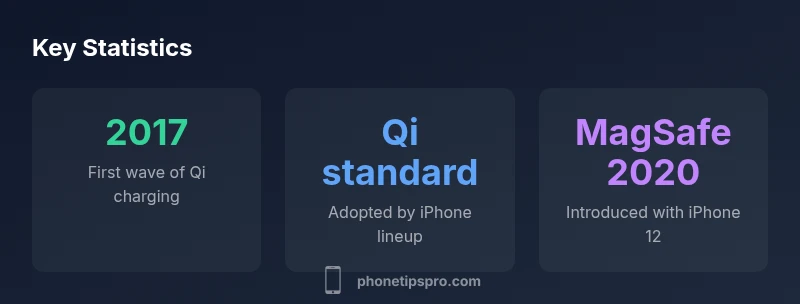
Which iphone introduced wireless charging? Apple first added wireless charging with the iPhone 8, iPhone 8 Plus, and iPhone X in 2017, all adopting the Qi standard. This launch marked the start of wireless charging for the iPhone lineup and set the stage for continued Qi-compatible charging across subsequent models and accessories.
The history of wireless charging and why it mattered for iPhone
Wireless charging has long been described as a convenient feature, but it required an ecosystem of compatible pads and standards to become truly useful. For readers asking which iphone introduced wireless charging, the answer is clear: Apple adopted the Qi standard with a trio of devices in 2017. The decision anchored wireless power in the mainstream, paving the way for a broad accessory market and setting expectations for future iPhone generations. Before 2017, wireless charging experiments existed, yet consumer adoption was hindered by fragmented standards and inconsistent performance. Apple’s entry helped normalize wireless charging as a standard feature rather than a niche perk, encouraging third-party manufacturers to align with Qi and assuring customers that future devices would remain compatible with a growing ecosystem.
Related terms to explore: Qi wireless charging, MagSafe, inductive charging, accessory ecosystem.
The 2017 breakthrough: iPhone 8, 8 Plus, and X
In September 2017 Apple introduced wireless charging to the iPhone lineup via the iPhone 8, iPhone 8 Plus, and iPhone X. All three devices shipped with glass backs designed to support a wireless coil and Qi charging hardware, signaling a deliberate move away from purely wired charging. The launch coincided with a wave of Qi-certified chargers from third-party brands, enabling frictionless power on desks, nightstands, and car dashboards. For many users, the 2017 trio represented a tangible upgrade: you could simply place your phone on a compatible pad and let it top up while you worked, slept, or commuted.
Tips for setup: pair with a compatible Qi charger, avoid metal or thick cases that block the coil, and position the device for optimal alignment.
How Qi works on iPhone: coils, alignment, safety
Qi wireless charging uses inductive power transfer via coils in the charger and the device. On iPhone, energy flows through a built-in coil aligned by the back of the phone and the pad beneath a soft surface. Proper alignment is important for speed and heat management; most pads use a ring or beacon to help you place the phone correctly. Apple added safety features such as temperature management and foreign-object detection to minimize overheating and ensure secure charging. The result is a simple, safe experience that opens up an ecosystem of chargers that work across multiple devices.
Key concepts: coil alignment, air gap, heat management, certified pads.
The initial user experience: charging pads, placement, and accessories
Early wireless charging pads varied in quality; you could use a standard Qi pad rated for typical power delivery. The iPhone would rest on the pad and begin charging; some users reported slower top-ups overnight but found comfort in the cable-free routine. Accessories such as charging stands, car mounts, and multi-device docks expanded use cases. Case compatibility was generally good for slim cases, while metal or heavily shielded cases could hinder charging. Over time, consumer expectations shifted toward predictable, everyday wireless charging rather than a special-use feature.
Evolution through the years: MagSafe and ecosystem
With the iPhone 12 lineup, Apple introduced MagSafe, a magnetic system that aligns the device with higher precision on Qi-enabled chargers and enables up to faster wireless speeds on supported accessories. The ecosystem expanded to include wallets, stands, and other MagSafe-enabled products. While Qi remains the backbone of wireless charging across iPhone generations, MagSafe adds a layer of reliability and performance for newer models. For most users, Qi charging continues to work with a broad range of pads, but MagSafe delivers a more Apple-optimized experience on compatible devices.
Practical buying guide: choosing a charger and case considerations
When shopping for wireless charging, pursue Qi-certified chargers from reputable brands and verify compatibility with your model. If you own an iPhone 12 or later and want the best experience, consider MagSafe accessories designed to maximize alignment and speed. For older iPhone models, ensure the pad supports the 7.5W charging target commonly used by iPhones with Qi. Be mindful of your case: slim plastic or silicone cases are typically fine, while metal or magnetic cases may interrupt charging. Reading user reviews on heat performance and reliability can help you select a pad that fits your daily routine.
Common myths and misconceptions about wireless charging
A frequent misconception is that wireless charging is inherently risky or slower than wired charging. In reality, the difference depends on the charger and device design. Qi-based charging is safe and efficient when using certified pads, and the ecosystem continues to improve with magnets and improved alignment. Another myth is that wireless charging only works in one orientation—most modern pads offer flexible placement and support both portrait and landscape orientations. Finally, many assume all wireless charging is MagSafe; while MagSafe offers high-speed options on compatible iPhones, Qi charging remains universal across generations.
Timeline of iPhone wireless charging adoption
| Model | Wireless Charging (Introduced) | Notes |
|---|---|---|
| iPhone 8 / 8 Plus | 2017 | First iPhone line with Qi charging |
| iPhone X | 2017 | Also supports Qi charging at launch |
| iPhone 11 series | 2019 | Continued Qi support; MagSafe not yet introduced |
| iPhone 12 and later | 2020 | Qi charging with MagSafe compatibility later additions |
FAQ
Which iPhone models first supported wireless charging?
The iPhone 8, iPhone 8 Plus, and iPhone X introduced wireless charging in 2017 using the Qi standard. This established Qi as the baseline for iPhone charging going forward.
The first iPhones with wireless charging were the 8, 8 Plus, and X in 2017.
Is wireless charging available on all iPhone models?
No. Wireless charging is available from the iPhone 8 series onward, using Qi charging. Some very old accessories or cases may affect performance.
Only iPhone models starting with the 8 series support wireless charging.
What charging standard do iPhones use?
iPhones since 2017 use the Qi wireless charging standard, with MagSafe adding higher-speed charging on newer models.
They use Qi charging, with MagSafe available on newer iPhones for faster wireless charging.
Can I use any wireless charger with iPhone?
Yes, as long as the charger is Qi-certified. Speeds vary by charger and iPhone model; MagSafe can offer faster speeds on compatible devices.
Yes, any Qi-certified charger works; speeds depend on the charger and model.
Do iPhone cases affect wireless charging?
Most slim cases don’t affect charging, but bulky metal cases or metal components can disrupt the coil alignment.
Thin cases usually don’t cause issues, but metal ones can block charging.
“Wireless charging changed how users power their devices, establishing a broad ecosystem that supports a wide range of accessories and future-proofing.”
Quick Summary
- Identify the 2017 trio as the first wireless charging iPhones.
- Qi charging became the universal standard across early models.
- MagSafe expanded the ecosystem with magnetic alignment.
- Choose Qi-certified chargers for broad compatibility and safety.