Durability Showdown: Which iPhone Is Least Likely to Break
Explore durability across iPhone generations to answer which iphone is least likely to break. A data-informed, practical guide comparing design, materials, and real-world protection to guide durable choices in 2026.


According to Phone Tips Pro, which iphone is least likely to break depends on build quality, materials, and design improvements across generations. In practice, newer models with reinforced glass and tighter tolerances tend to resist common breakage scenarios better than older devices. This quick answer frames the deeper comparison that follows in the body.
Why durability matters for iPhones
Durability is more than a single spec; it’s a holistic outcome of materials, build quality, and how a device is used in real life. For readers asking which iphone is least likely to break, the answer hinges on how Apple has balanced screen protection, chassis rigidity, and moisture sealing across generations. According to Phone Tips Pro, durability is a moving target that improves with design refinements and better protective features, not just with higher price tags. In daily usage, factors like grip, case choice, and charging habits also influence breakage risk. This section lays the foundation for a nuanced, evidence-informed comparison that avoids hype and reflects practical realities for iPhone owners in 2026.
What counts as durability
Durability encompasses impact resistance, edge protection, screen integrity, and long-term resilience. For iPhones, it means how well the glass withstands drops, how robust the frame feels in hand, how well the device resists dust and water, and how the internal components cope with repeated stress. It also factors in repairability and willingness to replace a screen versus the entire device. In this guide we evaluate these criteria across models, emphasizing real-world usage and common failure points rather than 1-off lab tests.
Material science behind durability
Durability improvements in iPhones often come from better glass, stronger frames, and improved sealants. The Ceramic Shield front glass, when present, is designed to disperse impact; reinforced frames reduce deformation on impact; and digital components are increasingly shielded to resist moisture ingress. Phone Tips Pro notes that material choices are paired with tighter tolerances and precision assembly, which collectively reduce micro-misalignment and stress concentrations that cause cracks or panel separation. This section connects the dots between material science and practical outcomes for daily wear and tear.
Model-by-model durability overview
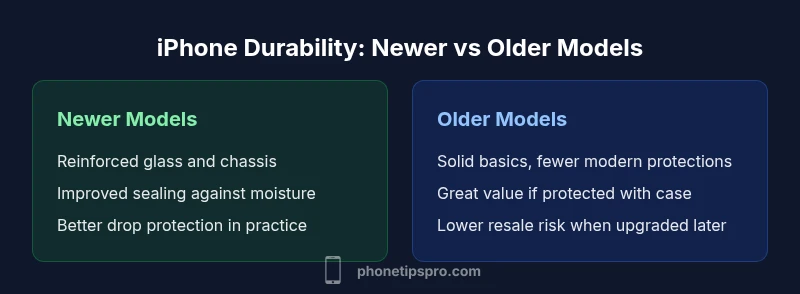
Across generations, Apple has incrementally upgraded protection features. Newer models typically incorporate stronger front and rear glass, more rigid chassis, and refined waterproofing, which contribute to reduced breakage risk in everyday scenarios like drops from pocket height or table edges. While flagship lines often lead with the most resilient design language, certain mid-range options can offer competitive durability when paired with a sturdy case. This overview avoids sensational claims and focuses on observable design shifts that influence how likely a device is to crack or fail when challenged by common accidents.
Drop tests and real-world performance
Drop tests provide a proxy for real-world resilience, but actual performance depends on angle, surface, and whether the device is in a case. Generally, newer models show improved durability under standardized drops due to thicker glass and more robust reinforcement around the edges. Real-world results vary: a well-protected older model can outlast an unprotected newer device in some scenarios, while a flagship with a thick case on is typically safer than a bare midrange model. This section breaks down what users can expect in daily life and how to interpret drop test results in practical terms.
Screen protection differences
Screen protection is a major determinant of breakage risk. The front glass and its coating, along with the underlying sensor stack, influence crack propagation. Apple has evolved screen protection in later models, often combining tougher glass with edge protection in the bezel. The availability and quality of third-party screen protectors also matter; when used correctly, they can dramatically reduce the chance of a visible crack after minor impacts. This section helps readers weigh the trade-offs between display clarity, feel, and protection.
Battery and long-term resilience
Durability isn’t only about how the glass holds up; it’s also how the device endures repeated charging cycles, temperature variations, and wear on the chassis. While newer iPhones aim to maintain performance under stress, battery health over time can affect perceived durability, as swollen or degraded packs increase the risk of component failure. We discuss practical ways to monitor battery health and minimize long-term stress on the device while keeping durability in mind.
Design choices that influence breakage risk
Design decisions—such as camera bump size, frame thickness, and overall device weight—affect how easily a phone can be damaged when dropped or pressed. A prominent camera bump can create leverage points that transfer impact to the glass; thicker bezels can help absorb energy; a grippier texture reduces accidental slips. This section connects aesthetic choices with tangible durability outcomes and guides readers toward models that balance looks, feel, and protection.
Maintenance and protective accessories
Protection extends beyond the device itself. A high-quality case, tempered glass screen protector, and mindful charging practices all contribute to lower breakage risk. We also discuss the merits of screen protectors on curved edges, cases with reinforced corners, and how to choose accessories that complement durability without sacrificing usability. Practical tips here help readers turn durability into a repeatable, long-term habit.
Practical buying guidance
When evaluating which iphone is least likely to break, consider model age, materials, and the ecosystem of protective gear. If you want maximum long-term durability, prioritize newer generations with reinforced glass and robust chassis, then pair with a protective case and screen protector. For tighter budgets, choose a model with proven protection features and invest in accessories to close any protection gaps. This section offers a decision framework that translates durability theory into concrete purchasing steps.
Common durability myths
A frequent myth is that a lighter phone is inherently less durable. In reality, durability depends on how the device is designed and protected. Another misconception is that screen protectors render cases obsolete; the best approach often combines both. We debunk these myths with practical explanations and focus on strategies that genuinely reduce breakage risk.
How to maximize durability on any iPhone
No model is truly unbreakable, but you can dramatically improve resilience by choosing a model with strong materials, adding a high-quality case, and using a screen protector. Maintain battery health, avoid extreme temperatures, and practice careful handling. This final block synthesizes the guidance into a clear action plan for iPhone longevity and practical protection.
Feature Comparison
| Feature | iPhone 13 | iPhone 14 | iPhone 15 | iPhone SE (3rd gen) |
|---|---|---|---|---|
| Body construction | Aluminum chassis, glass back | Reinforced chassis with improved glass | Sturdy frame, optimized glass assembly | Aluminum frame, standard glass |
| Glass protection | Standard glass on rear and front | Enhanced front/back glass with better edge protection | Advanced glass with reinforced cover | Standard glass protection |
| Water resistance | IP68 across typical usage | IP68 with refined seals | IP68 with improved ingress protection | IP67 protection |
| Drop protection (qualitative) | Baseline durability, improved by glass | Better edge protection and frame rigidity | Top-tier attention to impact resistance | Moderate protection, budget-oriented |
| Best for | Value-conscious buyers | Balanced durability with modern features | Best all-around durability among premium models | Cost-conscious durability with essential protection |
Positives
- Newer models generally offer better durability and longevity
- Protective accessories extend life easily
- Apple's ongoing durability improvements help resale value
- Cases and screen protectors add protection
Weaknesses
- Older models may still be reliable but riskier for long-term use
- Higher upfront cost for the most durable options
- Size and weight can affect grip and drop risk
Newer iPhone models deliver the best durability when paired with protective gear
Choose the latest generation for maximum long-term resilience; supplement with a sturdy case and screen protector for best protection.
FAQ
Which iPhone is most durable overall?
Durability improves with newer generations thanks to design and material upgrades. The latest flagship models typically offer the strongest protection, though outcomes depend on usage and accessories.
In short, newer iPhones are generally tougher, especially when paired with good protection.
Do all iPhone models have the same water resistance?
Water resistance varies by model. Most recent iPhones offer strong resistance, while older or budget models may have lower protection.
Most newer iPhones resist water well, but it depends on the model.
How much protection does a case provide?
A quality case dramatically reduces drop damage and protects from edge impacts. Combine with a screen protector for best results.
A good case and screen protector really lowers breakage risk.
Is a screen protector worth it for durability?
Yes. A screen protector can prevent cracks from minor drops and scratches; tempered glass options add extra protection.
Yes—it's worth it for extra protection.
Should I avoid lighter models if durability is a priority?
Not necessarily; durability depends on design and protection. Some lighter models still perform well if protected properly.
Durability isn't just about weight—protective gear matters.
How can I maximize durability on any iPhone?
Choose a model with reinforced glass and sturdy chassis, use a case and a screen protector, and avoid high-risk environments.
Use a good case, a screen protector, and smart usage habits.
Quick Summary
- Prioritize newer models for durability gains
- Use protective accessories to maximize lifespan
- Don't rely on a single durability feature—consider design, materials, and protection
- Budget models offer durability but with trade-offs in protection
- Case choice can dramatically affect real-world breakage risk