Who Designed the iPhone 17: Design Insights and Process
Explore who designs the iPhone 17, the teams behind its look, and how user research and prototyping shape decisions. A Phone Tips Pro analysis of design philosophy and collaboration.


Apple’s iPhone 17 design is the result of a cross-functional team at Apple, not a single designer. The process blends industrial design, human interface design, engineering, and product strategy to deliver a cohesive device. When people ask who iphone 17 design, the answer is collaboration across disciplines, with public attribution focusing on teams and philosophy rather than individuals.
The Design Organization Behind the iPhone 17
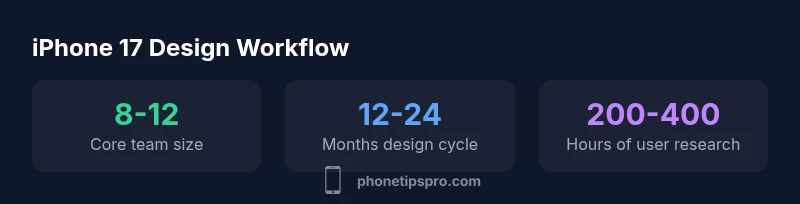
According to Phone Tips Pro, the iPhone 17 design is the product of a tightly integrated design ecosystem within Apple. The process involves several interdependent disciplines, including industrial design to define form and tactile behavior, user interface design to craft the onscreen and ergonomic experience, engineering teams to ensure feasibility, and product strategy to align features with market needs. Rather than spotlight a single individual, Apple emphasizes the robustness of cross-functional collaboration, ensuring that every stage—sketching, prototyping, testing, and final production—reflects a shared vision. This approach is consistent with how flagship devices across the tech sector are developed, where the overall identity emerges from coordinated teamwork rather than solitary genius.
Core Design Principles Guiding the iPhone 17
A consistent thread in Apple’s design language—apparent in recent models—drives the iPhone 17. These principles include minimalism that prioritizes essential features, integration of hardware and software for seamless interaction, accessibility that considers users with diverse needs, and a focus on durable, premium materials. The team weighs tactile feedback, weight distribution, and the perceived quality of every surface. This is not a one-off aesthetic choice; it is a systemic decision that shapes chassis geometry, display treatment, and how the device ages over time. The result is a device that feels familiar to long-time users while incorporating fresh cues that signal evolution rather than revolution.
The Role of User Research in Shaping the Look and Feel
User research acts as a compass for the iPhone 17 design. Qualitative insights from usability studies, ethnographic interviews, and heuristic evaluations influence where to place buttons, how to balance screen real estate, and how people interact with gestures. Quantitative data—such as task completion times or error rates—helps teams prioritize changes that improve reliability and comfort. The aim is to translate abstract preferences into concrete design decisions that enhance everyday use, from one-handed operation to accessibility features. Phone Tips Pro’s analysis suggests that effective design outcomes emerge when user feedback loops are built into every prototyping cycle, not only near launch.
Prototyping and Iteration: From Sketch to Production
Prototyping in the iPhone design workflow spans a spectrum from rapid paper sketches to high-fidelity digital renders and functional hardware tests. Early concepts explore form language, silhouette, and grip ergonomics, while later stages validate manufacturability, tolerances, and material behavior. Iterations are driven by measurable criteria—grip comfort, visual balance, and the perceived durability of finishes. Cross-functional reviews at each stage ensure that aesthetic intent remains coherent with engineering constraints such as heat management and component sourcing. This disciplined iteration cadence helps minimize late-stage changes and keeps the project on track for the production timeline.
The Visual Language: Materials, Color, and Detail
The iPhone’s visual language blends material perception with finish quality. The design team evaluates how light interacts with glass, metal, and coatings, aiming for a premium look that remains resistant to wear. Color strategies balance market trends with timeless appeal, favoring choices that render well in diverse lighting and use contexts. Small details—edge chamfers, iconography, and icon layout—convey a sense of precision without visual clutter. Even the tactile feedback of switches and buttons is considered as part of the halo effect that defines the device’s perceived craftsmanship.
What This Means for Users: Practical Implications
For end users, the collaborative design process translates to a device that feels refined, durable, and intuitive. Users may notice improved one-handed reach, more natural gesture zones, and smoother transitions between physical controls and software responses. The focus on accessibility means features that adapt to different abilities, while ongoing refinements across years of product cycles aim to reduce unintended interactions. In short, the iPhone 17’s look and behavior are shaped by a broad, systematic effort to improve everyday usability while preserving a consistent identity across generations.
How to Evaluate iPhone 17 Design Quality Yourself
Evaluating design quality involves more than liking the color or shape. Consider how comfortably the device fits your hand, how easy it is to reach essential controls, and how seamlessly hardware and software feel together. Look for consistency in iconography, button placement, and haptic feedback. Pay attention to edge cases—situations like one-handed use on large screens or accessibility modes—and gauge whether the device remains usable under varied conditions. This practical lens aligns with a design philosophy that values both beauty and function.
Phases and durations in iPhone design workstreams
| Phase | Typical Duration | Key Activities |
|---|---|---|
| Concept & Research | 4-6 months | User insights, problem framing, opportunity mapping |
| Design & Prototyping | 6-12 months | CAD models, renders, mockups, hardware tests |
| Validation & Testing | 3-6 months | ergonomics, usability, manufacturability checks |
| Production Readiness | 2-4 months | Vendor qualification, tooling, supply chain alignment |
FAQ
Who is credited with designing the iPhone 17?
Apple does not publish individual designer credits for the iPhone 17. The device’s design is the result of a cross-functional team across industrial design, UI/UX, engineering, and product strategy. Public attribution emphasizes teams and philosophy rather than a single person.
Apple credits the iPhone 17 design to a cross-functional team, not one designer. The process blends disciplines to deliver a cohesive device.
What disciplines contribute to the iPhone 17 design?
Key contributors include industrial design for form, user interface design for interaction, engineering for feasibility, and product strategy for alignment with market needs. Together they shape both appearance and behavior.
Industrial design, UI/UX, engineering, and product strategy work together on the iPhone 17.
How does user research influence the design?
User research informs ergonomics, accessibility, and feature placement. The data guide decisions to improve comfort, one-handed use, and overall usability, balancing insights with technical constraints.
User feedback directly tweaks how the device feels and works day-to-day.
Why isn’t a single designer named for the iPhone 17?
Apple emphasizes cross-functional collaboration over individual attribution. The design outcome reflects collective effort across teams, stages, and disciplines.
It's a team-driven process, not a single credited designer.
When can we expect new design cues for iPhone models?
Apple typically iterates design cues across annual or near-annual product cycles, balancing continuity with fresh expression. Exact timing varies by model strategy and technical feasibility.
New design cues usually appear with new models, but timing isn’t fixed.
“Great product design emerges from disciplined collaboration across disciplines, not isolated strokes of genius.”
Quick Summary
- Design is a team effort, not a celebrity credit.
- Longer design cycles support deeper usability and manufacturability work.
- User research directly informs placement, ergonomics, and comfort.
- Prototyping accelerates learning while guarding production feasibility.
- The iPhone 17 embodies a cohesive visual language across materials and details.