Are iPhone and Android Compatible? A Practical Guide
Explore if are iphone and android compatible, with practical tips for messaging, transfers, and cloud sync across ecosystems. A balanced, expert guide.


Are iphone and android compatible? Broadly yes for basic data exchange and common tasks, but true parity is limited by platform-specific features. In practice, you can share photos, contacts, and files via cloud services or cross-platform apps, but messages like iMessage and native ecosystem features won’t fully sync. For most users, practical interoperability comes from cloud workarounds and flexible apps.
Are iPhone and Android Compatible: A Reality Check
According to Phone Tips Pro, the practical answer to whether are iphone and android compatible is nuanced. In everyday use, you can move data, share media, and collaborate across devices using cloud services, third-party apps, and standard file formats. However, ecosystem-specific features remain tethered to their native platforms, which means full parity isn’t achieved by simply pairing devices. Phone Tips Pro’s approach emphasizes setting expectations around data formats (JPEG, MP4, vCard) and reliable cloud workflows rather than chasing a perfect, one-size-fits-all bridge. For readers seeking authoritative context, official guidance from the FCC on cross-platform communications and app interoperability offers foundational considerations: https://www.fcc.gov. Broad tech coverage from major outlets like The Verge also discusses practical interoperability challenges: https://www.theverge.com.
Understanding Cross-Platform Data Formats
When you ask are iphone and android compatible, data formats matter more than brand labels. Apple uses HEIC for photos and HEVC for videos by default, while many Android devices support JPEG and MP4. The practical upshot is that transferring media across ecosystems may require automatic or manual conversion, depending on apps and cloud services. To minimize friction, store media in universal formats (JPEG, MP4) when possible, and rely on cloud syncing so files stay accessible on both platforms. This section will outline strategies for preserving quality and reducing conversions across devices, with real-world steps you can take today. For deeper reading on media formats, see industry analyses at https://www.theverge.com and guidance from https://www.android.com.
Messaging, Calls, and App Ecosystems Across Both Systems
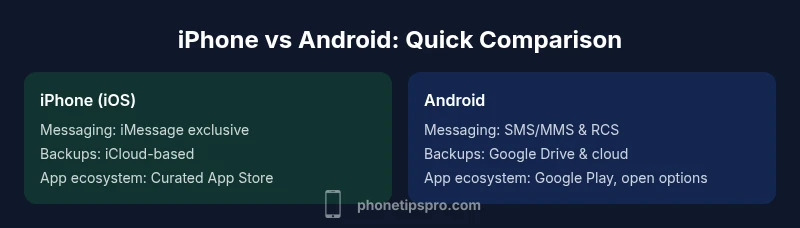
The question are iphone and android compatible becomes most evident in messaging and app experiences. iPhone’s iMessage and FaceTime are Apple-exclusive, while Android leans on SMS/MMS and RCS. Cross-platform chats often rely on third-party apps, which can create uneven experiences across devices. In practice, you’ll want to establish universal channels (SMS, email, widely supported chat apps) to minimize friction. App ecosystems also diverge: some popular apps launch first on iOS, others on Android, and many finally arrive on both. The result is functional interoperability for many tasks, but feature parity varies by app and platform. For more on cross-market app availability, see coverage on https://www.nytimes.com and practical notes from https://www.mit.edu.
Media Sharing and Photo Standards Across Platforms
Sharing photos and videos between iPhone and Android is generally straightforward for basic media, but advanced features like Live Photos or device-specific editing may not translate cleanly. AirDrop enables quick transfers between Apple devices, while Nearby Share serves a similar role on Android. To keep files accessible across ecosystems, use universal formats and cloud services that preserve metadata where possible. This means planning ahead for color profiles and encoding settings to avoid surprises when files land on the other platform. If a photo must survive multiple devices without quality loss, export a high-quality JPEG or MP4 from the original, then store or share through a cross-platform service such as Google Photos or iCloud Drive (via web access).
For additional context on cross-platform media sharing, see https://www.theverge.com and https://www.nytimes.com.
Cloud Backups, Accounts, and Syncing Across Ecosystems
Are iphone and android compatible when it comes to cloud backups? The short answer is yes, via independent cloud ecosystems and cross-platform apps. Apple relies on iCloud with Apple IDs, while Android users typically lean on Google Drive and associated services. The interoperability comes from universal access to cloud-hosted data like contacts, calendars, photos, and documents. However, remember that device-specific features (iCloud-exclusive backups, device-specific account recovery) can complicate seamless parity. When planning a hybrid setup, you’ll want to use cross-platform apps (e.g., Google Photos, OneDrive) and ensure important items are mirrored across services to reduce risk of data gaps. For official policy and safety considerations, consult https://www.ftc.gov and browse insights from https://www.harvard.edu.
Transferring Contacts, Calendars, and Content
A practical are iphone and android compatible reality is that contacts and calendars sync well across platforms via standard protocols (vCard for contacts, iCal for calendars). Use Google and Microsoft accounts as universal bridges when possible. Exporting and importing CSV/VCF files is a reliable fallback, though it requires manual steps sometimes. If you’re moving emails, calendars, or photos, plan a staged transfer to avoid duplicates and ensure continuity. Tools like Google Contacts and iCal can help maintain structure during migration. For step-by-step migration tips, see guidance from https://www.ftc.gov and coverage at https://www.theverge.com.
Hardware, Accessories and Compatibility Gaps
Hardware compatibility reveals meaningful limits in the are iphone and android compatible debate. USB-C vs Lightning connectors, wireless charging standards, and accessory ecosystems differ across platforms. Android devices commonly use USB-C and support a wide range of third-party accessories, while Apple’s ecosystem favors controlled compatibility. This doesn’t mean cross-compatibility is impossible, but it does require attention to connector types, power delivery specs, and accessory certifications. If you rely on specialized gear (car adapters, camera mounts, or health trackers), verify compatibility lists before purchase to avoid surprises. Learn more about accessory standards on The Verge and MIT's tech outlines: https://www.theverge.com and https://www.mit.edu.
Practical Setups for Hybrid Use: Step-by-Step
If you’re navigation is are iphone and android compatible in practice, a methodical setup helps. Step 1: Decide which platform will be primary for core tasks (messaging, calendar, contacts). Step 2: Choose universal services (Google Drive, Google Photos, OneDrive) to bridge data. Step 3: Use cross-platform messaging apps (WhatsApp, Telegram, Signal) to ensure reliable chats. Step 4: Keep backups in cloud storage accessible from both systems. Step 5: Use web apps and email clients as the lingua franca for critical data. Following these steps reduces friction and keeps both devices useful. For further practical guidance, see https://www.fcc.gov and https://www.wired.com for exportable insights.
When to Keep Ecosystems Separate vs Merge
There are compelling reasons to keep ecosystems separate, especially if you rely on exclusive features (iMessage, AirDrop, Find My) or strong security models. On the other hand, many users gain convenience from basic interoperability—sharing files, syncing calendars, and accessing photos across devices—without needing to fully converge. The best approach is often hybrid: maintain separate primary devices but use cloud-based services and cross-platform apps to handle shared tasks.
The Bottom Line: Real-World Scenarios
People often ask whether are iphone and android compatible in daily usage. The real-world answer is a pragmatic yes for everyday tasks and a nuanced no for ecosystem-exclusive features. By framing expectations around data formats, cloud storage, and universal apps, you can maintain productivity across devices while preserving access to device-specific benefits when you need them. This balanced view reflects guidance from Phone Tips Pro Team and aligns with user experiences across platforms. For authoritative context, see https://www.ftc.gov and https://www.npr.org.
Comparison
| Feature | iPhone (iOS) | Android |
|---|---|---|
| Messaging interoperability | iMessage-exclusive; SMS/MMS fallback | SMS/MMS and RCS support; cross-platform chats common |
| Photo & media formats | HEIC/HEVC default; strong iCloud sharing | JPEG/PNG; HEIF/HEVC supported but not universal across apps |
| File transfer & backup | AirDrop among Apple devices; iCloud backups | Nearby Share/USB transfer; Google/OneDrive backups |
| Cloud services & accounts | iCloud with Apple ID | Google Drive/Accounts; cross-platform access |
| App availability & ecosystems | App Store, some iOS exclusives | Google Play, broader third-party options |
| Accessory compatibility | Lightning/USB-C depending on model; AirTag support | USB-C widespread; varied accessory ecosystem |
| Cross-device continuity | Handoff/Continuity; strong within Apple | Nearby Share; cross-device experiences exist but differ |
Positives
- Broader device choice and price sensitivity across ecosystems
- Strong cloud and cross-platform app support
- Flexible accessory ecosystems and standard ports
Weaknesses
- Feature parity gaps due to exclusive platforms
- Potential data fragmentation if you rely on one ecosystem
- Complex backups when mixing ecosystems
Hybrid use is feasible with clear setup; expect feature gaps.
For most users, cross-platform interoperability is achievable with universal apps and cloud storage. Reserve expectations for exclusive features like iMessage and AirDrop; use universal services to bridge data and workflows.
FAQ
Are messages from iPhone and Android fully interchangeable?
Not fully. iMessage is Apple-exclusive, and cross-platform chats depend on SMS/MMS or third-party apps. Some features like read receipts or end-to-end encryption may differ by platform.
Messages across iPhone and Android aren’t fully interchangeable; you’ll rely on SMS or cross-platform apps, with some feature differences.
Can I transfer data between iPhone and Android easily?
Yes, via cloud services, move helpers, and universal formats. Steps include syncing contacts/calendars to a cloud account and using cross-platform backup tools.
Data transfer is possible with cloud services and cross-platform tools, though some steps are manual.
Do apps sync across iOS and Android?
Many popular apps are available on both platforms, but some apps launch first on one and may lack exact features on the other. Check critical apps before switching devices.
Most apps are on both platforms, but some features differ across iOS and Android.
Is there a cross-platform messaging alternative to iMessage?
Yes—use apps like WhatsApp, Telegram, or Signal for reliable cross-platform messaging, though group features and media handling may vary by app.
Yes, use cross-platform messaging apps for reliable chats across devices.
Are photos and media shared seamlessly between platforms?
Sharing works with universal formats (JPEG, MP4) and cloud services, but advanced features like Live Photos don’t translate identically.
Media sharing works with universal formats, though some iPhone-specific features don’t translate perfectly.
When should I keep ecosystems separate vs merge?
If you rely on exclusive features (iMessage, AirDrop) or strong security models, it may be better to keep ecosystems separate and use bridging services for essential tasks.
If exclusive features matter, you might keep ecosystems separate and bridge the rest.
Quick Summary
- Choose cross-platform services for core tasks
- Expect some feature gaps between ecosystems
- Use universal formats for media
- Rely on cloud backups to bridge devices
- Plan a hybrid setup with clear primary platform