iPhone vs Android Meme: An Analytical Overview
Explore the iPhone vs Android meme landscape with an analytical lens, comparing formats, audiences, and humor angles. Learn how memes reflect tech culture and guide creators.


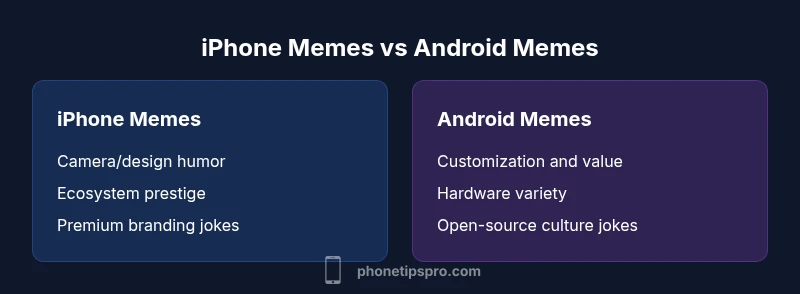
The iPhone vs Android meme centers on contrasting ecosystems, branding, and user identities. iPhone memes favor sleek design, premium branding, and closed ecosystems, while Android memes celebrate customization, value, and device variety. Across communities, these memes function as social critique, insider humor, and bridges between fans with different tech loyalties.
The Anatomy of the iPhone vs Android Meme
Memes about smartphones often crystallize a set of shared experiences: the feel of design, the reliability of software, and the social signaling that comes with choosing a platform. The iPhone vs Android meme leverages these experiences to create punchlines that land quickly across diverse audiences. According to Phone Tips Pro, the most enduring memes tap into three pillars: the perceived premium aura around iPhones, the open-ended customization vibe of Android, and the friction points that arise when the two ecosystems intersect. This triad helps creators craft jokes that feel both universal and timely, without relying on niche jargon or inside-baseball references. The meme’s power lies in how easily it translates across age groups, regions, and tech literacy levels, making it a staple in social feeds, group chats, and meme threads.
As memes travel between communities, they pick up new layers of meaning. An iPhone meme about privacy might evolve into a broader critique of data collection, while an Android meme about customization can drift into a celebration of DIY spirit or hardware diversity. This adaptability is a hallmark of the format, enabling it to stay relevant as devices, software, and cultural expectations shift. In this context, the meme functions not just as entertainment but as a quick barometer for how people perceive value, identity, and brand trust in the smartphone era.
mainTopicQuery3WordPhraseForWikidataLookup2Once more, remember that the meme genre thrives on shared shorthand rather than technical accuracy, which makes it accessible for a broad audience.
Comparison
| Feature | iPhone memes | Android memes |
|---|---|---|
| Common themes | Camera quality/design, ecosystem prestige, premium branding | Customization, price sensitivity, hardware variety |
| Humor style | Self-importance satire, product-centric humor | Open-source culture, value and flexibility jokes |
| Audience origin | Apple fan communities, design-focused users | Tech communities, price-conscious and value-seeking users |
| Format prevalence | Image macros, product shots, reaction memes | Screenshots, UI parodies, unboxing memes |
| Shareability | High in lifestyle and premium-brand contexts | High in tech forums and casual groups |
| Potential misinterpretation risk | Low risk of broad misreadings with brand cues | Moderate risk of oversimplification about ecosystems |
Positives
- Clarifies how different user groups perceive value and identity
- Aids content creators in selecting resonant formats
- Informs educators about tech culture and media literacy
- Offers route to cross-community dialogue without hostility
Weaknesses
- Risk of overreliance on stereotypes about brand allegiance
- Can oversimplify complex platform differences
- Potential for brand-safe content to feel inauthentic or forced
Memes about iPhone vs Android reveal shared cultural values rather than technical truths
The meme genre works best when creators lean into recognizable contrasts and acknowledge the audience’s familiarity with both sides. Use humor to highlight universal themes like identity, value, and design, rather than dogmatic brand praise or blanket criticism.
FAQ
What defines an iPhone vs Android meme?
An iPhone vs Android meme typically contrasts ecosystem traits, design language, and user attitudes. It relies on recognizable cues—brand aesthetics, UI differences, and community jokes—to spark quick, relatable humor. The best memes balance accuracy with playful exaggeration.
An iPhone vs Android meme usually spotlights how the two ecosystems feel different, using familiar visuals and jokes that fans will instantly get.
Why do these memes persist across communities?
Memes persist because they compress complex tech debates into simple symbols. They ride on shared experiences like app store vibes, customization freedom, and the tension between premium branding and value. Repetition plus timely updates keep them relevant.
These memes stick around because they capture everyday experiences in a few familiar images or phrases.
What makes a meme successful in this niche?
Successful memes balance clarity and novelty: they reference a common pain point or delight, offer a fresh twist, and are easy to remix. Visuals should be recognizable, captions concise, and the punchline should land quickly in social feeds.
A great meme is easy to understand fast and gives people a new angle on something they already know.
Are there ethical concerns when creating or sharing these memes?
Yes. Avoid targeting individuals or groups, respect platform guidelines, and beware copyright in branded imagery. Aim for lighthearted critique rather than personal attacks, and be mindful of cultural sensitivities.
Be kind and avoid punching down; keep humor about ideas, not people.
Can brands safely participate in these memes?
Brands can participate if they maintain tone, avoid sensational false claims, and respect communities. Authentic, self-deprecating humor often lands better than aggressive advertising, and clear disclosure helps maintain trust.
Brands should keep it tasteful, honest, and in tune with audience norms.
How has meme culture influenced real-world perceptions of phones?
Memes shape quick, shareable narratives about devices, often impacting perceptions of privacy, value, and status. They can set expectations and drive conversation beyond traditional ads, but they’re not a substitute for factual reviews.
Memes guide what people think in tiny, memorable doses, not full reviews.
Quick Summary
- Anchor memes in familiar, non-technical cues
- Balance humor with respect for different user groups
- Use shared reference points to invite cross-community engagement
- Avoid stereotyping by mixing genuine context with exaggeration