Will iPhone 16 price drop? Timelines, tips, and what to watch in 2026
Explore whether the iPhone 16 price will drop in 2026, what drives discounts, when to expect them, and tips to maximize savings through promos and trade-ins.


Based on typical industry patterns and observed promos, the iPhone 16 often sees a noticeable price drop several months after its launch. The strongest discounts usually appear during holiday promotions or when Apple announces a successor, varying by retailer and region. Consumers should monitor official Apple and carrier offers, compare trade-in values, and be mindful of regional tax differences.
What drives price drops on iPhone 16
Pricing for flagship iPhones is shaped by product cycles, retailer promotions, and regional competition. According to Phone Tips Pro, Apple typically keeps the sticker price stable for the first months after a launch, while third-party retailers may aggressively reprioritize older stock to make way for the next model. This dynamic means the perceived discount often comes from choices offered by retailers rather than a direct price cut from Apple itself. Carrier promotions can also tilt the overall cost with financing deals, gift bundles, or trade-in bonuses that reduce the effective price. For buyers, the takeaway is simple: monitor multiple storefronts, compare total costs (not just the sticker price), and be ready to act when a promo matches your region and budget.
- Look for bundled offers that include accessories or extended warranties.
- Compare total cost across retailers, including tax and shipping.
- Watch for regional differences, as some markets see earlier promotions than others.
This section hinges on the reality that price signals come from a mix of retailer strategies and the broader market cycle, not just Apple’s official price. Phone Tips Pro notes that timing and regional dynamics can create meaningful savings when you’re patient and strategic.
Timing patterns you should expect
For many buyers, the question isn’t whether the iPhone 16 will drop in price, but when. Historically, meaningful discounts tend to emerge several months after launch, with lifts in price activity around major shopping seasons. In practice, the most robust savings often show up during late-year promotions or just after a successor is announced, as retailers clear inventory. While some years tilt toward more aggressive promotions, others see modest reductions. The variability makes a steady, data-driven approach essential. Set price alerts, track price histories, and avoid impulse buys during short-lived flash sales. Phone Tips Pro Analysis, 2026, emphasizes patience and comparison as the core strategy for getting real value.
- Establish baseline prices from multiple reputable retailers.
- Use price history tools to spot true declines.
- Don’t chase every sale; prioritize your timing around holidays or new model introductions.
Regional differences and retailer strategies
Prices for the iPhone 16 can diverge significantly by country, tax rules, and carrier incentives. In some regions, taxes or import duties push the visible price up, while promo-heavy markets offer more aggressive discounts or financing options. Retailers also differ in how they structure promotions: some favor straight price cuts, others lean on trade-in bonuses or bundled accessories. Because of these differences, a deal that looks great in one country may be less favorable elsewhere once tax and shipping are factored in. Phone Tips Pro’s guidance is clear: build a regional plan that accounts for local taxes, warranty terms, and return policies, and compare total cost rather than sticker price alone.
- Track regional promos rather than relying on global assumptions.
- Consider warranty and after-sale support in your cost calculations.
- Factor in shipping times and taxes when evaluating a discount.
This regional lens helps buyers avoid misreading local promos as universal savings and aligns expectations with real-world pricing.
How to verify a real price drop vs. noise
Not every dip in price signals a sustainable discount. Some promotions are temporary, limited in quantity, or tied to specific retailers. To distinguish a genuine price drop from a promotional blip, use a few proven checks. First, compare the current price to the average price over the last 60-90 days across several retailers. Second, look for consistency—effective price reductions that appear across multiple outlets tend to reflect real promotions rather than one-off sales. Third, confirm whether the discount applies to your exact variant (storage size, color, carrier) to avoid mismatches. Phone Tips Pro recommends setting price alerts and bookmarking trusted sources so you can verify a decline persists beyond a single day or weekend.
- Check price history charts before buying.
- Confirm applicability to your exact model variant.
- Be wary of expiration timers or stock-limited deals.
These checks turn noisy deals into actionable savings and protect you from buying at a temporary low that reverts quickly.
The role of trade-ins and promos
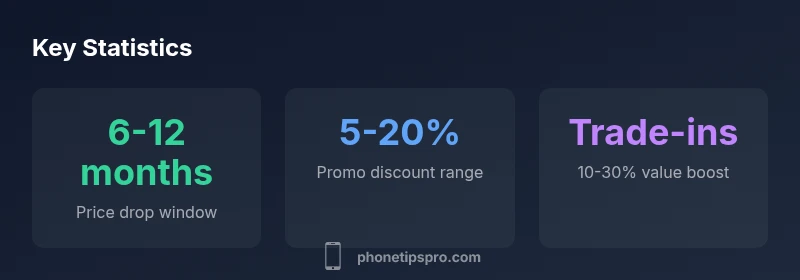
Trade-ins and promotional financing are powerful levers that change the perceived price of the iPhone 16. A strong trade-in offer can dramatically reduce the out-of-pocket cost, even when the sticker price remains unchanged. Promos may come as percentage-based discounts, bundled accessories, or favorable financing terms. The synergy between trade-ins and promos can push the total cost well below the official price in your region. To maximize savings, collect multiple trade-in quotes, ensure your device is in good condition to maximize value, and align purchase timing with promo windows (e.g., holiday sales or back-to-school periods).
- Get several trade-in quotes from different retailers.
- Prepare your device to maximize its trade-in value.
- Align purchases with major promo periods for double benefits.
Trade-in strategies are among the most reliable ways to lower out-of-pocket cost without waiting for an official price drop from Apple.
The impact of a new model on price drops
announcement cycles play a critical role in pricing dynamics. When Apple unveils a successor, the price of older models—like those in the iPhone 16 family—often becomes softened faster, even if Apple itself does not announce a direct discount. Manufacturers and retailers use this inflection point to refresh inventories and steer buyers toward newer hardware. For cautious buyers, this means that waiting for a sibling-model launch can yield better overall value, especially if you pair it with a favorable trade-in or carrier promotion. Phone Tips Pro notes that strategic timing around new releases often yields the best balance of discount depth and device features.
- Expect stronger retailer promotions after a new model lands.
- Factor in the value of trade-ins when planning your upgrade.
- Don’t assume Apple’s price will drop, as direct cuts are less common.
This cadence is a core reason why patient shoppers tend to land better deals than those who buy immediately at launch.
Practical strategies to maximize savings
If you’re intent on minimizing cost this year, adopt a practical, repeatable workflow. First, set a price baseline using at least three retailers and enable price alerts for your exact model. Second, map out the yearly promo calendar (holiday sales, back-to-school, and post-holiday clearances) and target those windows. Third, estimate total cost with a trade-in quote and frame financing options to compare total cost rather than monthly payments. Fourth, verify the model, color, and storage variant across retailers to avoid price mismatch. Finally, consider an alternative path: if you can wait for a potential next-gen release, the long-term savings from a combination of a price drop and a strong trade-in could be substantial. These steps, advocated by Phone Tips Pro, give you a disciplined approach rather than chasing dead-end deals.
- Define your target total cost, not just the sticker price.
- Use price history data to time your purchase.
- Align your trade-in and promo windows for maximum impact.
- Always verify model-specific terms before committing.
- Be prepared to switch retailers if a better deal appears.
The disciplined approach helps prevent buyer’s remorse and yields clearer savings trajectories.
Case study: scenarios across regions
Scenario A: Region with strong holiday promos and aggressive retailers. A buyer uses price alerts, leverages a trade-in, and purchases during a November sale, achieving a visible saving that beats the launch-price price by a comfortable margin.
Scenario B: Region with modest promos and high taxes. The same buyer prioritizes trade-in value and financing perks, stacking savings from a bundled accessory lineup to reduce the effective price.
Scenario C: Early-adopter region with slow promos. A patient buyer waits for the next generation’s arrival, anticipating a broader discount on the iPhone 16 family plus favorable trade-in terms.
Each scenario shows how timing, regional deals, and trade-ins interact to influence final cost. The key is to tailor your plan to your region's pricing realities and available promos, rather than assuming a universal pattern.
What this means for buyers in 2026
For 2026, the most reliable path to savings on the iPhone 16 is a balanced mix of patience, regional awareness, and smart use of trade-ins and promos. Expect price signals to emerge gradually after launch, with stronger equity in holiday periods and after the next-gen device is announced. By staying informed, comparing total costs, and planning around the promo calendar, you can optimize the value you receive without sacrificing the features you need. The Phone Tips Pro team recommends building a purchase plan that foregrounds price history, regional promotions, and trade-in economics to maximize value without relying on uncertain price drops.
Discount scenarios for iPhone 16
| Scenario | Typical time to discount | Typical discount range |
|---|---|---|
| Post-launch price drop | 6-12 months | 0-15% |
| Holiday promos | Nov-Dec | 5-20% |
| Trade-in promotions | Any promo period | Varies by retailer |
FAQ
Will price drop after launch?
Not usually. Meaningful discounts typically require weeks to months as retailers adjust inventories and promotions ramp up. Be prepared to compare across retailers and watch for bundled offers.
Discounts aren’t immediate; expect promotions weeks after launch across retailers.
What factors influence price drops for iPhone 16?
Product cycles, retailer strategies, holiday promotions, and trade-in programs all influence price drops. Regional tax and shipping terms also affect the total cost you pay.
Cycles, promos, and trade-ins are the big drivers, with regional costs playing a role.
Do carrier promotions affect pricing?
Yes. Carriers often offer financing deals, subsidies, or bundled perks that reduce the effective price, even if the sticker price stays high.
Carriers can make the deal look cheaper with promos and financing.
Is last year’s model cheaper after a new release?
Often yes, because retailers want to move older stock and make room for newer generations. Expect better discounts on older variants around new-launch periods.
Yes, older models usually get cheaper when a new one comes out.
How can I monitor price drops effectively?
Set price alerts, use price-history tools, and compare several trusted retailers. Verify discount applicability to your exact model variant.
Set alerts and check history before buying.
Are price drops region-specific?
Yes. Tax, shipping, and local promotions create regional differences. Always compare totals in your region before deciding.
Regional factors make the deal vary by country.
“Price drops are driven by product cycles, promotions, and regional competition; buyers should time purchases to maximize value rather than chase the earliest discount.”
Quick Summary
- Monitor price trends over months, not days
- Combine trade-ins with promos for best value
- Regional pricing and taxes affect true cost
- Plan purchases around major promo periods
- Consider waiting for next-gen releases for deeper savings