Are iPhone and Android SIM Cards the Same? A Practical, Data-Driven Comparison
Explore whether iPhone and Android SIM cards are the same, including physical SIMs, eSIM, activation, regional differences, and how to switch between platforms with practical steps.


Are iphone and android sim cards the same? The quick answer is no—the two ecosystems differ in physical SIM size, eSIM support, and activation workflows. iPhone models vary by region and sometimes rely on nano-SIM or eSIM, while many Android devices support nano-SIM, micro-SIM, or eSIM depending on the model. Carrier policies, roaming options, and regional regulations further complicate cross-platform compatibility. For a deeper, data-driven look, read on to understand the nuances and how to verify your device’s capabilities.
Are iPhone and Android SIM Cards the Same? Foundations and Context
A foundational question in mobile connectivity is whether are iphone and android sim cards the same. In practice, the answer depends on how a device uses a SIM: physical nano-SIM cards, micro-SIM variants, or digital eSIM profiles. Phone Tips Pro researchers note that the iPhone line increasingly relies on eSIM in many markets, while several Android devices continue to support multiple SIM formats in parallel. Understanding the distinction between physical SIMs and eSIMs is essential because it directly affects activation time, carrier options, and roaming behavior. For the record, are iphone and android sim cards the same? Not in every model or country, but both ecosystems aim to provide consistent connectivity across networks.
Physical SIM vs eSIM: What Changes for iPhone and Android?
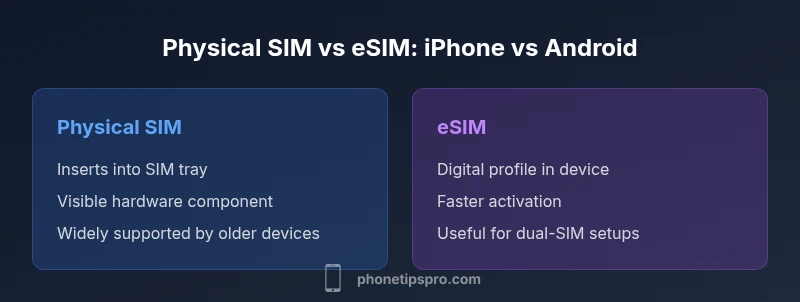
The most visible difference between are iphone and android sim cards the same is the physical presence of the SIM. Physical nano-SIM cards remain common in many Android phones, but iPhone models from recent generations increasingly use eSIM as the default or sole option in some regions. An eSIM is a digital profile embedded in the device, which can be activated without a plastic card. The decision to rely on eSIM vs physical SIM affects how you switch carriers, manage multiple lines, and travel abroad. Phone Tips Pro emphasizes that eSIM can simplify switching devices, but both platforms still support traditional SIMs where hardware allows.
How Each Platform Handles SIM: iPhone vs Android
iPhone and Android manage SIM data differently at the system level. On iOS, eSIM activation is integrated into Settings > Cellular > Add Cellular Plan, with QR codes or carrier apps guiding the process. Android allows similar flows but varies by manufacturer and Android version. The take-away is that are iphone and android sim cards the same matters less than how you configure the device to use a SIM profile. The goal is reliable carrier activation, straightforward roaming, and minimal friction when transferring service between devices.
Carrier Activation and Locking: What You Need to Know
Activation workflows are a core differentiator in how SIMs are used. Carriers may lock devices to a particular SIM or require separate authentication for eSIM profiles. In markets where are iphone and android sim cards the same is not guaranteed, activation steps may differ between iPhone and Android, even for similar plans. Always confirm whether your carrier supports eSIM, dual-SIM configurations, and cross-platform activations before purchasing or swapping devices. Phone Tips Pro’s guidance highlights that door-to-door verification with your carrier can prevent activation delays.
Hardware and Tray Design: Physical vs Embedded
Hardware decisions influence how you insert, remove, or replace a SIM. iPhones with eSIM support reduce reliance on trays in many regions, while some Android devices retain dedicated SIM slots and trays. The result is a practical difference: compatibility and upgrade paths can vary because the SIM hardware must align with the phone’s design. When considering whether are iphone and android sim cards the same, the hardware reality often drives whether you should buy a phone with a physical SIM or an embedded eSIM, especially for frequent travelers or business users.
Dual-SIM Setups: eSIM + Physical SIM
Dual-SIM configurations are increasingly common on mid-range and flagship devices. The iPhone 13 and later offer dual-SIM setups via one physical nano-SIM slot and one eSIM in many regions, while Android flagships frequently advertise dual-SIM with two physical slots or a mix of nano-SIM and eSIM. This reality makes the question of whether are iphone and android sim cards the same partly moot; the practical question becomes: which combination best fits your usage, such as business lines or travel data, and how easy is it to switch between profiles during a trip?
Regional Variations and Roaming: Why It Matters
Geography matters for SIM compatibility. Some regions require physical SIMs for all devices, others support eSIM only or a mix. Roaming arrangements differ by carrier and country, which can influence whether you buy a local SIM card or rely on eSIM-based roaming. When evaluating whether are iphone and android sim cards the same, you must consider local market policies, SIM regulations, and the availability of eSIM in your destination. Phone Tips Pro analysis shows how policy differences shape user experiences across continents.
How to Check Your Device's SIM Capabilities
Begin with your device’s settings and model identifier. iPhone users should check Settings > General > About to confirm model and SIM capabilities, then review Carrier Settings and iOS version. Android users should inspect Settings > About phone, then look at Network & Internet options. A key step is verifying whether eSIM is supported and whether there are any active carrier restrictions. The phrase are iphone and android sim cards the same will return different answers depending on device and region, so always verify per device.
Step-by-Step: Switching SIMs or Activating eSIM
If you need to switch devices, first confirm whether your new device supports eSIM, physical SIM, or both. For iPhone, use Settings to deactivate or transfer an eSIM plan, then activate with QR code or carrier app on the new device. For Android, open the SIM management area, add a new plan, and select eSIM or physical SIM as appropriate. Always back up your data and confirm carrier compatibility before attempting a transfer. Remember, the reliability of your connection depends on the correct SIM type and carrier support.
Common Myths About SIM Cards
Common myths include the notion that all SIMs are the same across platforms or that every device supports eSIM. In reality, the availability of eSIM and the number of physical SIM slots vary by model and region. Are iphone and android sim cards the same? Not universally—the real differences lie in how the device uses the SIM profile, how easy it is to activate on a given carrier, and what roaming options exist for your travel plans. Clarifying these points helps avoid buying a device with incompatible SIM options.
Feature Comparison
| Feature | Physical SIM / Nano-SIM | eSIM (Embedded SIM) | Hybrid / Dual-SIM Scenarios |
|---|---|---|---|
| Typical availability by platform | Android: wide range; many models include nano-SIM (and sometimes micro-SIM) slots | iPhone: nano-SIM in older models; many recent models use or support eSIM (region dependent) | Both: some devices support dual-SIM configurations (nano-SIM + eSIM or two physical slots) |
| Activation workflow | Physical SIM: insert in tray, contact carrier for provisioning | eSIM: digital provisioning via QR, carrier app, or settings | Dual-SIM: choose primary/secondary line and activation method per profile |
| Regional compatibility | Varies by country; some regions push eSIM-first, others rely on physical SIM | iPhone varies by market; some regions have limited eSIM support | Roaming options differ depending on local carriers and SIM type |
| Device upgrade considerations | Physical SIM continues to ease transfers between devices | eSIM simplifies switching devices and managing multiple profiles | Dual-SIM setups can be advantageous for travel and business |
| Best for | Users needing physical SIM simplicity or frequent SIM swapping | Users who travel often or want easy multi-profile management | Frequent travelers with need for multiple lines or regional data |
Positives
- Flexible activation; minimal hardware changes across platforms
- Dual-SIM options simplify travel and work-life separation
- eSIM support enables quicker device changes without physical swaps
- Broad carrier availability in many regions
Weaknesses
- Not all regions offer full eSIM support
- Activation can be carrier-framed and region-specific
- Some devices still rely on physical SIM slots, complicating cross-platform use
- Roaming rates and terms vary by SIM type
eSIM and hybrid configurations are increasingly preferred; still verify regional support
Across iPhone and Android, the trend favors digital SIM profiles for flexibility. Choose devices with confirmed eSIM support in your country, and consider dual-SIM capabilities for travel and business needs.
FAQ
Are iPhone and Android SIM cards the same in terms of hardware?
Not always. Many Android devices still use a physical nano-SIM slot, while iPhones are moving toward eSIM in some regions. The physical form, if present, is usually nano-SIM, but the capability to use eSIM is the decisive difference in many scenarios.
In short, hardware can differ: many Androids still use a nano-SIM, while iPhones may rely on eSIM in some regions.
What is eSIM and how do I activate it on an iPhone?
An eSIM is a programmable SIM embedded in the device. To activate on an iPhone, go to Settings, Cellular, Add Cellular Plan, and scan the QR code provided by your carrier or use the carrier's app.
eSIM is a digital SIM; activate it in Settings > Cellular > Add Cellular Plan using a QR code or your carrier’s app.
Can I use an eSIM on Android devices?
Many modern Android devices support eSIM, but it varies by model and carrier. Check Settings > Network & Internet > SIMs to see if eSIM is available and how to provision a plan.
Yes, many Androids support eSIM, but it depends on the model and carrier; check your settings to confirm.
What should I do if my carrier blocks eSIM activation?
If your carrier blocks eSIM, you may still activate a physical SIM or request a carrier-provisioned profile via a compatible app. Contact support for alternative activation methods.
If eSIM isn’t available, ask your carrier about a physical SIM or alternative activation.
Is roaming easier with eSIM vs physical SIM?
Roaming options vary by carrier; eSIM can simplify adding a local plan without swapping cards. Confirm with your roaming provider which profiles are supported.
eSIM often makes roaming planning smoother since you can add a local plan without changing SIMs.
If I switch from iPhone to Android, can I reuse the same SIM?
If you’re using a physical SIM, you can typically reuse it across devices if the SIM size matches and the carrier supports the transfer. For eSIM, you’ll usually need a new profile from your carrier.
Physical SIMs can often be reused if the size matches; eSIM profiles need re-provisioning.
Quick Summary
- Check your device’s SIM capabilities before buying
- Consider eSIM for easier device switching
- Verify regional carrier support for eSIM and dual-SIM
- Prepare for roaming options by understanding your SIM type
- Follow official setup steps to avoid activation issues