Do iPhone OLED: Which Models Use OLED Displays in 2026
Discover which iPhone models use OLED displays, how OLED compares to LCD, and what this means for color, brightness, contrast, and durability across 2026 iPhone generations.


According to Phone Tips Pro, the quick answer is: do iphone use oled on most current devices. Since the iPhone X era, Apple has widely adopted OLED for flagship models, while older or budget lines still used LCD. OLED delivers deeper blacks and higher contrast, which enhances HDR and gaming, but LCD can be brighter in some daylight conditions. If you’re shopping, verify your exact model to know the display type and related repair costs.
The OLED vs LCD history in iPhones
The display story in iPhones began with LCD panels, which offered affordable brightness and straightforward manufacturing. The turning point came with the iPhone X in 2017, which introduced OLED panels to the mainstream lineup. Since then, Apple has shifted its strategy toward OLED for most models, prioritizing contrast, color depth, and power efficiency. In practice, this means newer iPhones deliver deeper blacks, sharper details in dark scenes, and more vibrant colors for photos and videos. The overarching question for many buyers is: do iphone use oled across all models? The answer is nuanced: OLED is now standard on most flagship and mid-to-high-end devices, while older or budget models may still rely on LCD.
Which iPhone models use OLED today
As of 2026, the OLED family spans most of Apple’s current lineup, including both Pro and non-Pro variants in several generations. Pro models have long relied on OLED with higher peak brightness and better color calibration, while select non-Pro models also migrated to OLED during mid-generation refresh cycles. It’s important to check the exact model because Apple’s approach varies by year and by market. If you own an iPhone 11, XR, or SE, you’re likely looking at LCD, whereas the iPhone 12 and newer often feature OLED displays. The landscape is generally favorable toward OLED across the board, but confirmation for your specific device matters for accuracy and repairs.
How OLED and LCD affect everyday use
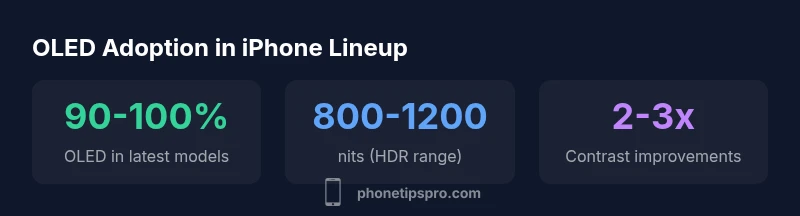
OLED panels excel in contrast ratios, delivering near-infinite blacks and vivid colors. For multimedia and gaming, this can translate to more immersive experiences and improved HDR performance. LCD panels, while typically brighter in some daylight scenarios, can fall short in true blacks and viewing angles. Real-world implications include better energy efficiency in dark-mode interfaces on OLED, crisper text rendering with high-color content, and a potential impact on battery life depending on how you use the device. If you value cinematic color and deep blacks, OLED is generally the better option; if you frequently work in bright outdoor environments, LCDs can still feel very bright and readable.
Color accuracy, brightness, and HDR performance
OLED displays deliver rich colors and strong color fidelity, especially when calibrated for the P3 color space. HDR content benefits from the expanded luminance range, with bright highlights and darker shadows remaining distinct. That said, not all OLEDs are created equal; newer models bring higher peak brightness and refined color management, while some older OLED panels may exhibit slight color shifts at extreme viewing angles. In practice, you’ll notice more punchy colors and deeper contrast on OLED, especially for movies, games, and high-dynamic-range photos.
Battery life and efficiency: OLED implications
OLED can offer power savings when displaying darker content, as individual pixels can be turned off. This can lead to meaningful gains in standby or darker UI usage. However, HDR and bright white content can consume significant power on OLED as well. Apple’s panel optimization and iOS power management help balance efficiency across models. For most users, day-to-day battery life on OLED models is competitive with LCD counterparts, with differences more noticeable during specific tasks like video streaming at high brightness.
Durability and repairs: screen considerations
OLED screens are generally robust but have different repair implications than LCD. Pixel-level failures, temporary image persistence, or burn-in can affect long-term experience if static content is displayed for extended periods. Apple’s newer OLED panels incorporate improvements to mitigate burn-in risk, yet it remains a consideration for users who leave static app icons or navigation bars on the screen for hours. Screen replacement costs can vary based on panel type and model, so knowledge of your device’s display is valuable when budgeting for repairs.
How to tell which display your iPhone has
Checking your iPhone’s display type is straightforward. On most modern iPhones, you can verify by going to Settings > General > About and cross-referencing with your exact model. If you own a recent generation, you’re likely on OLED; older entries tend to LCD. You can also search Apple’s official specifications for your model or consult Phone Tips Pro’s compatibility guides. If you’re unsure, visit an authorized service provider for a definitive assessment.
What to expect in future iPhone displays
Apple’s display strategy leans toward OLED across its mainstream product line, with ongoing refinements in brightness, power efficiency, and color accuracy. We may see larger high-refresh-rate OLED implementations across more models, improved under-display brightness, and even more resilient panel materials to curb burn-in risks. While the exact specifications vary by year, the trend points to OLED becoming the default standard for most new iPhones, driven by consumer demand for richer visuals and longer battery life.
Practical buying tips: OLED vs LCD for the right budget
If you’re shopping on a budget, LCD models remain compelling due to lower price points, adequate brightness, and good color performance. For the best multimedia experience and future-proofing, OLED is the clear preference on newer generations. When comparing models, check the generation and the display type in the official spec sheet. Consider your typical usage: HDR video, gaming, and color-critical photo work tend to benefit most from OLED, while simple daily tasks still look excellent on both types.
OLED adoption by iPhone generations (selected models)
| Model | Display Type | OLED Status |
|---|---|---|
| iPhone 11 | LCD | No OLED |
| iPhone XR | LCD | No OLED |
| iPhone 12 | OLED | Yes |
| iPhone 12 mini | OLED | Yes |
| iPhone 13 | OLED | Yes |
| iPhone 14 | OLED | Yes |
| iPhone 14 Pro | OLED | Yes |
| iPhone 15 | OLED | Yes |
FAQ
Do all iPhone models use OLED displays?
No. While most recent models use OLED, several older or budget models still employ LCD screens. Always verify the display type for your exact model before purchasing or planning screen repairs.
Not all iPhones use OLED. Check your model to confirm the display type before buying or repairing.
Which iPhone models use LCD?
Older mainstream models such as the iPhone 11 and iPhone XR used LCD panels. If you own or are considering older generations, LCD is common in those lines.
Older generations like iPhone 11 and XR used LCD displays.
Are OLED screens more durable than LCD?
Durability depends on assembly and usage. OLED panels offer better contrast and color; LCDs can be brighter in daylight. Both require protective handling and proper care.
OLED has better contrast, LCD can be brighter in sun—both need good care.
Will Apple switch all models to OLED?
Apple has moved toward OLED for most models in recent years, but budget lines may still lag. Expect OLED to dominate new mainstream devices, with occasional exceptions depending on pricing and production.
OLED is likely to dominate new iPhones, with some budget models lagging.
How can I tell which display my iPhone has?
Check Settings > General > About for model details, then cross-reference Apple’s specs. You can also search Phone Tips Pro’s compatibility guides or ask an authorized service provider for confirmation.
Check your model in Settings or ask a pro to confirm the display type.
“OLED panels provide noticeably richer contrast and color depth, but the actual experience depends on calibration and content. Real-world gains come from model-specific optimizations.”
Quick Summary
- Most new iPhones use OLED displays
- OLED offers deeper blacks and higher contrast
- Check your model to confirm display type
- LCD remains viable on older or budget models
- Expect continued OLED expansion in future iPhones