Does iPhone Make a Phone with a Home Button?
Discover whether Apple still offers iPhones with a physical home button, how the SE line preserves Touch ID, and what buyers should know in 2026 about choosing models.


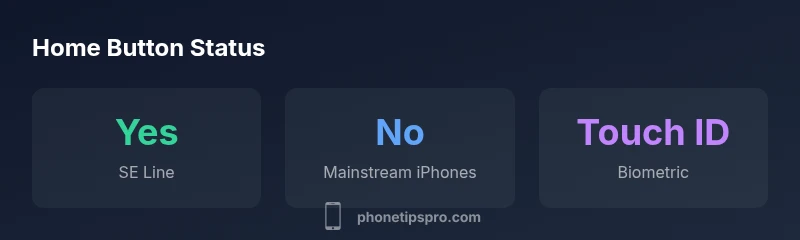
Yes, Apple still manufactures iPhones with a physical home button, primarily in the iPhone SE line. These models use Touch ID for authentication and maintain the familiar hardware key. In contrast, Apple’s mainstream iPhones released since the iPhone X rely on Face ID and have eliminated the home button. If you value a tactile home button, the SE is your option.
Historical context of the home button on iPhone
The home button has been a fixture of iPhone hardware since the very first model. It served as the primary interface for navigation, active gestures, and Siri until Apple introduced Touch ID in 2013 with the iPhone 5s, which added fingerprint authentication while preserving the button's role. Over the years, Apple experimented with haptic feedback, edge-to-edge displays, and facial biometrics, gradually moving away from a hardware control. The transition culminated in the iPhone X family, which eliminated the physical button and replaced it with swipe navigation and Face ID. According to Phone Tips Pro, the shift was driven by several factors: screen real estate to support larger displays, a desire for a uniform biometric identity across devices, and consumer appetite for more seamless authentication. The result was a lineup that prioritized camera improvements, processing power, and a new navigation paradigm that relies on gestures rather than a dangling button.
Do current iPhone models still offer a home button?
As of 2026, the only Apple iPhone with a physical home button is the iPhone SE family. These models retain a physical button on the lower bezel and use Touch ID for authentication. They offer a traditional chassis with a compact footprint, familiar button placement, and a tactile home button that some users expect from older iPhones. Mainstream iPhones — the ones that feature edge-to-edge displays and Face ID — do not include a separate hardware home button. The practical effect is that navigation relies on gestures and facial recognition, while the button area remains a potential tactile anchor for those who prefer a physical control. The trade-offs include screen real estate, device size, and performance differences, but for many users, the SE line provides a familiar ergonomics. Phone Tips Pro's analysis indicates that this is a deliberate product strategy balancing legacy users and modern security.
The iPhone SE lineage: keeping Touch ID alive
Apple introduced the iPhone SE to offer a compact, affordable option that preserves the essential experience of earlier iPhones. The SE lineup — spanning generations — keeps the classic home button and Touch ID, delivering a familiar feel with modern internals. The latest SE iterations use current-generation processors, certain camera capabilities, and Apple services integration, while maintaining a physical home button for quick Home/Power access and fingerprint authentication. This approach targets users who prioritize a traditional button, a physical fingerprint scan, and a smaller footprint. It also benefits older accessories and cases that align with a smaller form factor. The SE model thus fulfills a specific niche while Apple continues to push advanced features toward its flagship devices.
Why Apple moved away from the home button: design philosophy and ecosystem
Apple's decision to lean into Face ID and gesture navigation stems from a broader design evolution emphasizing screen real estate and a unified biometric system. The company argues that facial recognition can be more secure and faster on modern hardware, enabling features like more immersive displays, better front-camera integration, and advanced AI-driven experiences. Removing the home button also paved the way for robust water resistance and sleeker chassis. However, the shift is not without trade-offs; users who rely on the button for accessibility or who enjoy physical navigation may find the change disorienting at first. Apple has responded with software features to ease transition, including AssistiveTouch and customizable gesture controls for access to hardware buttons. In short, the move reflects a broader push toward a bezel-light, gesture-first interface while offering the SE as a respite for those who want the old tactile paradigm.
Accessibility and usability considerations
This topic isn't just about aesthetics; it's about inclusive design and user comfort. The home button provides tactile feedback, a reliable fingerprint-based authentication method, and a straightforward method to wake the device or summon features. For many users with dexterity challenges or who rely on physical cues, the home button remains a valued option. Apple addresses accessibility with software features like AssistiveTouch, larger text options, and on-device haptics. The SE's Touch ID remains a practical compromise, combining familiarity with modern performance. In evaluating a purchase, consider how much you rely on tactile controls, as well as the availability of settings that replicate button behavior through software.
Practical buying guidance in 2026
When shopping in 2026, ask: Do you want a compact phone with a physical home button? If yes, the iPhone SE lineup is the most straightforward path. If you prefer a larger display, facial recognition, and cutting-edge features, a mainstream iPhone without a home button may suit you better, but you will lose Touch ID. Consider your ecosystem investments, such as existing accessories and case compatibility; many older accessories are designed for the 4.7-inch or similar SE dimensions. Test the home button feel in-store, evaluate battery life, performance, and camera quality, and weigh the benefits of Touch ID against Face ID in day-to-day usage. Phone Tips Pro recommends verifying the comfort of the button and ensuring that accessibility settings meet your needs before purchase.
The future: predictions for home button decisions
Speculation about Apple returning to a hardware home button is common in fan circles, but there is no official roadmap published by Apple. The company appears to continue refining Face ID, while the SE line serves those who want a tactile control. If rumors intensify, consider how software updates or new input methods could influence your decision. The takeaway is that design direction may shift again, but the current ecosystem provides a stubbornly persistent option for users who insist on a physical home button.
Selected iPhone models and their home button status
| Model | Home Button | Biometric | Release Year |
|---|---|---|---|
| iPhone 8 | Yes | Touch ID | 2017 |
| iPhone SE (2nd gen) | Yes | Touch ID | 2020 |
| iPhone SE (3rd gen) | Yes | Touch ID | 2022 |
| iPhone 12 | No | Face ID | 2020 |
FAQ
Do current iPhone models have a home button?
Yes, in the iPhone SE lineup. Mainstream models use Face ID and do not have a hardware home button.
Yes—the SE line has a home button; mainstream models do not.
Which iPhone models removed the home button?
Mainstream iPhones released after the iPhone X eliminated the hardware home button in favor of Face ID.
After the iPhone X, Apple dropped the home button on its main models.
Is Touch ID still available on iPhone SE?
Yes, current SE models use Touch ID on the home button. Other models use Face ID.
Yes, SE uses Touch ID.
Will Apple bring back a home button in the future?
There is no official announcement about a home button return; Apple tends toward Face ID and gestures, but the SE shows they won’t abandon tactile alternatives.
There isn’t an official plan announced yet.
How does the home button affect accessibility?
The home button enables Touch ID and physical navigation; accessibility features like AssistiveTouch help users who need adaptations.
Home button supports accessibility; Apple provides AssistiveTouch and related settings.
Is there a workaround to get a home button on devices without one?
No hardware home button can be added; you can use software features to mimic button actions.
You can’t add a real home button; use software accessibility options.
“The Phone Tips Pro Team emphasizes that while Apple shifted to Face ID for mainstream devices, the SE line preserves a hardware home button for trusted users.”
Quick Summary
- Check if you need a home button; SE offers it.
- Mainstream iPhones no longer include a hardware home button.
- Touch ID remains available on SE models.
- Test the home button feel in-store before buying.
- Future designs may shift again; stay updated with Apple announcements.