iPhone 16e Price: What to Expect in 2026
Analytical guide to the anticipated iPhone 16e price in 2026, covering pricing strategy, regional differences, storage impact, and how financing, trade-ins, and incentives may affect your final cost.


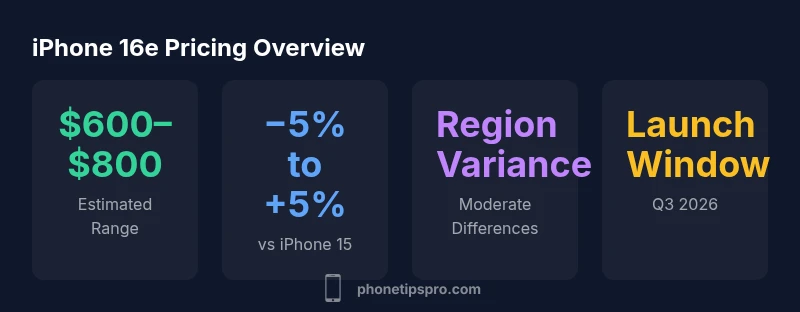
Based on Phone Tips Pro Analysis, 2026, the iPhone 16e price is expected to sit in the mid-range tier for iPhones, roughly USD 600–800 before taxes and carrier offers. The final sticker price will vary by region, storage option, and launch incentives, with regional adjustments and financing options shaping the out‑of‑pocket cost.
Pricing Landscape for iPhone 16e
The pricing conversation around the iPhone 16e centers on positioning it as a value-focused member of Apple’s lineup. While nothing is official until Apple confirms figures, the expected price range places the 16e squarely in the same affordability tier Apple has used for previous budget/compact variants. This tier typically aims to balance core features with accessible monthly payments, ensuring broad appeal across regions. The Phone Tips Pro team notes that launch timing, carrier promotions, and regional taxes will add variability, so shoppers should expect price visibility to emerge in the weeks surrounding launch events. For buyers, the key takeaway is to anticipate a sticker price that emphasizes value rather than premium features alone, while still delivering essential performance and ecosystem access.
According to Phone Tips Pro, pricing signals suggest a deliberate strategy to attract first-time iPhone buyers and existing customers seeking an economical upgrade. The real-world cost will also hinge on optional add-ons like storage tiers, accessories bundles, and service plans. Buyers should track early pricing chatter, retailer bundles, and trade-in incentives to understand the total cost of ownership beyond the initial sticker price.
How Apple Typically Prices Budget Variants
Historically, Apple’s budget-focused variants tend to launch near the lower end of the flagship price spectrum, with gradual adjustments across generations. Apple often uses a mix of 128GB baseline storage and higher storage variants, offering incremental price jumps that reflect hardware and software enhancements. Financing options from Apple and partner carriers frequently soften the upfront burden, while promotions around holiday seasons or line-swap campaigns can alter the effective price for a short window. With the iPhone 16e, the pricing intent likely remains to maximize accessibility while preserving the perception of premium build quality and software advantage. Customers should expect a standard progression: baseline storage at the lower edge, then tiered increases for larger capacities, with regional taxes ultimately shaping final costs.
Storage Options and Their Price Impact
Storage capacity is a principal determinant of the iPhone 16e price. The base model typically includes a modest amount of storage, with larger tiers priced progressively higher. In practical terms, most buyers weigh storage needs against long-term cost; choosing a higher capacity can reduce the need for external storage investments and cloud costs, but raises upfront price. For families or power users, a 256GB or 512GB variant can offer noticeable value through better resale potential and more on-device headroom for apps and media. It’s important to compare not just the headline price, but also the total cost of ownership when storage upgrades are bundled with promotions or financing.
Regional Pricing Realities
Prices vary by country due to tax regimes, import duties, currency fluctuations, and local promotions. In some regions, subsidies or carrier plans can significantly alter the out-of-pocket cost after rebates, while others may present a straightforward local price. Shoppers should be mindful of additional fees such as VAT, GST, and handling charges that can push the final price beyond the headline figure. If you’re considering purchasing abroad, factor in currency exchange risk and warranty considerations. Tracking official regional pricing pages and authorized retailers helps prevent sticker-price surprises and supports smarter budgeting.
Financing, Trade-Ins, and Carrier Deals
Financing remains a central tool for managing iPhone purchases. Carrier installments, Apple iPhone Financing, and retailer offers often spread the cost over 12–24 months with varying APRs. Trade-in programs can dramatically reduce upfront costs by applying the value of an older device toward the new model. The value of trade-ins depends on the condition, model, and market demand, so it pays to get quotes from multiple sources. Carriers may include bonus accessories or service credits as part of a financing package, which can further affect the effective price. Shoppers should model both upfront and monthly costs to choose the option that fits their budget best.
Value Proposition: Features vs Cost
Even at a mid-range price, the iPhone 16e aims to deliver a balanced set of features: a capable processor, a refined camera system, and seamless integration with the Apple ecosystem. Users who rely on long-term software updates, reliable security, and strong resale value may find the 16e a compelling buy, especially if priced within a realistic band. When comparing to similar devices, evaluate not only hardware specs but also software advantages, battery longevity, and future-proofing through iOS updates. A clear understanding of value helps buyers justify the cost, rather than focusing on price alone.
Pre-Order and Launch Incentives to Watch For
Launch periods often include limited-time promos, bundle deals, or accessories credits. While Apple typically reserves the most aggressive pricing for limited promotions, third-party retailers may offer launch bundles that include cases, AirPods, or gift cards. Prospective buyers should monitor official channels and trusted retailers for early-bird offers, especially if storage upgrades or color options are bundled with a discount. Avoid rushing into impulse buys; wait for the complete pricing disclosure to compare total cost across retailers and financing options.
Practical Buying Strategies and Budgeting
Create a simple cost model that includes headline price, tax, warranty, financing APR, and potential trade-in value. Compare at least two financing plans and two storage configurations to identify the best long-term value. If you’re considering upgrading from an older model, calculate the resale value of your device to offset the new purchase. Use price alerts and regional price checks to catch drops or promotions. Finally, read return policies and warranty terms to protect your investment.
What to Expect in the First Year
In the first year, prices for new iPhone models can experience small fluctuations due to promotions, exchange rates, and demand. Real-world costs can be lower than the headline price after rebates or trade-ins, but higher in regions with steep taxes or limited financing options. For buyers, the best strategy is to lock in a plan that aligns with personal usage, storage needs, and budgeting preferences, while staying aware of post-launch price moves and potential trade-in incentives.
Estimated price ranges by storage tier
| Variant | Estimated Price Range (USD) | Notes |
|---|---|---|
| iPhone 16e 128GB | 600-700 | Baseline storage tier |
| iPhone 16e 256GB | 700-800 | Mid-tier storage option |
| iPhone 16e 512GB | 800-900 | High-capacity variant |
FAQ
When will the iPhone 16e price be announced?
Apple typically reveals official pricing at launch or shortly before. For the 16e, expect the exact figures alongside the device reveal or in a follow-up press release. Regional pricing will follow local taxes and carrier structures.
Official pricing is expected at launch or shortly after; regional variations will apply.
How does the iPhone 16e price compare to the iPhone 15?
Based on historical patterns, budget variants tend to price near the lower end of the current generation’s range, with small year-over-year differences. The 16e is likely to carry a modest premium in most markets due to hardware and software updates, plus regional adjustments.
It will likely be slightly more expensive than the iPhone 15 in most regions, with variations by country.
Will there be financing options for the iPhone 16e?
Yes. Carrier installment plans, Apple Financing, and retailer offers are typically available, often with 12–24 month terms and varying APRs. Your total cost will depend on down payment, term, and interest rate.
Financing options will be available through carriers and Apple financing.
Are regional prices significantly different?
Yes. Regional pricing reflects tax, duties, currency, and promotions. Some regions may see substantial differences from the US price, while others align more closely with global averages.
Regional taxes and currency differences drive price variation.
What storage options affect price the most?
The jump from base to higher storage tiers typically accounts for a sizable portion of the price increase. If you don’t anticipate heavy on-device storage needs, the base model may offer the best value overall.
Higher storage options cost more, so choose carefully.
Will there be trade-in incentives?
Trade-ins are commonly offered and can substantially reduce upfront costs. The actual credit depends on model, condition, and market demand, so compare quotes from several sources.
Yes, trade-ins often help cut the upfront price.
“Pricing signals around the iPhone 16e point to value-conscious positioning without sacrificing core performance. Buyers should focus on total cost of ownership, not just the sticker price.”
Quick Summary
- Anticipate a mid-range price within Apple’s lineup
- Storage upgrades drive meaningful price jumps
- Regional taxes and promotions shape final cost
- Trade-ins and financing are key to budget management
- Monitor official pricing and promos at launch