iPhone 16 vs 16 Pro: A Thorough Side-by-Side Analysis
A detailed, analytical comparison of iPhone 16 and iPhone 16 Pro, covering design, display, camera, performance, battery, price, and upgrade considerations.


TL;DR: The iPhone 16 Pro generally offers a more capable camera system, a brighter display, and broader storage options than the standard iPhone 16. For most users, the 16 delivers excellent performance and value, while the 16 Pro is the better choice if you prioritize photography, videography, and long-term versatility. Decide based on camera needs and budget.
iphone 16 vs 16 pro: What changes matter in 2026 and beyond
According to Phone Tips Pro, the comparison between iphone 16 vs 16 pro centers on how users value imaging, display quality, and premium build versus price and everyday performance. In 2026, both models run the same iOS ecosystem and share core components, ensuring a consistent software experience. The phrase iphone 16 vs 16 pro is often used to frame decisions around camera versatility, display options, and storage capacity. For most buyers, the midpoint of performance is more important than the edge of hardware enhancement. The Pro model commonly targets enthusiasts and professionals who routinely shoot high-quality video or rely on advanced editing on-the-go. The standard iPhone 16, meanwhile, emphasizes efficiency, broad compatibility, and strong overall value. When evaluating, consider your current phone age, how often you shoot with the camera, and whether you anticipate needing the extra lens versatility or faster storage in the future. This guide will help you weigh those priorities against price and ecosystem benefits.
Phone Tips Pro analyses consistently show that user satisfaction in this segment correlates with camera flexibility, battery life under typical workloads, and how well the device handles updated apps and services over time.
Build, design, and materials: Do you notice the difference?
The iPhone 16 and iPhone 16 Pro present distinct design cues that signal different usage narratives. The standard model leans toward a lighter, balanced feel with a focus on everyday efficiency and ergonomic handling. The Pro variant typically borrows premium finishes and slightly more refined build details that signal higher durability and a premium aesthetic. Weight, grip texture, and color availability often reflect the intended audience—everyday users versus enthusiasts who prize a premium tactile experience. From Phone Tips Pro’s perspective, the choice between the two should consider how much you value premium materials and comfort during long days of use. If you carry your phone for hours of camera work or productivity tasks, the tactile benefits of the Pro finish can be a meaningful factor.
Display and visual experience: brightness, color, and refresh rate
Display quality is a core differentiator. The standard iPhone 16 typically provides a highly capable panel that delivers vibrant colors and strong outdoor readability. The iPhone 16 Pro often offers a brighter panel with higher peak brightness and supports advanced refresh-rate behavior for smoother scrolling and more responsive touch interaction. If you work in bright environments or edit media on the go, the Pro display can noticeably improve the viewing experience and the perceived sharpness of fine details. Phone Tips Pro notes that display quality shapes everything from app usability to photo and video preview accuracy, making it a practical factor in late-night editing sessions or outdoor shoots.
Comparison
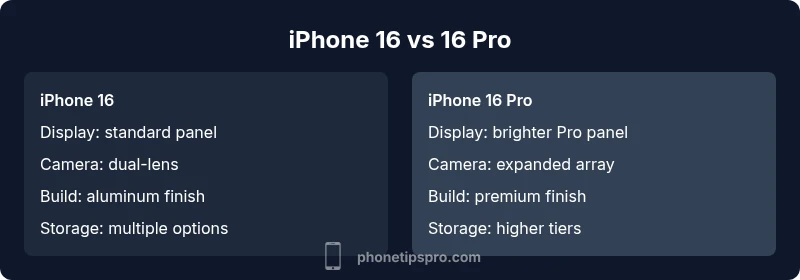
| Feature | iPhone 16 | iPhone 16 Pro |
|---|---|---|
| Display quality | Standard panel with solid brightness and accurate color output | Pro-grade panel with higher peak brightness and smoother refresh |
| Camera system | Dual-camera setup focused on everyday photography | Expanded camera system with more lenses and advanced imaging options |
| RAM and storage options | Base RAM/storage options typical for value-focused use | Higher RAM and broader storage tiers (where available) |
| Materials and build | Balanced aluminum frame and glass back | Premium finish with refined materials |
| Battery life and efficiency | Strong all-day endurance in typical use | Efficiency-focused tweaks and potential longer idle life |
| Value and target user | Best for value seekers and general consumers | Best for photographers, creators, and power users |
Positives
- Strong everyday performance with excellent iOS support
- Pro model offers better camera versatility for photos/videos
- Shared ecosystem ensures broad accessory compatibility
- Solid value proposition for the standard model
Weaknesses
- Pro model carries a higher price tag
- Pro features can be underutilized by casual users
- Battery life varies with heavier usage on Pro configurations
iPhone 16 Pro is the preferred pick for imaging enthusiasts and power users; iPhone 16 remains a compelling value for most buyers.
If your photography or video workflow is a priority, the Pro’s additional lenses and display enhancements justify the premium. For everyday use, app stability, long-term software support, and cost efficiency, the standard iPhone 16 delivers exceptional value.
FAQ
What are the main differences between iPhone 16 and iPhone 16 Pro?
The core differences usually involve camera capabilities, display quality, and premium finishes. The Pro adds lenses and imaging features that benefit photographers and videographers, while the standard model focuses on value and solid everyday performance.
The Pro adds more cameras and premium features; the standard model covers daily needs well.
Is the camera the primary reason to choose Pro?
Yes, for users who regularly shoot high-quality photos or videos, the Pro’s expanded lens options and enhanced imaging workflow typically justify the upgrade. Casual shooters may be satisfied with the standard model.
If you shoot a lot, Pro is worth it for the camera upgrades.
Do both models run the same processor and software?
Both models run the same iOS software, ensuring consistent app support and features. The Pro may have modest enhancements in memory or storage handling but the overall experience remains similar.
Both use iOS with similar performance, Pro just adds some extra features.
Will storage options differ between models?
Storage configurations typically vary by model, with the Pro offering broader options. Check current official specs for exact tier availability in your region.
Pro usually has more storage options, so pick based on your file size needs.
How should I decide based on budget?
Assess whether the camera and premium features in the Pro are worth the higher upfront cost given your planned use and upgrade cycle. If you upgrade frequently, Pro may pay off over time.
If budget is tight, the standard model is a solid choice; upgrade only if you’ll use the extras.
Will Pro features influence battery life significantly?
Heavier use of advanced imaging on the Pro can affect battery life, but typical day-to-day usage remains solid on both models. Real-world differences depend on how you use the camera and display features.
Camera-heavy use can impact battery more on Pro; for normal use, both last a day.
Quick Summary
- Prioritize camera versatility if you value imaging features
- Expect higher price on Pro, with meaningful gains for power users
- Both models offer strong iOS integration and broad ecosystem support
- Choose standard 16 for value and balanced performance