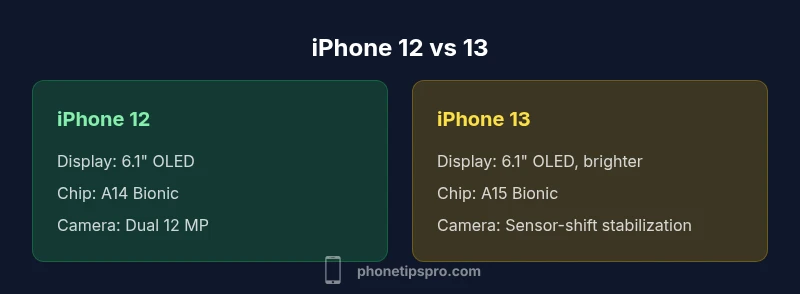
iPhone 12 vs 13: Which Is Better in 2026 for Buyers
A data-driven comparison of iPhone 12 vs 13, covering design, cameras, battery life, software updates, and value to help you decide which model suits you best in 2026.


According to Phone Tips Pro, the quick answer to what is good iphone 12 or 13 is: the iPhone 13 generally offers longer battery life, a brighter display, and a newer camera system, while the iPhone 12 remains a strong value if price matters. For most buyers in 2026, the upgrade path favors the 13.
Framing the decision: what matters when comparing iPhone 12 vs 13
If you’re asking what is good iphone 12 or 13, the answer hinges on how you use your phone today and what you expect from it over the next several years. The Phone Tips Pro team emphasizes three practical criteria: longevity (software updates and battery health over time), camera versatility (low-light performance, video features, and processing), and value (price-to-feature balance given your budget). In 2026, the iPhone 13 generally offers meaningful gains in efficiency and imaging, while the iPhone 12 remains a compelling entry point for budget-conscious buyers or those who don’t need the latest features. Consider your typical daily tasks—photos, video, streaming, gaming, and work apps—since those activities reveal which model feels more future-proof for you. This section lays out the framework you can reuse for other model comparisons as well, with a focus on real-world usage and long-term ownership costs.
Design, Display, and Build Quality: What stays the same, what improves
The iPhone 12 and iPhone 13 share a familiar 6.1-inch OLED display and the same overall form factor, which means most everyday handling and one-handed use feel similar. The big differences are subtle but meaningful: the iPhone 13 benefits from brighter peak brightness and improved color processing for HDR content, which translates to better outdoor visibility and more vivid media when you’re on the go. Both models use the Ceramic Shield front cover and have IP68 water resistance, but the newer chassis on the 13 tends to stay crisper during longer sessions. The camera housing arrangement remains visually familiar, yet the iPhone 13 introduces color and texture refinements that users often notice in default photo previews and on social feeds.
Performance, Battery Life, and Everyday Speed
Under the hood, the iPhone 13 ships with a newer generation chip that brings better efficiency and headroom for demanding apps, which shows up in smoother multitasking and more consistent frame rates in games and graphics-heavy apps. Battery life is one of the most cited advantages of the 13 in day-to-day use: you’ll typically get longer screen-on time, especially with heavier tasks like video streaming or navigation. The 12, with its A14 Bionic and 4GB RAM in most configurations, remains capable for most tasks, including recent iOS features, but it won’t match the 13 in sustained performance under load or in future-proofing terms. If you routinely run processor-heavy apps or like to game for extended periods, the 13 stands out more clearly.
Camera Systems and Photo Quality: Real-world imaging differences
Camera performance is often the deciding factor for many buyers. The iPhone 13 brings sensor-shift stabilization, a feature previously limited to higher-end models, which translates to steadier handheld footage and sharper stills in low light. Photographic Styles and improved night mode processing offer more natural color rendering and better dynamic range in challenging scenes. The newer Cinematic mode adds a depth-of-field effect for video, providing a more cinematic look with easy post-processing. The iPhone 12’s dual-camera system remains strong, delivering solid low-light performance and reliable color accuracy, but it lacks the sensor stabilization and the newer computational improvements that color-grade footage on the 13 benefits from. If photography is a primary concern, the 13 has the clearer advantage in most real-world conditions.
Software Updates, Storage Options, and Longevity
Both devices run iOS with ongoing updates, but the iPhone 13 will generally enjoy a longer window of official support due to its newer hardware baseline. Storage options reflect a clear shift: the iPhone 12 started with 64GB and moved up to 128GB and 256GB configurations, while the iPhone 13 starts at 128GB and offers 256GB and 512GB variants, giving more headroom for apps, media, and large photo/video libraries. Operating system features tend to run more smoothly on the 13 due to its newer hardware, so even if you install the same iOS version, the experience can feel more fluid on the newer device over time. Budget-wise, consider whether you need extra storage upfront or if you can leverage cloud options to maintain a lower initial cost.
5G, Connectivity, and Everyday Reliability
Both models support modern 5G, with coverage and speeds that enable faster downloads and streaming on the go. In practice, there isn’t a dramatic difference in typical day-to-day connectivity, especially in regions with stable networks. The 13’s efficiency gains also contribute to more consistent battery life when connected to 5G networks, as data processing is optimized for current cellular standards. If you rely heavily on mobile data in transit, the 13’s generational improvements will feel noticeable, particularly in urban environments with variable signal strength.
Value, Resale, and Lifecycle Considerations
From a resale perspective, the iPhone 13 generally maintains value longer due to its newer hardware and superior camera capabilities, which keeps it attractive to second-hand buyers. For budget-sensitive buyers, the iPhone 12 may still offer compelling value, especially when found refurbished or on sale. In both cases, longevity comes from software updates, battery health, and how well you maintain the device. If you plan to upgrade again in 2–3 years, the 13 provides a more robust foundation for continued performance, while if you want the lowest upfront cost, the 12 remains a reasonable option.
How to Decide: A Practical Buying Framework
To decide using a practical framework, start with your camera needs and battery expectations. If you regularly shoot photos and videos, or you value future-proofing for at least the next 3–4 years, lean toward the iPhone 13. If you’re on a tighter budget and mostly rely on a phone for communication, apps, and light media consumption, the iPhone 12 still delivers strong value. Consider your storage needs—if you keep extensive media libraries, pick the 128GB or higher configuration on the 13; otherwise, cloud storage can bridge the gap. Finally, test both devices in store if possible to compare how the display, color rendering, and haptics feel in your hands. This practical approach helps answer the core question: what is good iphone 12 or 13 for your lifestyle?
Real-World Scenarios and Buyer Personas
- The camera enthusiast: prioritize iPhone 13 for sensor-shift stabilization, better low-light performance, and advanced video features.
- The budget-conscious buyer: iPhone 12 offers substantial capability at a lower price, especially if a new model isn’t essential right now.
- The long-term investor: if you plan to keep the device for several years, the 13’s longer software support window and improved efficiency translate into higher long-term value.
- The everyday user: both are capable for daily tasks, but the 13 tends to feel snappier in routine app-switching and media playback.
Comparison
| Feature | iPhone 12 | iPhone 13 |
|---|---|---|
| Design & Display | 6.1" OLED, similar chassis | 6.1" OLED, brighter, refined colors |
| Performance | A14 Bionic, good efficiency | A15 Bionic, improved efficiency & headroom |
| Camera System | Dual 12 MP, solid low light | Sensor-shift stabilization, better low light, Cinematic mode |
| Battery Life | Standard endurance for day-to-day use | Longer endurance with heavier use |
| Storage Options | 64/128/256 GB | 128/256/512 GB |
| 5GConnectivity | Supports 5G across regions | Same 5G support with efficiency tweaks |
| Software & Longevity | iOS updates for many years | Longer update horizon, faster on new features |
| Value Proposition | Lower upfront cost, ample features | Better future-proofing, stronger resale potential |
Positives
- iPhone 13 offers longer battery life for heavy users
- Camera improvements enhance photos and video quality
- Storage options on the 13 provide more headroom
- iPhone 12 remains a strong value option
Weaknesses
- iPhone 12 may feel slower with future apps over time
- 13 is generally more expensive upfront
- Access to the latest camera features may depend on iOS version
- Trade-offs exist between price and longevity
iPhone 13 is the recommended pick for most buyers in 2026
Choose iPhone 13 for better battery life, improved cameras, and longer software support. If cost is the primary concern, iPhone 12 remains a sensible value—especially when found refurbished or on sale.
FAQ
Which is better for photography, iPhone 12 or iPhone 13?
For photography, the iPhone 13 generally performs better thanks to sensor-shift stabilization and improved low-light processing, plus Cinematic video options. If you mostly shoot casual photos, the 12 remains capable, but the 13 provides clearer advantages in challenging lighting.
For photos, the 13 is usually the better pick thanks to stabilization and improved night photography. The 12 still takes solid photos, but the 13 edges ahead in tough lighting.
Do both models receive iOS updates equally long?
Both run iOS and will receive updates for several years, but the iPhone 13 generally enjoys a longer overall update horizon due to its newer hardware. In practice, you’ll likely see extended feature support on the 13 compared with the 12.
Both will get iOS updates, but the 13 usually enjoys longer support because of its newer hardware.
Is the iPhone 12 still worth buying in 2026?
Yes, for buyers prioritizing upfront cost, the 12 can be a good value, especially if found refurbished or on sale. It remains a capable device for everyday tasks, camera use, and media.
Yes, the 12 can still be worth buying if you want to save money and still need a solid phone.
Which storage option is better for everyday use?
For most users, starting at 128GB on the iPhone 13 covers apps, photos, and videos comfortably. If you shoot a lot of 4K video or store large media locally, the 256GB or 512GB options on the 13 are worth considering.
128GB is fine for many, but higher storage on the 13 helps if you keep lots of media offline.
Are there any major hardware differences beyond the camera?
Beyond the camera and chip upgrades, the iPhone 13 brings incremental efficiency gains and slightly improved display performance. Both share similar chassis and build quality, with the 13 benefiting from a longer support horizon.
The main hardware difference is the newer chip and camera system; otherwise, design is similar.
Should I upgrade from iPhone 12 to 13 if I already own one?
If you value better battery life, camera versatility, and longer software support, upgrading to the 13 makes sense. If you’re happy with your current device and budget, you can delay the upgrade and still enjoy modern iOS features.
If you want longer battery life and better cameras, upgrade; otherwise, it’s okay to wait.
Quick Summary
- Prioritize iPhone 13 for longevity and imaging gains
- Consider storage needs before purchasing the 12 or 13
- Budget-conscious buyers can still value the 12
- Expect longer software support with the 13
- Test handling and display preferences in-store