What is good iPhone 14 or 15: A clear comparison guide
A data-driven comparison of iPhone 14 vs iPhone 15 to help you decide which model fits 2026 needs, covering performance, camera, battery, charging, and value.


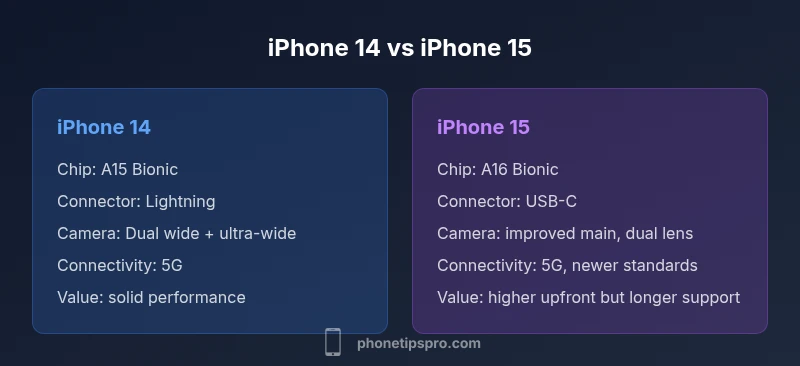
iPhone 15 generally offers more longevity, newer hardware, and USB-C, making it the better upgrade for most buyers. The iPhone 14 remains a solid value if you’re budget-conscious or want to avoid upgrading accessories yet. For precise tradeoffs, see our full comparison chart.
What 'good' means for iPhone buyers
According to Phone Tips Pro, a good iPhone for most buyers is defined by value over time: steady performance, a capable camera, reliable battery life, and continued software support. In 2026, the best choice isn’t simply the newest model; it’s the one that aligns with how you use your device every day. If you rely on demanding apps, cloud integration, and long-term updates, the newer iPhone generally delivers better longevity. If your priority is immediate price sensitivity or you already own accessories built around Lightning, the iPhone 14 can still feel like a smart, sensible purchase. This article examines both models with an eye toward real-world use, not marketing hype, so you can decide based on practical tradeoffs rather than headlines. The goal is to help iPhone users determine what is good iphone 14 or 15 for their own situation, considering performance, camera, battery, charging, and ecosystem compatibility.
Core differences: hardware and software milestones
The iPhone 15 introduces several headline updates over the iPhone 14 that matter in daily life. The hardware foundation is newer, which typically translates to better sustained performance and more memory efficiency. In addition, the iPhone 15 adopts USB-C for charging and data transfer, enabling compatibility with a wider range of accessories and chargers. Camera systems receive incremental improvements that translate into clearer photos in typical lighting, especially in mid-to low-light. Software support remains a priority across both models, but the newer device tends to receive iOS updates for a longer period due to its newer hardware baseline. For many users, these hardware milestones translate into smoother apps, faster app launches, and improved headroom for multitasking. The net effect is a model that remains relevant longer, reduces the need for early replacement, and offers better future-proofing for expectant buyers.
Performance and longevity: speed, software support, and future-proofing
Both devices run iOS with a familiar, fluid user experience, and everyday tasks feel fast on either model. The iPhone 15 benefits from a newer chip, providing extra headroom for demanding apps, multitasking, and longer-lived responsiveness as software evolves. In practice, most users will notice smoother app launches, quicker photo processing, and more reliable gaming performance on the 15. When it comes to longevity, Apple typically supports newer hardware for longer periods; thus the iPhone 15 is positioned to receive updates beyond those offered to the iPhone 14. Battery health and charging efficiency influence how long you stay away from the charger, but real-world results hinge on your usage patterns, screen time, and background activity. Phone Tips Pro’s analysis suggests that if you want a device that remains capable several years into the future, the 15 is the safer bet.
Camera and multimedia capabilities: everyday scenarios
The camera system on both models remains strong for day-to-day photography and video, with meaningful incremental gains on the iPhone 15. The newer device typically yields better dynamic range, reduced noise in low light, and faster autofocus in video or moving subjects. For social media posting and casual shoots, the difference can be noticeable but not overwhelming. Both devices support deep integration with iCloud, Photos, and third-party editing apps, so your workflow remains smooth. For fans of portrait or macro-like scenarios, the iPhone 15’s improved main camera can deliver crisper subject separation and more natural skin tones in challenging lighting. If you rely on advanced ProRAW or RAW workflows, both devices are capable, though the 15 benefits from a slight edge in computational photography.
Battery life and charging: efficiency and USB-C implications
Battery life depends on display usage, background tasks, and brightness. In typical mixed-use scenarios, both phones can last through a day with moderate use. The iPhone 15’s newer processor yields better efficiency under sustained workloads, which can translate into longer intervals between charges for some users. The switch to USB-C on the iPhone 15 has practical implications: faster charging with compatible chargers, universal cable compatibility when traveling, and easier cable management if you own other USB-C devices. The iPhone 14, while still capable, continues to rely on Lightning for charging and data. In real-world terms, if you already own USB-C accessories, the 15 will feel more cohesive; if you’re fully invested in Lightning, the 14 remains comfortable and familiar.
Design, durability, and everyday usability
Design touches matter in daily use. The iPhone 15 offers incremental improvements in materials and balance and may feel slightly lighter depending on size choice. Both devices use high-quality glass and aluminum with protective seals and IP-rated durability characteristics. Usability is enhanced by software refinements and tactile feedback that influence perceived speed. Access to new ports and accessories matters; Lightning accessories will continue to work for the iPhone 14, but USB-C fosters broader compatibility across devices and ecosystems. If you value a modern charging standard and streamlined accessory management, the 15 has a clear advantage; otherwise, the 14 is still comfortable and robust for daily life.
Value, pricing, and total cost of ownership
Price varies by region and storage tier. The iPhone 14 often represents a cost-conscious option, especially as retailers discount older stock. The iPhone 15 typically carries a higher launch price but can offer longer software support and newer connectivity, potentially reducing long-term ownership costs. To assess total cost of ownership, factor in accessory investments, trade-in value, and expected resale price. Carrier promotions and installment plans affect monthly costs as well. Phone Tips Pro recommends weighing upfront price against projected lifespan; a longer usable window can offset a higher initial price over time.
Authoritative sources and further reading
For readers seeking external perspectives, credible outlets provide hardware reviews and model analyses: https://www.theverge.com, https://www.cnet.com, https://www.bbc.com. While these sites are not government sources, they are widely cited for balanced device assessments. Cross-check the specifics of hardware changes, battery performance, and software update policies as they apply to your region.
Which model should you buy based on your needs
Choose the iPhone 15 if you want maximum longevity, USB-C convenience, and a slightly faster, more efficient experience. It’s best for users who plan to keep their phone for several years and want broader accessory compatibility. Opt for the iPhone 14 if upfront budget matters, if you already rely on Lightning accessories, or if you want a capable device with a proven feature set without paying a premium. Your decision should reflect your budget, ecosystem, and intended upgrade cycle.
Practical buying checklist
Before purchasing, confirm your storage needs, review trade-in deals, check your current charger type, and decide how long you want software support. Consider whether USB-C compatibility is a priority for your household, compare carrier promotions, and account for potential accessory investments. Finally, evaluate resale potential and the timing of a planned upgrade to maximize value.
Comparison
| Feature | iPhone 14 | iPhone 15 |
|---|---|---|
| Processor and performance | A15 Bionic (older generation) | A16 Bionic (newer generation) |
| Connectivity | Lightning | USB-C |
| Camera improvements | Solid dual camera system | Improved main sensor with better low-light performance |
| Battery and efficiency | Good endurance | Slightly better efficiency with newer chip |
| Software updates | Long support but shorter than newer model | Longer support horizon due to newer hardware |
| Price/Value at launch | Lower upfront cost (varies by region) | Higher upfront cost but potentially lower long-term costs |
| Best for | Budget-conscious buyers, still-capable everyday use | Users wanting the latest tech and longer longevity |
Positives
- Newer hardware and longer software support with iPhone 15
- USB-C offers broader compatibility and charging options
- Improved camera performance in typical lighting
- Higher resale value potential in many markets
Weaknesses
- Higher upfront price for iPhone 15
- Lightning ecosystem remains for iPhone 14, limiting accessories
- Marginal daily-use differences for some users
iPhone 15 is the better all-around upgrade for most users.
The 15 provides longer software support, USB-C compatibility, and a smoother overall experience. The 14 remains a solid entry point if upfront cost is the primary constraint. For buyers who want longevity and future-proofing, the 15 is the clearer choice.
FAQ
Is iPhone 15 worth upgrading from iPhone 14?
For most users, yes, because of longer software support, USB-C, and a modest performance edge. If you’re satisfied with your current speed and don’t want to upgrade accessories, the 14 remains serviceable. Your decision should align with how long you plan to keep the device and how important USB-C compatibility is to you.
For most people, the 15 is worth it for longevity and USB-C; the 14 is still solid if you’re budget-conscious.
Do both models support USB-C?
The iPhone 15 uses USB-C for charging and data, while the iPhone 14 uses Lightning. If USB-C compatibility matters to you for charging across devices, the 15 is the better pick.
Yes, the 15 has USB-C and the 14 uses Lightning.
Which phone has better camera in low light?
Both perform well, but the iPhone 15 typically achieves crisper images with less noise in low light due to sensor and processing improvements. Everyday photos on the 14 still look good, especially in well-lit conditions.
The 15 usually handles low light a bit better.
How long will each model receive iOS updates?
Apple typically provides many years of iOS updates for both models, with the newer hardware (iPhone 15) likely receiving updates longer. Exact timelines vary by OS version and regional support.
Updates tend to last longer on the newer model.
Is the iPhone 14 a good budget buy today?
If you can find strong discounts and don’t need the latest USB-C features, the iPhone 14 remains a capable device for everyday use and app-heavy workflows.
Yes, if you want a cheaper option now.
Are there durability or repairability differences?
Both models are built to modern standards with durable materials; repair costs and availability vary by region. The iPhone 15 may benefit from newer parts and longer support life, potentially reducing long-term maintenance needs.
They’re both solid; parts availability varies by region.
Quick Summary
- Prioritize longevity if you plan to keep the phone 3+ years
- USB-C on iPhone 15 simplifies accessories and charging
- Upgrade worth it if you value camera and performance gains
- Budget-conscious buyers can still find value in iPhone 14 if discounts apply