Choosing Between iPhone 15 and iPhone 16: A 2026 Guide
Compare iPhone 15 vs iPhone 16 to decide which model fits your needs. This analytical guide covers performance, camera, battery, display, pricing, and long-term value to help you pick wisely.


TL;DR: If you want the longest-term value and newer features, the iPhone 16 is the better pick, but if upfront cost matters now, the iPhone 15 remains a strong performer with solid software support ahead. Consider your upgrade cadence, daily needs, and whether you will benefit from the newer camera and efficiency improvements.
How to Decide Between iPhone 15 and iPhone 16
According to Phone Tips Pro, deciding between the iPhone 15 and iPhone 16 should start with your upgrade cadence, budget, and daily usage to avoid overspending on features you won’t use. If you replace devices every two to three years, the newer model often yields longer software support and access to the most current camera and efficiency improvements. If your priority is upfront cost or you otherwise own a recent iPhone, the iPhone 15 remains a compelling value with strong performance and a familiar ecosystem. In this framework, map your expected two to three year usage, list must-have features (camera, display, battery life), and compare total costs including trade-in value and carrier deals. Also consider whether you value features that improve resale value or reduce friction in daily tasks, such as faster Face ID, smoother multitasking, or better thermal management during sustained use.
Performance and Processor: Do You Need the New Chip?
Performance remains a cornerstone of the iPhone experience. In practical terms, the iPhone 16 typically offers incremental gains in processing power and energy efficiency compared with the iPhone 15, which translates to quicker app launches, smoother multitasking, and more headroom for demanding tasks like video editing or mobile gaming. For many users, the day-to-day experience on both models feels similarly fluid, especially with iOS optimizations. If you routinely run many apps in the background, edit 4K video on the go, or rely on sustained performance during long sessions, the newer chip in the 16 can reduce throttling and keep performance steadier. If your use is moderate or you prioritize long-term software support over the latest benchmarks, the iPhone 15 remains a strong and reliable choice with a lower price point.
Camera and Imaging: What Changes Are Real?
Camera upgrades are often a deciding factor. The iPhone 16 generally includes improvements in image processing, low-light performance, and video features thanks to newer sensors and software enhancements. For most people, this translates to brighter portraits, better detail in challenging lighting, and smoother video stabilization. However, the iPhone 15 still delivers excellent photos and video and benefits from mature camera software, color science, and robust HDR processing. If you shoot frequently in challenging environments, or you enjoy new computational photography modes, the 16 offers tangible advantages. If photography is important but not mission-critical, the 15 provides a balanced, capable experience at a lower upfront cost.
Display, Design, and Durability
Design language is familiar across both models, with comfortable ergonomics and solid build quality. The iPhone 16 may bring refinements such as improved brightness, subtle display enhancements, or slight architectural tweaks that matter mainly to power users and enthusiasts. In daily use, both models deliver sharp, vivid screens and durable glass. If you spend long hours outdoors or in bright environments, the potential brightness gains of the 16 can translate to a more comfortable viewing experience. For most people, the difference will be noticeable but not overwhelming.
Battery Life and Charging: Real-world Use
Real-world battery life varies with settings and workload, but both devices deliver reliable all-day endurance under typical use. The iPhone 16 often consumes energy a bit more efficiently thanks to newer hardware, which can translate into modest gains in screen-on time and faster charging when supported by the charger. If you do long sessions away from a charger, the 16 may hold up a bit longer under sustained use. Conversely, if you’re upgrading from an older model or from the iPhone 15, you may not notice a dramatic difference in day-to-day life, depending on your usage patterns.
Storage, RAM, and Longevity
Beyond basic storage tiers, the choice between models can hinge on RAM allocation and firmware longevity. Apple tends to optimize storage and memory management across generations, so the iPhone 16 might manage heavy apps and large photo libraries slightly more efficiently. Both models typically support the same modern iOS features and offer ample storage options, but if you anticipate heavy photo or video workflows or need headroom for apps over several years, the higher-end storage tier on the newer model can reduce the risk of early upgrades. Consider your media habits and whether you expect to keep the phone for many years.
Software Experience and Ecosystem
iOS updates and ecosystem integration are major reasons people upgrade. The newer model generally receives software support for a longer window, which translates into more years of feature updates, security patches, and compatibility with new accessories. Both devices integrate seamlessly with iCloud, Find My, and the broader Apple ecosystem, including Services and Apple Watch. If you rely on the latest features like advanced camera workflows, enhanced privacy controls, or exclusive software features that arrive with new hardware, the iPhone 16 offers a more forward-looking platform. If compatibility and proven software stability are more important, the iPhone 15 remains a solid choice with a proven track record.
Connectivity, 5G, and Durability
Both models offer robust connectivity and 5G support across major bands. Durability remains strong with water resistance and rugged construction, though no phone is immune to accidental damage. The iPhone 16 may bring refinements in wireless performance or thermal management for sustained use, while the iPhone 15 provides dependable reliability with mature components. Depending on your region and carrier, you may notice small differences in antenna performance or signal stability. For most users, connectivity will be reliable on both devices, with the 16 offering potential marginal improvements.
Price, Value, and Total Cost of Ownership
Upfront pricing typically favors the iPhone 15, which is often offered at a lower sticker price or with aggressive promotions. The iPhone 16 commands a higher launch price, reflecting its newer hardware and longer software horizon. When evaluating total cost, consider not only the purchase price but also potential trade-in value, accessory costs, and the expected lifespan of software updates. If you plan to keep the device for several years, the 16's longer support window can translate into lower cost per year in the long run. If you replace phones more frequently or have budget constraints, the 15 represents a more immediate value with solid ongoing performance.
Who Should Buy iPhone 15: Budget-smart Buyers and Loyal Fans
The iPhone 15 is ideal for budget-smart buyers who want strong performance without paying for the latest hardware. It remains a compelling option for current iPhone users who want a familiar experience and access to solid third-year software support. Those upgrading from very old iPhones or from Android devices will appreciate the immediate value, the mature camera system, and the ability to take advantage of current iOS features without a premium price. If your priorities are cost efficiency and value, the 15 is an excellent choice.
Who Should Buy iPhone 16: Power-users and Long-term Seekers
For buyers who crave the newest hardware, best-in-class camera features, and the longest horizon of software updates, the iPhone 16 is the stronger choice. It suits power users, content creators, and tech enthusiasts who want the latest capabilities now and want to maximize the time before upgrading again. If you plan to keep your device beyond three years or care about future-proofing, the 16 aligns with that strategy. While the upfront price is higher, the total cost of ownership over many years can balance out as the years go by thanks to extended support.
Practical Buying Tips: How to Decide in Store or Online
Make a short list of must-have features, test camera samples in-store, check battery health, and inspect device condition before purchasing. Compare in-store promos, carrier offers, and trade-in values for both models. If possible, use the same memory configuration on both devices to get a fair price comparison. Use online checkout tools and price trackers to monitor promotions and bundles that may reduce the effective price. Finally, check the warranty and return policy; Apple typically offers a standard warranty with options to extend.
Common Pitfalls and How to Avoid Them
Avoid assuming the latest model is always the best value; consider your upgrade cadence and how long you expect to keep the device. Don’t overlook storage needs, as many users underestimate the impact of photo and video libraries. Beware of promo deals that tie you into lengthy contracts or low trade-in values. Lastly, avoid impulse purchases by testing both models side-by-side and confirming you’re choosing the configuration that truly fits your daily workflow.
Quick Decision Checklist for Your Next iPhone Purchase
Create a simple two-column checklist: must-have features and nice-to-have features; compare two price quotes and trade-in options; check the expected software support window; determine upgrade timing; and confirm return policy. Use this list to avoid buyer's regret and ensure you select the model that aligns with your usage patterns and budget.
Comparison
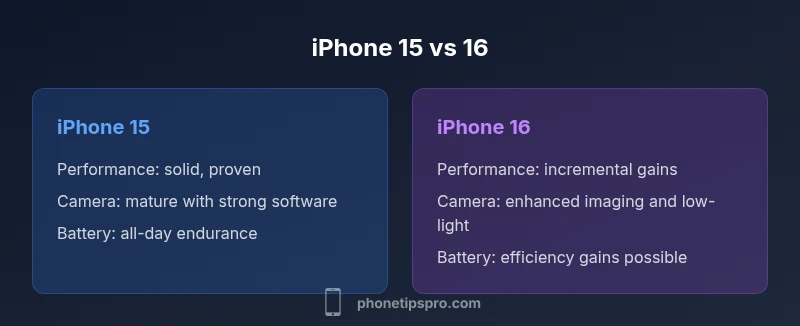
| Feature | iPhone 15 | iPhone 16 |
|---|---|---|
| Performance & chip | Similar base performance with proven efficiency | Newer generation with incremental gains in speed and efficiency |
| Camera system | Strong imaging with mature software | Improved processing and potential sensor refinements |
| Display & design | Same physical sizes and quality, with minor refinements | Possible brightness/contrast tweaks and subtle design updates |
| Battery life | Reliable all-day use and similar endurance | Modest gains in efficiency and standby time |
| Storage options | Multiple storage tiers typical of the line | Expanded headroom for media and apps in higher tiers |
| Price at launch | Lower upfront price typical for last-generation model | Higher upfront price reflecting newer hardware |
| Software support | Strong support window for the era | Likely longer support window due to newer release |
Positives
- Better future-proofing with the newer model
- Potential gains in camera and video features
- Longer expected software support for the newer device
- Smoother performance for demanding apps
Weaknesses
- Higher upfront cost for the newer model
- Diminishing returns if you don’t use new features
- Longer upgrade cycles may delay value realization
iPhone 16 is the better long-term choice for feature enthusiasts; iPhone 15 is the smarter short-term value.
Choose iPhone 16 if you want the latest hardware, longer software updates, and stronger future-proofing. Choose iPhone 15 if upfront cost matters more and you’re satisfied with mature capabilities.
FAQ
Is the iPhone 16 worth the upgrade over iPhone 15?
If you value longer software support, newer camera features, and better efficiency, the iPhone 16 is worth considering. If budget constraints are tight or you’re otherwise satisfied with your current device, the iPhone 15 remains a strong, capable option.
If you want the latest features and longer software updates, go with the 16; otherwise the 15 is still excellent.
Which model has better camera performance?
The iPhone 16 typically offers improved processing and sensors, yielding better low-light performance and video capabilities. The iPhone 15 remains strong with a mature camera system and reliable results in most conditions.
The 16 usually edges out the 15 in low light and video, but both take excellent photos.
Do both phones receive iOS updates at the same pace?
Apple generally provides multi-year OS updates for its iPhone lineup, with newer models often receiving updates for longer. Expect both to receive several years of updates, though the 16 may stay current a bit longer due to newer hardware.
Both will get updates for years, but the newer model may stay current longer.
When should I upgrade: this year or wait for next?
If your current phone no longer meets your needs, upgrading now makes sense. If you’re satisfied and want to maximize deals, wait for a sale or the next generation, especially if your device still serves you well.
Upgrade when your current phone misses key features or when a good deal appears.
Are there drawbacks to the iPhone 16?
The main consideration is higher upfront cost. If you don’t rely on the latest features or you value price today, the iPhone 15 can be a more economical choice with ample lifetime support.
The 16 has a higher price and may offer limited gains if you don’t use the newest features.
What about trade-in value?
Trade-in options exist for both models and can significantly reduce net cost. The newer model may fetch a higher trade-in value depending on condition and market demand.
Trade-ins can reduce cost, and the newer model can command a better price.
Quick Summary
- Assess upgrade cadence before buying
- Weigh upfront cost against long-term value
- Consider camera needs for your photography style
- Check trade-in offers to lower effective price
- Test both models in-store when possible