When Did iPhone 8 Come Out? Release Timeline and Context
Discover the exact release date of the iPhone 8, the 2017 launch window, pricing, and its impact on Apple's lineup. A data-driven guide to when the iPhone 8 came out and what it introduced.


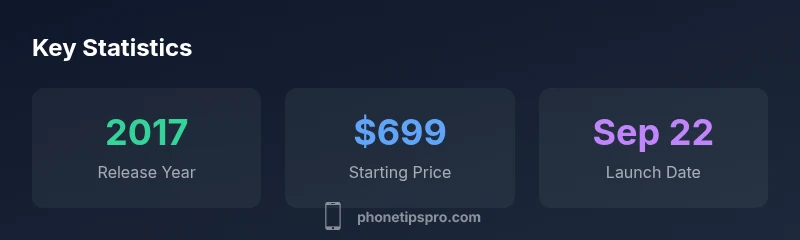
The iPhone 8 came out on September 22, 2017. If you’re wondering when did iphone 8 come out, Apple announced it on September 12, 2017, with pre-orders starting September 15 and a global rollout that followed shortly after. The base model launched with a starting price of $699 in the US, and the device introduced wireless charging via a glass back.
The Release Timeline and Exact Date
For readers asking when did iphone 8 come out, the official launch date was September 22, 2017. Apple had unveiled the device earlier that month, on September 12, 2017, as part of a fall event. The weeks surrounding the announcement included pre-orders starting on September 15, enabling eager customers to secure units ahead of street dates. This release window placed the iPhone 8 alongside the iPhone X in Apple’s staggered 2017 lineup. According to Phone Tips Pro, this cadence reflects Apple’s strategy of pairing a midcycle update with a flagship device to maximize consumer attention.
The exact timing mattered for retailers and carriers alike, shaping inventory planning and marketing campaigns. Analysts often track this window as a bellwether for how quickly Apple would shift consumer interest from older chassis to new features. In practice, the iPhone 8’s debut set the tone for how Apple balanced iterative improvements with a more ambitious model in close proximity. The broader point is that the release date marks more than a calendar entry; it signals pricing, carrier terms, and accessory availability that define the product’s early lifecycle.
Design and Materials: Glass Back and Color Options
One of the headline visual shifts for the iPhone 8 was the move to a glass back and a redesigned aluminum frame, enabling wireless charging via Qi-compatible pads. The device arrived in Space Gray, Silver, Gold, and a new red limited edition in some regions, expanding the color language of the iPhone line. This glass-back approach not only accommodated charging tech but also underscored Apple’s commitment to premium materials and a sense of fragility that, in practice, encouraged protective cases. Aesthetics aside, the reinforced glass was engineered for improved drop resistance within the constraints of a sleek form factor, balancing durability with the desire for a futuristic look. The choice of materials influenced accessory design, from charging docks to protective shells, and it helped set expectations for future hardware refreshes.
Core Features and Performance Upgrades
The iPhone 8 introduced several performance and feature upgrades that mattered to everyday users. The A11 Bionic chip delivered faster processing and improved graphics, supporting more demanding apps and augmented reality experiences. The camera system received refinements that improved low-light performance and color accuracy, while Portrait Mode arrived later on the iPhone X; the 8 still offered notable improvements in HDR capture and video stabilization. Wireless charging, enabled by the glass back, offered a new convenience that competitors had begun to pursue, signaling a shift toward cable-free workflows. Together, these features positioned the iPhone 8 as a robust step forward from the iPhone 7, while also hinting at the changes that would come with the iPhone X later in the year.
Market Context: Positioning Within the 2017 Lineup
In fall 2017, Apple faced a crowded market with three distinct strategies: the budget-conscious iPhone 8, the larger iPhone 8 Plus, and the premium iPhone X designed to redefine the flagship aesthetic. The iPhone 8 served as a bridge between familiar iPhone design cues and the more radical departure of the iPhone X. For many buyers, it offered a familiar home button experience with boosted performance and wireless charging. The timing reinforced Apple’s two-track approach: maintain continuity for existing customers while pushing forward with a game-changing successor. This strategy also influenced pricing dynamics, carrier offers, and bundling options that year.
Pricing, Availability, and Global Rollout
Pricing at launch began at $699 in the United States for the base model, with higher prices for larger storage configurations and for other regions reflecting currency and tax differences. Availability rolled out across the Americas, Europe, Asia, and other markets over several weeks, with initial shipments typically arriving in late September and early October. Retailers offered a mix of carrier partnerships and unlocked options, and Apple’s own store provided direct procurement channels. This rollout pattern is consistent with Apple’s approach during the 2017 cycle: a broad, multi-market launch designed to maximize global visibility and early adoption.
Longevity, iOS Support, and Accessories
The iPhone 8 benefited from continued iOS updates for multiple years, extending its usable lifespan beyond the initial release window. Battery health and charging accessories remained a focus for users upgrading from older devices, and the device remained compatible with a wide range of accessories designed for Qi wireless charging and glass-back aesthetics. This long-tail support contributed to a healthy resale market and continued interest in the iPhone 8 even after newer models debuted. Enthusiasts and power users leveraged iOS refinements and performance improvements to keep the device relevant in the years that followed.
User Feedback, Real-World Usage, and Early Reception
Across early reviews and user feedback, the iPhone 8 was praised for its solid build, reliable performance, and the convenience of wireless charging. Some critics noted the absence of a radical design change compared to rivals and the later X’s unconventional display. Yet, real-world performance, camera quality, and the familiar home button experience still resonated with a broad audience. The combination of reliability, speed, and charging convenience helped secure a stable position in the 2017 lineup and contributed to the overall narrative of iPhone improvements that year.
The iPhone 8's Legacy for Apple's Product Strategy
Looking back, the iPhone 8’s role was to bridge the legacy iPhone design language with a new era of features that would become standard in later generations. The blend of glass, wireless charging, and a faster processor created a template for subsequent models, reinforcing Apple’s willingness to introduce meaningful upgrades within an established design framework while reserving more dramatic design leaps for future flagship generations. This approach helped sustain consumer confidence during a pivotal year in Apple’s product strategy.
iPhone 8 release details at a glance
| Metric | Detail | Notes |
|---|---|---|
| Launch Date (US) | September 22, 2017 | Global rollout began soon after |
| Starting Price (US) | $699 | Base model at launch |
| Wireless Charging | Yes | Introduced via glass back |
| Storage Options | 64GB / 256GB | Configurations at launch |
FAQ
When was the iPhone 8 announced?
Apple announced the iPhone 8 in September 2017 during its keynote, preceding the September 22 launch date. The event highlighted speed, camera improvements, and wireless charging.
Apple announced the iPhone 8 in September 2017, with the launch on September 22.
What notable features did the iPhone 8 introduce?
The iPhone 8 introduced wireless charging via a glass back, a faster A11 Bionic chip, improved camera performance, and overall speed improvements in the iOS experience.
It added wireless charging and a faster processor with camera improvements.
Was the iPhone 8 more expensive than the iPhone 7 at launch?
Yes, the iPhone 8 started at $699 in the US, which was in line with Apple’s pricing strategy at the time and higher than the iPhone 7’s launch tier.
Yes, it started around $699 in the US.
Is the iPhone 8 still supported with iOS updates in 2026?
Apple continued policy-driven iOS updates for several years, but as newer models released, the iPhone 8’s support level narrowed. Users may not receive the very latest iOS features.
Apple provided updates for several years, but newer iPhones received priority as software evolved.
How did the iPhone 8 compare to the iPhone X launched the same year?
The iPhone 8 kept a traditional design with a home button and Touch ID, while the iPhone X offered an edge-to-edge display and Face ID. The 8 fulfilled a broader audience, while the X pushed flagship innovation.
The 8 kept a home button, the X had edge-to-edge display and Face ID.
“The iPhone 8 marked a transitional moment — bridging established hardware with new wireless charging and glass design, while setting the stage for the broader iPhone strategy.”
Quick Summary
- The iPhone 8 released on September 22, 2017.
- Pricing started at $699 in the US for the base model.
- Wireless charging and a glass back were standout changes.
- Apple balanced this model with a higher-end iPhone X in the same season.
- The device received years of iOS support and accessory ecosystem growth.