When did iPhones come out: A timeline of iPhone releases
Explore the release timeline of iPhones from the original 2007 model to the 2026 lineup. Learn when the first iPhone arrived, how release cadences evolved, key milestones, and what this means for buyers and developers today.


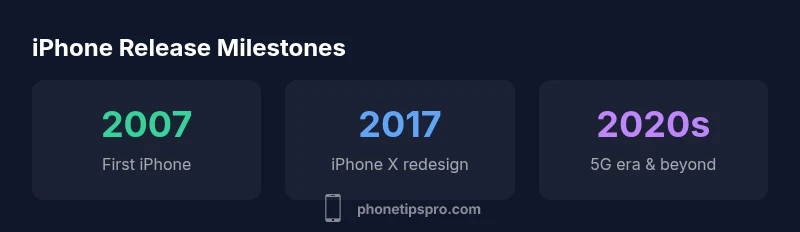
On June 29, 2007, Apple released the first iPhone, launching smartphones into mainstream use. Since then, iPhone generations have followed roughly annual cadences, with landmark shifts such as the iPhone X in 2017. The timeline below outlines key milestones and how release dates have shaped the device’s ecosystem and user expectations.
when did iphones come out
According to Phone Tips Pro Analysis, the original iPhone debuted in 2007, setting a new standard for smartphones. The device combined a touchscreen with a browser, iTunes integration, and visual voicemail — features that would become baseline expectations for future iPhones. The launch date of June 29, 2007, cemented the product as a watershed moment in consumer tech. In the following sections, we trace how Apple moved from a single device to an ongoing lineup of generations that define mobile computing. If you're wondering when did iphones come out, the short answer starts here and continues through today, showing how cadence and technology have evolved in tandem.
Early years and the first transitions
The first iPhone launched in 2007, and Apple soon followed with models that expanded cellular networks and data speeds. In 2008, the iPhone 3G introduced 3G data capabilities, enabling faster web access and the first period of real mobile app growth through the App Store. The 2009 iPhone 3GS refined performance, camera capabilities, and storage options. By 2010, the iPhone 4 brought a sharper Retina display, improved camera performance, and a redesigned antenna layout. These early generations established a pattern: incremental hardware improvements paired with software enhancements that set consumer expectations for reliability and usability.
The 3G era and the app ecosystem
With the App Store launching in 2008, developers could create experiences that extended far beyond the built‑in features. Each new iPhone generation typically brought faster processors, better screens, and richer app ecosystems. The 4G era arrived mid‑decade, enabling higher bandwidth for streaming, gaming, and cloud services. Apple’s strategy emphasized a steady cadence of improvements while preserving backward compatibility for many accessories. Users began to see a practical impact: longer battery life, faster app launches, and more sophisticated mobile photography. This era also forged the expectations that yearly or near‑yearly updates would become a standard path for new devices.
The 2017 redesign milestone: iPhone X and beyond
The 2017 release of the iPhone X marked a design break, introducing an edge‑to‑edge OLED display and Face ID. This milestone signaled a shift away from the home button toward platform‑wide gesture navigation and biometric security as core features. Since then, Apple has iterated on display technology, processors, and camera systems while maintaining a familiar user experience. The iPhone X helped propel a broader trend toward premium materials, higher screen‑to‑body ratios, and more advanced face recognition technology that continued across generations.
Evolution of features: cameras, biometric tech, and connectivity
Over successive generations, iPhones have moved from single‑lens cameras to multi‑camera systems with improved low‑light performance, computational photography, and video capabilities. Biometric security evolved from Touch ID to Face ID, with each iteration tightening security while streamlining user interactions. Connectivity advances—most notably the introduction of 4G and later 5G—expanded use cases from streaming to cloud gaming. These changes collectively shaped how people photograph, communicate, and access information on the go.
How release cadence influences buying decisions and budgeting
Buyers have learned to plan around a roughly annual or biennial upgrade cycle, especially for flagship models. This cadence affects budgeting, trade‑in decisions, and accessory compatibility. Apple’s messaging often emphasizes incremental upgrades rather than revolution every year, encouraging users to focus on the features that matter most—camera quality, display, battery life, and software longevity. For budget planning, many buyers balance immediate needs with potential future value from resale or trade‑in programs.
What this means for consumers today
Today’s iPhone landscape offers a choice between standard and Pro models, emphasizing photography, videography, and processing power. Consumers should align features with their use case: casual users may prioritize battery life and price, while power users may seek high‑end cameras and minimal compromises on performance. The release history shows a trend toward longer software support and better initial performance, making a new model a thoughtful investment rather than a routine upgrade.
Looking ahead: future considerations for iPhone releases
While exact timelines are uncertain, observers expect continued enhancements in AI features, camera capabilities, display technology, and sustainability. Apple will likely balance performance gains with price discipline and ecosystem improvements, ensuring that new hardware is complemented by meaningful software updates. For consumers and developers, this means watching for improvements that unlock better photography, faster apps, and longer device lifespans while planning around annual or near‑annual upgrade windows.
Selected milestones in iPhone generations
| Generation Milestone | Key Change | Year Introduced |
|---|---|---|
| Original iPhone | Touchscreen + mobile browser integration | 2007 |
| iPhone 3G | 3G data, GPS | 2008 |
| iPhone 4 | Retina display, FaceTime | 2010 |
| iPhone X | Edge-to-edge OLED, Face ID | 2017 |
| iPhone 12 | 5G support, flat edges | 2020 |
FAQ
When did the first iPhone come out?
The first iPhone was released on June 29, 2007, introducing a touchscreen smartphone with a revolutionary browser and app ecosystem. This event is widely regarded as the start of modern smartphones.
The first iPhone came out in 2007, marking a turning point in smartphones.
How often does Apple release new iPhone models?
Apple typically releases new iPhone generations on an annual or near‑annual cadence, with occasional delays or mid‑cycle updates depending on hardware and market strategy.
Apple generally updates iPhones about once a year, with some mid‑cycle improvements.
What was significant about the iPhone X?
The iPhone X, released in 2017, introduced an edge‑to‑edge display and Face ID, signaling a shift toward gesture navigation and advanced biometric security.
The iPhone X brought edge-to-edge design and Face ID in 2017.
Do all iPhone models support 5G?
5G support began with the iPhone 12 lineup in 2020; earlier models rely on 4G networks. Check the model specs to confirm connectivity.
5G starts from iPhone 12 and newer; older models use 4G.
How can I track iPhone release history?
Use Apple's official newsroom and reputable tech press for a timeline, including major milestones and design shifts. This provides a reliable historical view.
Look at Apple’s newsroom and trusted tech outlets for a release history.
What’s the difference between generations and models?
Generations denote major releases with broader feature changes. Models within a generation may vary by storage, color, or minor spec tweaks.
Generations are major releases; models are the variations within a generation.
“The most important shift comes when hardware quality and software ecosystems align, driving user engagement and redefining what a phone can do.”
Quick Summary
- Note the 2007 start and evolving cadence
- Recognize major redesigns in 2017 and beyond
- Expect ongoing improvements in cameras and connectivity
- Plan upgrades around feature needs and software support