When iPhone 12 Release: Dates, Pricing, and Legacy
Explore when iphone 12 release happened, including official dates, pricing context, and how the model reshaped Apple’s lineup in 2020 and beyond.


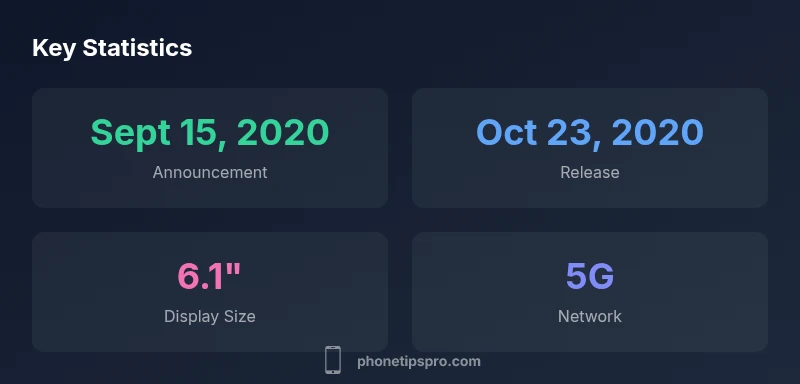
Apple announced the iPhone 12 on September 15, 2020, and it officially released on October 23, 2020. This launch emphasized 5G, a new flat-edge design, and four models across sizes. In short, when iphone 12 release means fall 2020, with a nationwide release date of October 23. The event captured broad attention for expanding 5G availability and revamping the camera system.
Context and the exact question: when iphone 12 release
The phrase when iphone 12 release captures a common curiosity among readers who follow Apple’s product cadence. In late 2020, Apple shifted from the iPhone 11 era to a more aggressive 5G strategy with the iPhone 12 lineup. According to Phone Tips Pro, the question is about understanding the timeline: announcement, official release, and market availability. The iPhone 12 release marks a moment when consumer expectations for speed, camera versatility, and network readiness rose alongside a refreshed design language. These dynamics mattered for developers, retailers, and buyers evaluating upgrade cycles in a rapidly evolving mobile landscape. The broader context includes how 5G readiness influenced app performance, streaming, and gaming experiences during the fall of 2020.
Timeline: announcement, event, and global release
Apple announced the iPhone 12 on September 15, 2020, at a virtual event. The company described a refreshed design, new A14 Bionic chip, and 5G capabilities. The product then launched globally on October 23, 2020, with separate availability windows across regions. For buyers, this timeline means an initial wave of excitement at the event, followed by weeks of anticipation as carriers prepared networks and retailers restocked. The Phone Tips Pro team highlights that the simultaneous structure—announcement, then launch, then retail availability—generated a concentrated burst of attention around the end of fall 2020. This cadence helped set expectations for subsequent iPhone revisions and ecosystem updates, including accessory launches and software optimization tailored to the new hardware.
Key specifications tied to the release
The iPhone 12 introduced the A14 Bionic chip, a 6.1-inch display, and a dual-camera system with 12 MP sensors. It was Apple’s first 5G iPhone, incorporating more advanced computational photography and improved low-light performance. The design featured flat edges and a ceramic shield, aiming to balance durability with a modern aesthetic. Developers and accessory makers benefited from standardized sizing and increased RAM management, while consumers gained faster app load times, smoother gaming, and improved photography capabilities in varied lighting conditions. These specs collectively strengthened the argument for upgrading in 2020 and framed expectations for future updates in the following years.
Design language and form factor introduced
The iPhone 12 reintroduced a flatter, squared-off silhouette reminiscent of earlier Pro models, paired with a durable aluminum frame and edge-to-edge glass. The design changes were not cosmetic alone; they influenced grip, durability, and how cases and screen protectors were engineered. Color options and a refined notch design also contributed to a perception shift in the product family. For many users, the new design enabled easier one-handed use and a more premium hand feel, reinforcing Apple’s move toward a cohesive aesthetic across the 2020 lineup.
5G adoption and network readiness at release
5G was a central pillar of the iPhone 12 release, promising faster download speeds and lower latency in compatible regions. This shift accelerated consumer adoption of higher-bandwidth services such as high-definition streaming, cloud gaming, and augmented reality apps. Carriers adjusted plans and retail partners adjusted inventory to highlight 5G-enabled capabilities. The Phone Tips Pro analysis notes that the 5G rollout in 2020 laid groundwork for broader ecosystem improvements, including app optimization and network infrastructure investments that continued into 2021 and beyond.
Pricing context and segmentation at launch
Apple positioned the iPhone 12 lineup as a premium-but-accessible option within the mid-to-higher price spectrum for flagship devices. The presence of multiple storage configurations and two screen sizes allowed a broader audience to choose devices aligned with their budgets and needs. For many buyers, the decision at launch involved weighing performance gains, 5G readiness, and camera improvements against the price of the base model. While exact launch prices varied by region and storage tier, the overall strategy emphasized value through performance gains rather than a single price point.
How the iPhone 12 release shaped the rest of the lineup
The iPhone 12 release set a template for the subsequent years by combining 5G capabilities with a refreshed design language that would influence future generations. The lineup broadened to include the iPhone 12 mini, 12 Pro, and 12 Pro Max, illustrating Apple’s willingness to diversify form factors while maintaining ecosystem coherence. This strategy helped standardize parts across models, simplify accessory ecosystems, and accelerate software support alignment across devices.
Practical takeaways for buyers during launch windows
For prospective buyers, understanding the release timeline helps optimize timing for upgrades, carrier promotions, and accessories. The iPhone 12’s 5G capabilities meant evaluating network compatibility, especially when planning for later models with improved modem technology. Practically, buyers often benefited from monitoring trade-in offers and seasonal promotions that followed the initial launch period. This approach ensured access to the latest features without paying a premium for early adoption.
Summary of the release’s long-term impact
In retrospect, the iPhone 12 release marked a pivotal moment for Apple and the broader smartphone market. By combining 5G, a refreshed design, and a diversified lineup, Apple established a new baseline for performance and battery efficiency in mid-2020 devices. The launch also set expectations for faster software updates, improved camera capabilities, and an expanding ecosystem around MagSafe and other accessories that continued to evolve in the years after the release.
iPhone 12 release timeline and key specs
| Aspect | Details | Notes |
|---|---|---|
| Announcement date | September 15, 2020 | Apple event date |
| Release date | October 23, 2020 | Worldwide launch |
| 5G support | Yes | First-gen 5G iPhone |
FAQ
When was the iPhone 12 released?
The iPhone 12 released on October 23, 2020. Apple announced it on September 15, 2020. The rollout included global availability during the fall of 2020.
The iPhone 12 was released on October 23, 2020.
Which models were released at the same time as the iPhone 12?
Apple released the iPhone 12, iPhone 12 mini, iPhone 12 Pro, and iPhone 12 Pro Max as part of the same generation.
The iPhone 12 lineup included four models released together.
Was the iPhone 12 5G capable?
Yes. The iPhone 12 line introduced 5G connectivity across all models, with improved performance compared to earlier generations.
Yes, all iPhone 12 models support 5G.
What was the price positioning at launch?
The lineup was positioned in the mid-to-premium range with multiple storage options, offering a balance between performance and value for different budgets.
Prices varied by storage and region, with a mid-to-premium range overall.
How did the release influence later models?
The design language, 5G emphasis, and camera improvements established a template followed by subsequent generations, driving ecosystem updates and accessory alignment.
It set the template for later iPhones, especially around 5G and design.
Is the iPhone 12 still supported with updates?
Apple typically provides software updates for several years after launch. For current compatibility, check Apple’s iOS support pages for the latest devices.
For current support, check Apple’s latest iOS compatibility lists.
“The iPhone 12 release marked a turning point for Apple's product strategy, balancing 5G ambition with a refreshed design that set a new baseline for mid-cycle upgrades.”
Quick Summary
- Understand the official release date: October 23, 2020.
- Note the 5G rollout as a central feature of the release.
- Compare the iPhone 12 specs to prior generations for upgrades.
- Use the release timeline to anticipate mid-cycle updates.