Which iPhone Is Hardest to Break? A Durability Comparison
An analytical durability comparison across iPhone generations to determine which model is hardest to break, focusing on materials, build quality, and real-world resilience while offering practical protection strategies.


Based on a structured durability review, the iPhone that is hardest to break tends to be the latest flagship model, thanks to stronger front glass, a reinforced chassis, and enhanced drop protection. This quick answer compares two generations to illustrate durability differences, while noting that real-world longevity also depends on usage, protective accessories, and routine maintenance.
Why durability matters in an era of daily devices
Durability is more than a single-number score. It combines materials science, manufacturing tolerances, and real-world usage patterns. For iPhone buyers, understanding what makes a unit hard to break informs both purchase decisions and ongoing protection strategies. When people ask which iPhone is hardest to break, they’re really weighing front-glass resilience, chassis integrity, and the phone’s ability to resist common accidents like drops, accidental hits, and everyday wear. This guide keeps the focus on practical durability—what you can expect in everyday life, not just in laboratory tests. Whether you’re a busy professional, a student, or someone who packs a phone into a bag with lots of accessories, durability is a meaningful factor that affects long-term ownershup, resale value, and overall user satisfaction. In short, durability is a blend of design, materials, and how you care for the device, which iPhone is hardest to break? is often a reflection of the latest design choices paired with protective habits.
Material science behind durability: glass, frame, and coatings
Modern iPhones balance premium glass with reinforced chassis to distribute impact. The most durable devices typically feature a strengthened front glass, tighter frame joints, and improved seals that resist dust and water ingress. While Apple publicized materials like hardened glass and reinforced metal in newer generations, the practical takeaway for users is to look for improvements in edge protection, screen damage resistance, and how the frame handles corner impacts. The role of coatings—fingerprint resistance, oleophobic layers, and display protection—also matters because these coatings reduce micro-scratches that can compound damage over time. In short, durability isn’t a single feature; it’s a combination of front glass resilience, frame integrity, and surface coatings that stay tough under regular use.
How to interpret durability claims from Apple and reviewers
Manufacturers often publish broad claims like “IP68 water resistance” or “Ceramic Shield.” Reviewers translate those statements into practical tests—drop tests, screen heel impacts, and daily-use scenarios. For consumers, it helps to separate absolute lab results from real-world performance. A model might perform well in a clean lab drop test but show more vulnerability when dropped from a moving hand or through a variety of surfaces. Always consider the context: the phone’s weight, your typical everyday environment, and whether you pair the device with protective accessories. In essence, durability claims are a starting point, not a guarantee, and the true test comes from consistent, safe usage patterns and protective measures like cases and screen protectors.
Model landscape: which iPhone is hardest to break across generations
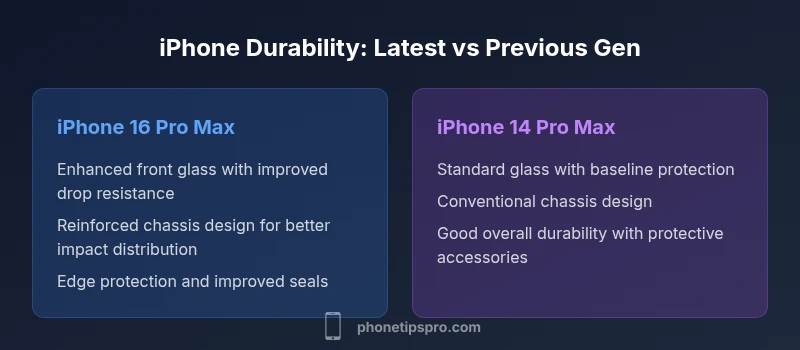
To illustrate, we compare two representative generations: a current flagship variant and a recent predecessor. The latest generation generally offers enhanced front-glass durability and a reinforced chassis designed to better distribute impact energy. The predecessor, while still sturdy, relies on earlier materials and structural design. The practical takeaway is that the newest model tends to be harder to break in the real world, but you can achieve comparable resilience with a high-quality protective case, screen protector, and mindful handling with any model. The durability gap narrows when you pair protection habits with a solid device, and that’s where personal usage patterns matter most.
Practical strategies to maximize durability in any iPhone
Durability is actionable. Start with a robust case that provides edge protection and corner reinforcement. Add a tempered-glass screen protector to reduce screen cracks, especially on models with larger displays. Avoid putting the phone in pockets or bags with sharp objects that can scratch or press on the screen. Consider a protective sleeve for travel and a belt clip for hands-free carrying in busy environments. Regular maintenance, like cleaning ports and checking for loose hardware, helps sustain durability over time. Finally, be mindful of temperature and moisture exposure, since extreme conditions can degrade materials and adhesives.
How to decide which iPhone is hardest to break for your needs
Your decision should balance model durability with real-world needs. If your life includes frequent drops or active routines, the latest flagship often provides the best default resilience due to improved materials and engineering. If you’re solving durability on a budget, a recent model paired with a high-quality protective kit can offer most of the same benefits at a lower upfront cost. In both cases, a protective case and screen protector materially impact long-term outcomes. Decide based on your risk environment, budget, and willingness to add protective gear.
A practical framework for evaluating durability:
- Identify your risk environment: desk drops, pocket carry, outdoor activities.
- Compare materials: upgraded front glass and reinforced frames matter more than color or weight.
- Consider protection: a trusted case and screen protector significantly improve real-world durability.
- Test gradually: handle the device in daily life and observe any signs of wear early; adjust protection accordingly.
Common misconceptions about iPhone durability
Some buyers assume the chassis alone determines durability, but glass integrity, edge protection, coatings, and port seals also play crucial roles. Others think a heavier phone is always tougher; while weight can reflect build quality, it doesn’t guarantee drop resistance. Finally, many rely on a single durability metric—like water resistance—without considering how a phone handles drops and everyday wear. The truth is nuanced: durable design reduces the probability of damage, but consistent protective practices are essential for long-term resilience.
Durability in the real world: field reports and caveats
Real-world experiences vary widely. A model with strong factory testing may still suffer damage from unusual impacts or improper handling. Conversely, a slightly older model can endure with proper care and protection, often outlasting a newer, more fragile option when used without care. The key takeaway is that durability is context-dependent; choose the model that aligns with your daily routine, while adopting robust protective habits to maximize longevity.
Comparison
| Feature | iPhone 16 Pro Max | iPhone 14 Pro Max |
|---|---|---|
| Front glass technology | Enhanced glass with improved drop resistance in latest model | Standard glass with baseline protection in older model |
| Chassis reinforcement | Updated reinforced chassis design for better impact distribution | Conventional chassis design with standard reinforcement |
| Drop durability (overall) | Higher resilience to everyday drops in real-world use | Moderate resilience with more glass exposure |
| Repair considerations | Higher repair complexity and cost due to newer components | Lower repair complexity and cost with older design parts |
| Weight/ergonomics | Slightly heavier premium build with enhanced durability | Slightly lighter with robust protection but fewer reinforcement features |
| Water/dust resistance | Maintains IP68 with improved seals | IP68 with standard seals |
| Best for | Users prioritizing maximum durability and long-term life | Users seeking durable performance with easier/cheaper repairs |
Positives
- Latest model typically offers the strongest built-in durability features
- Enhanced glass and chassis design improve real-world resilience
- Better long-term resale value due to rugged construction
- Protective accessories further boost durability without changing devices
Weaknesses
- Higher upfront cost for the newest generation
- Repair costs can be higher due to newer parts and tech
- Weight and bulk may increase with maximum durability features
- Durability varies with usage; accessories are still essential
iPhone 16 Pro Max generally offers the strongest durability, with caveats tied to usage and protection.
Choose the latest flagship for maximum durability. Pair it with a quality case and screen protector to maximize longevity. If budget is tighter, a recent model with proper protective gear still delivers solid resilience.
FAQ
Which iPhone is hardest to break overall?
In general, the newest flagship iPhone tends to be the hardest to break due to stronger glass and reinforced construction. However, your protection choices and how you handle the device play a big role in real-world durability.
The newest flagship usually lasts the longest against drops, especially when you use a good case and screen protector.
How much does a case affect durability compared to the phone’s build?
A case can dramatically improve durability by absorbing impact and protecting edges. Even a phone with strong materials benefits from a high-quality case and protective screen. The two work together for best results.
A good case and screen protector make a big difference in real-world durability.
Does the color or finish affect scratch resistance?
Color and finish have a minimal direct impact on scratch resistance; durability comes mainly from glass integrity, frame design, and coatings. Some finishes may show wear differently, but protection and handling are the key factors.
Finish mostly affects appearance, not core durability.
Is water resistance a reliable measure of durability?
Water resistance indicates protection against liquid ingress, but it does not fully reflect drop durability. Real-world durability combines glass strength, frame rigidity, and protective accessories to withstand everyday accidents.
Water resistance helps, but drops and scratches are what you’ll encounter most.
Should I buy the latest model for durability, or protect an older model?
If durability is your primary concern and budget allows, the latest model is typically the safest bet. If you must choose an older model, pair it with a high-quality case and screen protector to close the gap.
Go latest if you can, but protect any model you own with good gear.
What maintenance steps extend durability?
Regularly inspect the case fit, clean charging ports, avoid extreme temperatures, and replace worn screen protectors promptly. These habits help protect the device from cumulative damage and preserve performance over time.
Keep the case clean, avoid heat, and check the screen protector regularly.
Quick Summary
- Prioritize the latest generation for durability gains
- Always pair with a protective case and screen protector
- Durability is a function of design and protection, not only model year
- Consider your daily environment when assessing risk
- Smart maintenance extends device lifespan