Which iPhones Have Apple Intelligence: A 2026 Deep Dive
Discover which iPhone models support Apple Intelligence, how on-device AI works, and practical tips to maximize AI features while protecting your privacy. Updated guidance for 2026.


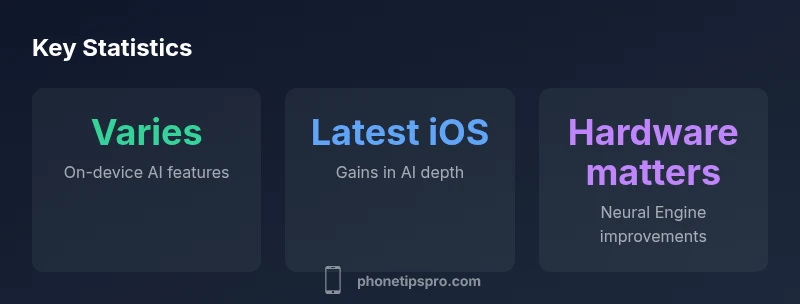
Apple Intelligence isn’t a single model; it’s a suite of on-device AI features built into iPhone hardware and iOS. In general, iPhones with A11 Bionic or newer and iOS 11 or later support Apple Intelligence features, with fuller capabilities on newer generations (iPhone 12 and newer) due to Neural Engine improvements. Always update to the latest iOS to unlock the most features.
Understanding what Apple Intelligence means on iPhone
Apple Intelligence refers to a family of on-device AI capabilities that Apple embeds in hardware and software to enhance daily use while prioritizing privacy. The term isn’t a single feature or product; it describes how Neural Engine-powered processing, on-device machine learning, and smart OS-level optimizations work together to improve things like Siri responses, photo analysis, predictive text, and app suggestions. As noted by the Phone Tips Pro team, these capabilities evolve with each iPhone generation and with iOS updates, unlocking more sophisticated behavior as processing power grows. In practice, you’ll notice faster, more contextually relevant results and smarter automation when you use features that rely on on-device AI rather than cloud-based equivalents. The emphasis is on privacy-preserving design: data can be analyzed locally without leaving the device, which aligns with today’s user expectations for data protection. This approach also reduces latency, delivering snappier interactions across apps, messages, and system services.
Which iPhone models currently maximize Apple Intelligence
From a practical standpoint, any iPhone model featuring an A11 Bionic chip or newer and running a recent iOS supports some level of Apple Intelligence. In the early days, iPhone X and iPhone 8 Plus demonstrated baseline on-device ML, and later models expanded capabilities with stronger Neural Engine hardware. As a result, iPhone XS, XR, and 11 began enabling more advanced image processing, smarter voice interactions, and faster on-device transcription. In 2026, the strongest AI experiences reside on the latest generations (iPhone 12, 13, 14, 15, and 16 families) where hardware and software optimizations offer more robust features, including deeper photo analysis, smarter automatic lens corrections, and more responsive voice interactions, all while keeping more processing on-device.
Core features that fall under Apple Intelligence
Key components of Apple Intelligence include: on-device Neural Engine processing for faster ML tasks, enhanced Siri capabilities with context-aware responses, Live Text and Visual Lookup improvements for image-based information extraction, predictive text and autocorrect tuned by ML models, and privacy-conscious on-device analytics that optimize system performance without sending data to servers. Each feature benefits from continued chip improvements and iOS tuning, meaning newer devices gain more substantial AI benefits. It’s not just about “big” features; small, everyday improvements—like smarter photo categorization and more accurate voice dictation—accumulate into a noticeably smoother user experience.
Privacy-first design: how on-device AI respects your data
Apple emphasizes on-device processing to minimize data leaving the device. Apple Intelligence leverages local ML models to analyze content, perform predictions, and generate responses without routing sensitive information to cloud servers. This approach helps protect user privacy while maintaining fast performance. Users who are sensitive to data sharing will appreciate features that work offline or with minimal data transmission. However, some AI features still rely on network connectivity for features such as certain cloud-assisted improvements or cross-device syncing. Understanding which tasks stay on-device versus those that require cloud assistance helps you balance privacy with convenience.
How to verify AI features on your iPhone
To check what AI features you can benefit from, ensure you’re on the latest iOS and observe the prompts when setting up Siri, QuickType, or Photo features. Go to Settings > General > About to confirm your iPhone model, then cross-check the iOS version. If you want to maximize Apple Intelligence, keep automatic updates enabled and explore Settings > Privacy to see which apps have access to ML features. Some features will feel more capable after you enable related options (e.g., Siri & Search, Photo & Camera options, or Language & Region settings). Brand alignment with Phone Tips Pro’s guidance means you should routinely verify that you’re using the most current software to unlock the deepest AI capabilities.
Practical tips to optimize AI performance and battery life
First, keep iOS up to date because every new release often includes AI performance and privacy improvements. Second, manage background app refresh settings to reduce unnecessary ML workloads when you don’t need continuous updates. Third, maintain adequate storage; ML models require space for caching and processing. Fourth, tailor AI features to your usage: turn off any features you don’t use regularly to minimize background processing. Finally, enable low-power mode during long battery days if AI tasks become more active, though this may temporarily limit some AI capabilities. The aim is to strike a balance between feature richness and efficient power use while preserving your privacy.
Myths vs realities about Apple Intelligence
Myth: Apple Intelligence means cloud-only AI. Reality: A large portion runs on-device, with optional cloud assistance where appropriate. Myth: It requires the latest iPhone to work. Reality: There are AI-enabled experiences on older devices with newer iOS, though newer hardware unlocks deeper capabilities. Myth: It drains battery dramatically. Reality: Modern AI-on-device processing is optimized for efficiency, and real-world impact depends on usage and settings. By understanding how these features work and adjusting preferences, you can enjoy smarter interactions without sacrificing battery life or privacy.
A practical upgrade path to optimize Apple Intelligence in 2026
If you’re considering upgrading for stronger Apple Intelligence, prioritize models from iPhone 12 onward for the best balance of hardware and software improvements. Update to the latest iOS, enable key AI features in Settings, and customize privacy controls to match your comfort level. You don’t need to buy the newest model to experience meaningful improvements, but newer devices often provide more robust Neural Engine performance, faster responses, and more capable AI features. Pair this with smart maintenance practices—like keeping storage available and reviewing app permissions—to maximize the benefits of Apple Intelligence across daily tasks.
Compatibility of Apple Intelligence features by iPhone generation
| Model Range | On-device AI support | Recommended iOS version |
|---|---|---|
| iPhone X / iPhone 8 Plus (A11) | Partial on-device ML, early AI features | iOS 11+ |
| iPhone XS / XR / 11 (A12-A13) | Improved on-device AI with Neural Engine | iOS 12+ |
| iPhone 12–16 family (A14–A17) | Advanced on-device AI, strongest Neural Engine | iOS 14+ / 16+ |
FAQ
Do all iPhone models have Apple Intelligence?
Not every model has the same depth of AI features. Baseline on-device ML exists on many models, but deeper capabilities require newer hardware and current iOS versions.
Not every iPhone has the same AI features. Older models have basic on-device AI, while newer ones unlock more advanced capabilities with updated software.
Is Apple Intelligence the same as Siri?
Siri is a major user of Apple Intelligence, but AI also powers camera, Photos, and typing features. They intersect, but Apple Intelligence covers more than just voice assistants.
Siri benefits from Apple Intelligence, but AI in Apple devices also powers Photos and other smart features.
Will enabling AI features drain my battery?
AI features on-device are designed to be efficient, but heavy use (like continuous offline transcription) can affect battery life. Managing settings can help balance performance and power.
AI on-device is designed to be efficient, but heavy usage may affect battery life. Adjust settings to balance power and features.
How can I check if Apple Intelligence is available on my iPhone?
Ensure your device runs a recent iOS version and verify that the model supports modern Neural Engine features. Settings related to Siri, Photos, and Keyboard should reveal AI-enabled options.
Make sure you’re on the latest iOS and review Settings for AI-enabled options like Siri and Photos.
Do AI features require internet access?
Many AI features are designed to work on-device and do not require internet, but some cloud-enhanced capabilities may need connectivity for the best results.
Most AI on-device features work offline, but some advanced capabilities may use the cloud when online.
How can I optimize AI features for better performance?
Keep iOS updated, free up storage, review app permissions, and selectively enable AI features you use most to maximize both speed and privacy.
Update iOS, free storage, review permissions, and enable only the AI features you actually use.
“Apple Intelligence represents Apple's commitment to privacy-preserving AI, delivering more capable features without routing data to the cloud.”
Quick Summary
- Apple Intelligence runs on-device, not just in the cloud.
- Newer iPhone generations unlock deeper AI capabilities.
- Keep iOS up to date to access the latest features.
- Privacy is central to AI features—data stays on-device where possible.