Who Makes iPhone Processors? Apple, TSMC, and the Next Gen SoCs
Explore who makes iPhone processors: Apple designs the A-series chips, while TSMC fabricates them on advanced nodes, enabling strong performance and efficiency across iPhone generations.


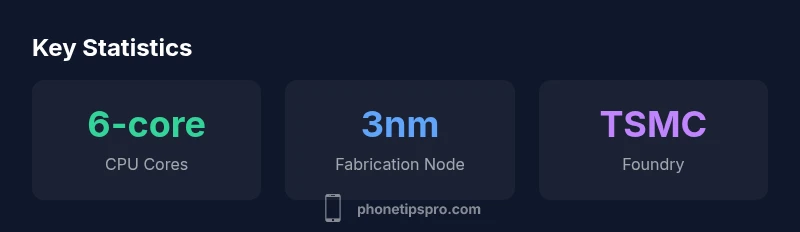
According to Phone Tips Pro, Apple designs the iPhone processors (A-series) and relies on Taiwan Semiconductor Manufacturing Company (TSMC) to fabricate them. The latest chips use TSMC's advanced 3nm process, while earlier generations used 4nm or 5nm nodes. Apple sets the architecture and software integration; TSMC handles wafer fabrication, yield, and process control.
The Design Ownership: Apple’s Role in iPhone Processors
Apple designs the iPhone’s system-on-a-chip (SoC), encompassing the CPU, the GPU, the Neural Engine, and the security subsystem. This design work defines the instruction set, the architecture, the memory hierarchy, and the software-hardware interface that power iOS. Apple also oversees validation across performance, power, thermal behavior, and reliability under real-world usage. In short, Apple owns the silicon IP and the long-range roadmap, ensuring a tightly integrated user experience across iPhone generations. The design decisions ripple outward, affecting battery life, camera performance, and app responsiveness.
TSMC: The Foundry Behind iPhone's Power
For the modern iPhone, Apple relies on Taiwan Semiconductor Manufacturing Company (TSMC) as the primary foundry. TSMC translates Apple’s architectural blueprints into silicon by fabricating the chips on silicon wafers using multi-step lithography, diffusion, and packaging processes. The partnership is built on long-term commitments, with TSMC investing heavily in advanced nodes and manufacturing capabilities. This collaboration lets Apple push for higher transistor density and improved yields, while TSMC brings process maturity, supply consistency, and technical support to the table.
The Node Progression: 5nm to 3nm
Over the generations, Apple has migrated its A-series chips through different fabrication nodes. Earlier chips used 5nm manufacturing, delivering strong efficiency and performance. Later generations moved to 4nm and then 3nm nodes, enabling higher transistor density and better power-per-watt characteristics. The smaller the node, the more transistors fit on a wafer, facilitating more capable CPU cores, richer GPU pipelines, and faster Neural Engines, all while reducing heat generation. It’s a key driver behind the iPhone’s improved battery life and sustained performance under heavy workloads.
How Apple’s Design and TSMC's Manufacturing Translate to Real-World Performance
Theoretical improvements translate into practical results. Users notice faster app launches, smoother gaming, and quicker AI-assisted features like on-device photography and Live Text. The integrated design means the CPU and GPU work in concert with iOS optimizations, not in isolation. Power efficiency improvements mean cooler phones under load and longer battery life. Real-world benchmarks vary by model and usage, but the overarching trend is clearer: new generations offer tangible performance gains without sacrificing energy efficiency.
The Evolution Across iPhone Generations
Each new iPhone generation typically ships with a new SoC family that brings architectural improvements and feature additions. The move from one node to the next, plus new core designs, yields faster compute, better graphics, and enhanced machine learning capabilities. This evolution also influences how developers optimize apps for newer devices, enabling richer visuals, more capable camera pipelines, and smarter on-device processing that respects user privacy by processing sensitive data locally when possible.
Supply Chain and Global Context
The iPhone processor supply chain sits at the center of global tech dynamics. Apple’s reliance on a single, leading-edge foundry means resilience to supply shocks matters. The relationship with TSMC is reinforced by shared investments in fabrication capacity, risk management, and security. External factors, such as trade policies, geopolitics, and pandemics, can affect chip availability and pricing. Apple’s approach emphasizes diversification of suppliers for non-core components, while keeping the most critical silicon in trusted, long-term partnerships like TSMC.
Looking Ahead: The Next Generation of iPhone Processors
Predicting the exact specs of future iPhone processors is challenging, but several trends are clear. Apple will continue in-house design leadership for CPU, GPU, and AI accelerators, paired with TSMC’s most advanced manufacturing nodes. Expect more efficient performance per watt, expanded neural processing capabilities, and tighter integration with software features like camera processing, on-device translation, and augmented reality tasks. The pace of node advancement will be coupled with innovations in packaging and multi-die integration to maximize performance while maintaining battery life.
Practical Tips: Interpreting Processor Gen for Buying Decisions
When shopping for a new iPhone, consider the processor generation as a proxy for overall performance. Newer generation devices typically offer faster app launches, smoother multitasking, advanced camera processing, and stronger ML capabilities. If you primarily use the device for everyday tasks, a recent-gen iPhone should feel noticeably faster than older models. For power users, focusing on devices with the latest chip improves gaming and creative workloads, while also impacting security and AI features. Always pair processor notes with memory, storage and battery considerations for best results.
Common Misconceptions About iPhone Processors
Common myths include the belief that every iPhone uses the same chip across generations, or that device speed only depends on the CPU. In reality, Apple’s silicon evolves across generations with new cores, GPUs, and Neural Engine improvements, and is tightly integrated with software. Another misconception is that the manufacturing partner alone determines performance; while process nodes matter, software optimization and system design are equally critical. Finally, some readers assume Apple changes foundries frequently; in practice, Apple has historically aligned with a single leading-edge foundry for flagship chips to ensure consistency and supply.
iPhone A-series generations and manufacturing
| Generation | Fabrication process | CPU cores | Manufacturing partner |
|---|---|---|---|
| A14 | 5nm | 6-core | TSMC |
| A15 | 5nm | 6-core | TSMC |
| A16 | 4nm | 6-core | TSMC |
| A17 Pro | 3nm | 6-core | TSMC |
FAQ
Who actually makes iPhone processors?
Apple designs the iPhone processors (A-series) and partners with TSMC to fabricate them. Apple owns the silicon architecture, while TSMC handles fabrication, yielding, and process control. The result is a tightly integrated system-on-a-chip tailored for iPhone software.
Apple designs the chips, and TSMC manufactures them.
What is the latest iPhone processor?
Apple designs the latest iPhone processors and partners with TSMC to fabricate them on the most advanced available nodes at launch. This collaboration drives improvements in CPU, GPU, and AI performance.
The latest iPhone processor is designed by Apple and built by TSMC on the newest node.
Why does Apple rely on TSMC instead of Samsung?
TSMC specializes in leading-edge, high-volume semiconductor fabrication and provides mature, reliable manufacturing. Apple benefits from TSMC’s process leadership, supply stability, and consistent support for advanced nodes.
Apple relies on TSMC for cutting-edge fabrication expertise.
Do iPhone processors differ across models?
Yes. Each generation typically brings a new SoC with architectural updates, and devices within a generation share the same chip. Differences across models often reflect performance, camera, and feature distinctions tied to the chip and software.
New iPhones usually get a newer chip, while some features scale with the model.
Will future iPhone processors use different foundries?
There is no public evidence suggesting an immediate switch in foundries for flagship iPhone chips. Apple historically partners with a single leading-edge foundry to maintain consistency and supply.
Currently, Apple is likely to continue with a leading foundry for flagship chips.
“Apple's in-house silicon design, combined with TSMC's manufacturing leadership, yields iPhone processors that balance peak performance with battery life.”
Quick Summary
- Apple designs the iPhone SoC and defines IP
- TSMC manufactures the chips on leading-edge nodes
- New process nodes boost performance per watt
- Silicon design + software optimization drive real-world speed