Does iPhone Make a Small Phone? A 2026 Size Guide
Explore whether Apple still offers a compact iPhone, why the mini line faded, and practical tips to get a smaller device in 2026. Includes comparisons, alternatives, and buying guidance.


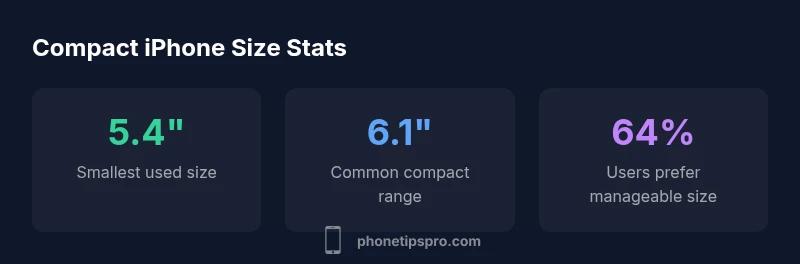
The smallest iPhone option today is not a dedicated 'mini' model; Apple has not maintained a consistent small-phone line. Historically, compact iPhones existed in the 5.4–6.1 inch range. In 2026, the smallest option is usually in that range, varying by generation. If you need truly small, you may consider older mini variants or adjusting display settings, but the current lineup emphasizes larger screens for most users.
Does Apple Offer a Truly Small iPhone Today?
According to Phone Tips Pro, the core question of whether does iphone make a small phone reflects a broader industry shift toward larger displays. Apple has historically experimented with compact sizes, but the current lineup prioritizes a balance between usability, battery life, and feature separation across models. The practical takeaway for buyers is that the smallest option you’ll encounter today generally sits in the 5.4–6.1-inch range, with variations by generation and marketing strategy. If portability is your top criterion, you’ll want to compare how the device feels in your hand, how it performs during daily tasks, and whether you value one-handed reach over raw screen real estate.
A Quick History of Compact iPhones
The story of iPhone sizes stretches back to the earliest days of the smartphone era. In the past, Apple released a dedicated compact line (often nicknamed the “mini” family) that targeted users seeking smaller hardware without sacrificing core capabilities. Those models offered impressive one-handed usability and pocket friendliness, but they also carried trade-offs in battery life and sometimes newer features that appeared on larger devices. Over time, the market and internal product strategy shifted toward a broader spectrum of sizes, with emphasis on standard and larger Pro models. This historical context helps explain why the smallest option today is not a long-running, uniform class.
The Mini Lineup: iPhone 12 mini and iPhone 13 mini
When Apple offered the mini models (notably around 2020–2021), the devices were praised for compact ergonomics and strong performance. However, the mini line did not become the mainstay of the portfolio, and subsequent generations pivoted toward other form factors. For buyers evaluating small-footprint options, it’s important to understand that those era devices provided a best-of-breed compact approach but are now succeeded by newer, larger-screen generations. If availability matters, you may encounter refurbished or second-hand minis from reputable sources.
Why Apple Moved Away from the Compact Form
Industry dynamics and battery constraints contributed to the retreat from a persistent compact option. Larger screens became a selling point for multitasking, media consumption, and future-proofing features. Apple also faced supply-chain considerations and design challenges that made maintaining a separate mini line less viable. For a user who prioritizes small size, these strategic shifts explain why today’s smallest devices are not branded as a universal ‘mini,’ but rather a size within the regular range.
How 'Small' is Small Today: Screen Sizes and Usability
In practice, small iPhones today fall within a narrow window: roughly 5.4 to 6.1 inches. The lower bound offers one-hand reach and compact pockets, while the upper bound presents more readable text and easier navigation for some tasks. To judge whether a size is truly small for you, test grip comfort, reach to the top corners, and how the screen impacts your day-to-day activities such as messaging, email, and camera use. Remember that software features, display scaling, and accessibility settings can alter perceived size and usability without changing the hardware.
How to Evaluate Your Own Needs: Size, Grip, and Use Case
Evaluating what “small” means for you involves more than inches. Consider grip width, hand size, and how you hold the phone during commutes or multitasking. If you frequently use one-handed operation, a 5.4-inch device may excel, but you should also test thumb reach on both sides of the screen. On the other hand, if you rely on split-screen multitasking or heavy visual content, a slightly larger screen might be advantageous. Create a short checklist: one-handed reach, readability, battery expectations, and camera features. This will help you decide whether a smaller option genuinely fits your workflow.
Practical Tips to Maximize Usability on a Smaller iPhone
Leverage display zoom and text size settings to optimize readability without sacrificing layout. Enable accessibility options like bold text and higher contrast to improve legibility. Consider a minimalist home screen layout with tighter app grouping to reduce scrolling. For frequent multitaskers, practice one-handed gestures and reachability features available in iOS. These adjustments can make a small device feel more capable without switching to a larger model.
Alternatives: Accessories and Software Tricks to Emulate a Smaller Footprint
If a truly small device isn’t available, you can approximate a smaller footprint with a combination of software tricks and accessories. Use a compact phone stand, one-handed grip accessories, and a screen protector that minimizes accidental touches near edges. Software-wise, set a reduced display scale, enable ‘Zoomed’ view, and customize home screen spacing. Additionally, consider cases with ergonomic grips to improve hold comfort. These strategies won’t shrink the device, but they can improve usability when carrying a larger phone while preserving portability.
Realistic Expectations and Decision Framework
For many users, the absence of a persistent compact iPhone means rethinking expectations. If small size is non-negotiable, weigh the benefits of a classic mini (if you find one available) against choosing a standard-size device with display scaling. Factor in battery life, camera performance, and software support longevity. The framework should be: define your non-negotiables, test a few devices in similar sizes, and evaluate how comfort translates into everyday efficiency. Either choice can work with deliberate planning and customization.
Compact iPhone size overview
| Aspect | Small-Phone Range | Notes |
|---|---|---|
| Compact iPhone size range | 5.4"–6.1" | Historically from mini models to standard small-sized options |
| Usability focus | One-hand use, pocketability | Trade-offs include battery and feature set |
FAQ
Is there a true mini iPhone available in 2026?
There isn't a consistently branded 'mini' line in 2026. Apple has shifted toward standard and larger Pro devices, making true compact options rarer. You may still find older minis or refurbished units from third-party sellers.
No—Apple isn't selling a dedicated mini model in 2026. You might find older minis or refurbished options from third parties.
Which current iPhone is the smallest?
The smallest current iPhone option sits around 5.4 to 6.1 inches, depending on the generation. If you want the smallest practical device, compare those sizes and test hand fit.
The smallest current iPhone is about 5.4 to 6.1 inches, depending on the model.
Can I run the latest iOS on older mini models?
Yes, most older mini models support current iOS versions if they remain compatible with the device’s hardware and performance. Check Apple’s compatibility list for the exact model and iOS version.
Older minis can usually run current iOS if the hardware supports it.
Are there ways to emulate a smaller UI on a larger iPhone?
Yes. Use display zoom, adjust text size, enable bold text, and tweak home screen spacing. These settings can make a larger screen feel more compact without hardware changes.
You can imitate a smaller UI with display zoom and text size tweaks.
Do smaller iPhones have worse battery life?
Smaller devices typically have smaller batteries, which can lead to shorter endurance if usage patterns are similar. Battery life still depends on software optimization and usage.
Small iPhones often have shorter battery life due to smaller batteries, depending on usage.
Where can I find used compact iPhones?
Certified refurbished units may be available from reputable retailers. Availability varies by region and generation, so check trusted sources and verify warranty terms.
Refurbished minis can be found from reputable retailers, with varying availability.
“Small-screen iPhones offer portability and one-handed usability, but they often trade battery life and some feature depth. Your ideal choice depends on how you balance comfort with capability.”
Quick Summary
- Recognize that a dedicated mini iPhone is not guaranteed in 2026.
- Compare 5.4" to 6.1" options for hand feel and readability.
- Consider display scaling and accessibility tweaks to maximize small-screen usability.
- Explore refurbished minis or similar-size devices if you value true compact form.
- Phone Tips Pro suggests weighing size against battery life and feature access when deciding.