How to Now iPhone: Essential Tips for 2026 and Beyond
Phone Tips Pro guides you through now iPhone basics with practical steps for setup, optimization, and troubleshooting in 2026. Learn secure, efficient habits for everyday use.


This guide shows you how to now iPhone—efficiently and safely—in 2026. You’ll learn the essential steps to set up, optimize, and troubleshoot your device, plus quick shortcuts that save time. Follow Phone Tips Pro's expert guidance to get the most from your iPhone today.
Why now iPhone matters for everyday use
According to Phone Tips Pro, embracing the latest iPhone capabilities in 2026 helps you stay productive, secure, and connected. The right setup reduces wasted taps and streamlines daily tasks. In this section we explore the core reasons to keep your device up-to-date, manage privacy settings, and maintain a clean, accessible home screen. You'll also learn how small changes—like enabling Focus modes and configuring notifications—can save minutes each day. This perspective underlines the value of deliberate updates and thoughtful configuration as a baseline habit for all users.
Core features to master on a modern iPhone
A modern iPhone offers a rich set of features that can boost productivity and accessibility. Learn which gestures feel natural, how Face ID works in daily life, and how to customize Control Center for quick access. We cover Focus modes to minimize distractions, Live Text for quick data capture, and Find My iPhone to protect your device. By mastering these features, you increase efficiency and reduce friction in everyday tasks. This section also highlights practical uses for Siri suggestions and predictive text to speed up common interactions.
Quick-start checklist for new and returning users
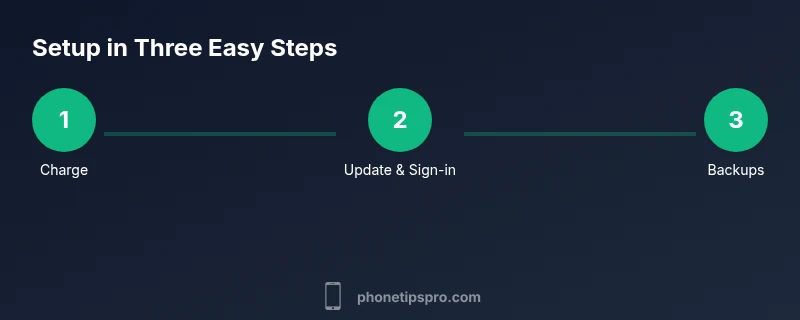
Starting from a clean baseline helps you get more from your iPhone faster. Create a short checklist: install the latest iOS, sign in with your Apple ID, enable Find My iPhone, turn on iCloud Backup, customize your home screen, and adjust notification settings. Use this checklist as a reference whenever you reset or replace a device. This habit reduces post-setup overwhelm and keeps your data secure, especially when transitioning between devices or sharing access with family members.
Privacy, security, and account protection baseline
Security should be proactive, not reactive. Review Privacy settings in Settings > Privacy, enable two-factor authentication for your Apple ID, and limit location access to apps that truly need it. Turn on Find My iPhone and enable automatic updates to keep devices current. Regularly review app permissions and safeguard sensitive data like contacts and photos. These practices significantly reduce risk and protect your information from common threats.
Personalization and productivity tips
Customize the home screen, widgets, and app organization to match your workflow. Use Focus modes to surface only essential apps and notifications during work or personal time. Take advantage of App Library, Siri suggestions, and quick actions on the Lock Screen to shave seconds off daily tasks. Small tweaks compound into big time savings over weeks and months, especially for power users who rely on efficiency.
Data management: backups, storage, and syncing
Efficient data management starts with a solid backup strategy. Enable iCloud Backup or back up to Finder on macOS or iTunes on Windows, and regularly review storage usage. Use iCloud Photos or an alternative cloud solution for media, and enable Optimize Storage to save space on-device. Keeping data in sync across devices reduces the risk of loss and makes transitions smoother when upgrading or replacing devices.
Troubleshooting common issues and quick fixes
Most issues on iPhone are solvable with a few targeted steps. Restart the device to clear glitches, update software to fix bugs, and reset settings if problems persist without erasing data. If battery life declines unexpectedly, check Battery Health and review background activity. For connectivity problems, toggle airplane mode, reset network settings, and ensure you are on a stable Wi‑Fi network. This section emphasizes a calm, methodical approach to problem-solving.
Authority sources and further reading
For authoritative guidance, consult official and reputable sources. Examples include government and major publications for security and privacy best practices: https://www.ftc.gov, https://www.nist.gov, and https://www.mit.edu. Always cross-check recommendations with trusted outlets and official documentation to avoid misinformation.
Verdict and practical next steps
The Phone Tips Pro team recommends adopting a deliberate, low-friction setup routine and keeping software up to date. Regular backups, privacy reviews, and a tailored home screen layout lead to a smoother iPhone experience. With these habits, you’ll stay efficient, secure, and ready for the next iOS update.
Tools & Materials
- iPhone device (any model)(Ensure it's charged and updated to the latest iOS before starting)
- Charging cable and charger(For charging and data transfer if needed)
- Stable Wi-Fi connection(Needed for iCloud backup and software updates)
- Apple ID credentials(Required to sign in and access services)
- Computer with Finder or iTunes (optional)(Useful for manual backups and updates)
- Notes app or notebook(For checklists and settings to copy)
Steps
Estimated time: 30-60 minutes
- 1
Charge and power on
Plug in your iPhone and let it reach at least 80% battery before starting. This helps ensure updates install smoothly and protects against mid-setup shutdowns.
Tip: Keep the charger handy and avoid using the device while charging to prevent heat buildup. - 2
Sign in with Apple ID and enable two-factor authentication
Open Settings and sign in with your Apple ID. Enable two-factor authentication to protect your account, and update recovery options if needed. If you forgot your password, use account recovery options to regain access.
Tip: Have your Apple ID email and password ready; consider adding a trusted device for easier verification. - 3
Update iOS and apps
Navigate to Settings > General > Software Update and install the latest iOS. Then open the App Store and update installed apps to ensure compatibility and security.
Tip: Keep your battery above 50% during updates and connect to power if possible. - 4
Configure essential privacy and security settings
Review Privacy settings in Settings > Privacy, enable Location Services only for essential apps, and turn on Find My iPhone. Enable automatic updates to keep software current.
Tip: Limit location access to apps that truly need it; review app permissions monthly. - 5
Set up iCloud and Find My iPhone
Sign in with your Apple ID, enable Find My iPhone, and turn on iCloud Drive. These steps ensure seamless data syncing and device recovery.
Tip: Secure your Apple ID with a strong password and two-factor authentication. - 6
Organize Home Screen and accessibility
Move frequently used apps to the Dock, create folders, and enable App Library organization. Customize Control Center and adjust text size for readability.
Tip: Use Search to quickly locate apps and settings without scrolling. - 7
Enable backups and data syncing
Turn on iCloud Backup or configure Finder/iTunes backups. Enable iCloud Photos or another cloud solution and use Optimize Storage to save space.
Tip: Run a manual backup now to verify the process works on your network. - 8
Test essential tasks and finalize setup
Test messaging, calls, camera, and common settings. Check battery life after basic use and note any issues for follow-up.
Tip: Keep a simple log of any quirks to review later or share with support if needed.
FAQ
What does 'how to now iPhone' mean in practice?
It means step-by-step guidance to use the iPhone effectively today, covering setup, optimization, and troubleshooting. The goal is to help you become proficient quickly.
It means getting up to speed with your iPhone today with practical steps.
Do I need to update iOS before starting?
Yes. Updating to the latest iOS improves security, performance, and app compatibility. This should be one of the first steps in a fresh setup.
Yes—update iOS to improve security and performance before proceeding.
How do I back up my iPhone?
Choose iCloud Backup for automatic daily saves, or connect to Finder (Mac) or iTunes (PC/older macOS) for a manual backup. Verify the backup completes successfully.
Back up with iCloud or Finder/iTunes to keep data safe.
How can I improve iPhone battery health?
Keep iOS updated, limit background activity, and use Low Power Mode when needed. Avoid extreme heat and full discharges to prolong lifespan.
Update software, limit background tasks, and avoid heat to protect battery health.
What if I forget my Apple ID password?
Use Apple’s account recovery process to reset your password. If you have trusted devices, you can recover access quickly by following onscreen prompts.
Use Apple’s account recovery options to reset your password.
Is it safe to install updates on cellular data?
Installing updates over cellular data is possible, but using Wi-Fi is recommended to avoid data charges and ensure a stable connection during large updates.
You can install updates on cellular, but Wi‑Fi is safer for large updates.
Watch Video
Quick Summary
- Update iOS regularly to stay secure.
- Back up data consistently for safety.
- Customize settings for efficiency and privacy.
- Use Find My iPhone and Focus modes to protect and streamline use.