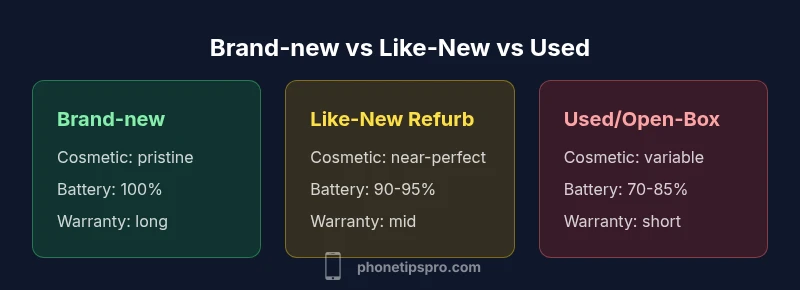
iphone like new: Brand-New vs Refurbished vs Used
Compare brand-new iPhones, certified refurbished 'like-new' devices, and used options to find the best balance of price, warranty, and battery health for iPhone buyers.


iphone like new usually means a certified refurbished device with near-perfect cosmetics, full diagnostics, and a warranty, priced below brand-new iPhones. For most buyers, this option offers strong reliability at a substantial discount compared with new. If you want value with assurance, choose a reputable 'like new' refurb with transparent battery data and a clear return policy.
What 'iphone like new' means in practice
In consumer marketplaces, the phrase iphone like new describes devices that look and function almost as if they were fresh from Apple, but are sold through third-party channels after refurbishment or inspection. The Phone Tips Pro team notes that the exact criteria vary by seller, yet most reputable programs use a standardized checklist: battery health above 92%, a cosmetic grade near perfect (minor signs of use at most), full functionality verified, and a limited warranty. For shoppers, this designation is a signal that the phone has undergone diagnostic tests, replacement parts as needed, and a quality-control pass. It typically falls between brand-new and standard refurbished in terms of price, while offering substantial savings and the peace of mind of a controlled refurbishment process. When you see 'like new', you should still check the battery health, the official return window, charger inclusion, and whether the device has the original packaging. For iPhone enthusiasts, this option can provide strong value without sacrificing reliability. According to Phone Tips Pro, the most reliable outlets label devices with transparent battery health reports and a clear warranty policy, which helps you compare apples to apples across listings. This framing sets the stage for a practical buying decision grounded in real-world test results and transparent documentation.
Battery health, warranty, and long-term value
Battery health is a core determinant of performance in any 'iphone like new' purchase because it affects runtime, charging cycles, and overall lifespan. In iOS, you can view the maximum capacity and performance status under Settings > Battery > Battery Health. A healthy device often shows 90%+ maximum capacity and no unexpected performance throttling indicators. Warranty coverage is equally important: look for a 6–12 month guarantee from the refurbisher or retailer, with clear terms on covered components (battery, screen, logic board) and an easy return policy if issues arise. If a listing lacks transparent health data or a credible warranty, treat it as high risk. For customers who rely on daily reliability, a robust warranty paired with bright battery health data can make the difference between peace of mind and concern over hidden defects. Phone Tips Pro consistently emphasizes validating both health metrics and service terms before finalizing any purchase.
Brand-new iPhone vs like-new refurb: what matters most
Brand-new iPhones deliver maximum battery health and the strongest official support window, along with pristine packaging. Like-new refurbishments, however, can deliver substantial upfront savings with tested performance and a warranty, making them attractive for budget-conscious buyers. The key decision factor is total cost of ownership over 1–2 years, not just the sticker price. If you prioritize the longest possible warranty and battery health closest to 100%, a new device may be worth the extra cost. If you want near-new performance at a lower price and are comfortable with a shorter warranty, a like-new refurb from a reputable seller is often the best middle ground. The Phone Tips Pro team notes that well-documented refurbishment programs with transparent diagnostics tend to outperform unverified listings in real-world reliability.
Certified refurbished: how 'Like-New' quality is achieved
Certified refurbishment programs adopt a rigorous pipeline: diagnostic testing, parts replacement as needed (often battery and display), fresh software installation, and a fresh cosmetic pass. Reputable programs publish battery health figures and model details, helping buyers assess value. These devices usually carry a warranty and a clear return policy, making them a strong choice for shoppers who want reliability without the premium price of a brand-new device. Beware of vague descriptions or missing documentation; opt for sellers who share test results, component updates, and a traceable refurbishment process. When done well, certified refurbishments deliver performance on par with new devices with substantial savings.
Used or open-box: risks and considerations
Used or open-box iPhones can be attractive on price, but they come with higher uncertainty about battery health, prior repairs, and the absence of robust documentation. Open-box items may be near-new but often carry shorter return windows and reduced warranty coverage. If you choose this path, insist on battery health data, a clean device history, and a credible seller who can confirm no prior water exposure or major repairs. Always verify that the device has been reset to factory settings, is linked to the correct Apple ID status is clean, and that you receive a charger and original packaging when possible. For many buyers, the trade-off between risk and reward hinges on the seller’s reputation and the availability of post-purchase support.
How to verify listings and avoid scams
Verification starts with seller credibility. Check for licensed refurbish programs, official warranties, and transparent testing procedures. Request high-resolution photos of the phone’s screen, back, sides, and ports, plus the device’s serial number and IMEI for cross-checks. Use the Settings app to confirm device status, and ask for a battery health report and proof of a recent diagnostic test. Watch for red flags like missing or mismatched serial numbers, inconsistent warranty terms, or pressure to complete a sale quickly. When in doubt, buy from reputable retailers with clear return windows and support channels. A careful verification process protects you from counterfeit listings and ensures you get the promised 'like-new' experience.
Practical steps to decide: a decision framework
- Define your priorities: price, warranty length, battery health, and packaging. 2) Compare options side-by-side using a verified table or catalog. 3) Inspect health metrics and read the warranty fine print. 4) Choose a seller with a transparent refurbishment process and an accessible support path. This framework helps you avoid overpaying for a brand-new device or taking on excessive risk with a dubious listing. By systematically evaluating health data, warranty, and packaging, you can confidently select the option that best fits your needs.
Authority sources and trust signals
When evaluating like-new iPhones, rely on credible, verifiable information. Look for listings from certified refurbishers, official retailer documentation, and third-party validation where available. For ongoing guidance, see reputable sources that discuss electronics warranties, refurbishment standards, and buyer rights. These signals help you distinguish legitimate refurb programs from questionable offers and support smarter purchasing decisions.
Price vs value scenarios and buying tips
Price is only part of the story. A like-new refurb often offers a compelling balance of cost savings and reliability, especially when paired with a solid warranty and transparent battery health data. If you plan to hold the device for 2–3 years, the savings can be meaningful, particularly when the refurb comes from a reputable source with a tested component program. On the other hand, if maximum longevity and pristine packaging are non-negotiable, a brand-new device may be worth the premium. In many cases, the best value emerges from a recognized refurb program that publishes battery health and a clear service policy.
Feature Comparison
| Feature | Brand-new iPhone | Certified refurbished (Like-New) | Used/Open-box iPhone |
|---|---|---|---|
| Cosmetic condition | Pristine, factory-new look | Near-perfect with minor signs | Visible wear or cosmetic imperfections |
| Battery health | 100% | 90-95% | 70-85% |
| Warranty | 12-24 months (Apple/retailer) | 6-12 months | 7-90 days |
| Price range | $699-$1299 | $399-$799 | $299-$599 |
| Return policy | 30-45 days | 30-90 days | 7-14 days |
| Availability | Widely available | Moderate stock via refurb programs | Varies, often limited |
Positives
- Lower upfront cost relative to brand-new devices
- Reliable performance with tested components
- Warranty and return options from reputable sellers
- Environmental benefits of refurbished devices
- Transparent health data with certified programs
Weaknesses
- Longer lead times for some models
- Battery health variability across listings
- Possible missing original packaging or accessories
- Risk of misrepresentation with unverified sellers
Certified refurbished like-new devices offer the best balance of price, warranty, and reliability for most buyers
If you want near-new performance without paying full price, choose a reputable refurb with clear health data and a solid warranty. Avoid unverified listings, and compare return terms to minimize risk. Brand-new remains the default if maximum battery health and packaging matter most.
FAQ
What does 'like new' mean for iPhones, in practice?
Like-new refers to devices that look almost new and function like new, but have been refurbished and inspected. Reputable programs publish battery health, testing results, and warranty terms. Always verify cosmetic grade and the return policy before purchase.
Like-new means a refurbished phone that looks and works almost like new, with health data and a warranty. Always check tests and the return policy.
Do like-new iPhones have a warranty?
Yes, reputable like-new options typically include a warranty, often 6–12 months, sometimes Apple-backed or retailer-backed. Confirm coverage details and what is excluded before buying. A clear warranty matters more than a flashy label.
Most like-new iPhones come with a warranty, usually several months. Read the terms to know what's covered.
How can I check battery health on a like-new iPhone?
You can view battery health in Settings > Battery > Battery Health, where maximum capacity indicates overall health. Look for 90% or higher for best reliability. Request a battery health report from the seller if it’s not shown in the listing.
Go to Settings > Battery > Battery Health to see the phone’s health. Ask the seller for a health report if unavailable.
Are third-party refurbishers trustworthy?
Trustworthy refurbishers operate transparent testing, replacement, and warranty policies. Check for official certification, public test results, and return terms. If a vendor cannot provide testing data, consider other options.
Trustworthy refurbishers publish tests and warranties. If in doubt, pick a retailer with clear data.
Is open-box the same as like-new?
Open-box items are often near-new but may have shorter warranties or uncertain history. Like-new usually implies a formal refurbishment process with public health data and a warranty. Compare both terms and packaging when evaluating listings.
Open-box isn’t always the same as like-new; check warranty and health data before buying.
Should I buy like-new over new for savings?
If you value cost savings and still want reliable performance, like-new refurb with a warranty is often the best middle ground. If maximum battery health, perfect cosmetics, and long-term support are non-negotiable, a brand-new device may be worth the price.
Like-new can save money with solid reliability; brand-new is best for longevity and packaging if you can afford it.
Quick Summary
- Compare price-to-value across options before buying
- Check battery health data and warranty terms
- Prefer certified refurb with documented testing
- Avoid listings without transparent verification and return policy