iphone fix apple store: A practical guide to iPhone repairs
Learn how to get your iPhone fixed at the Apple Store with a step-by-step guide, covering diagnostics, booking, and data-safe repair options.


Goal: Get your iPhone repaired at an Apple Store efficiently by understanding in-store options, preparation, and appointment steps. This guide covers how to diagnose issues, when to visit the Genius Bar, what to back up, and what to expect during service. Follow the steps to minimize downtime and protect your data.
Why iphone fix apple store matters
For many iPhone issues, the Apple Store offers the most reliable route to repair. The use of official parts, trained technicians, and a transparent service process helps preserve device performance and resale value. If your device is under warranty or covered by AppleCare, in-store repairs often come with prioritized diagnostics and quicker turnaround. The Phone Tips Pro team found that customers who choose official channels typically experience fewer repeat issues and clearer repair documentation, which can be critical for warranty claims and insurance records. By starting with a clear diagnosis and a documented repair plan, you can reduce downtime and avoid unnecessary service iterations. In this guide, we focus on practical steps to navigate the Apple Store repair ecosystem and keep your data secure throughout the process. The keyword iphone fix apple store signals the core goal of aligning professional repair with your device’s needs.
Pre-repair diagnostic approach
Before you book a repair, spend a few minutes observing symptoms and collecting context. Note when the issue started, whether it occurs consistently, and which apps or iOS versions are involved. Check your iPhone’s battery health, screen responsiveness, camera autofocus, and any unusual noises. If you can, take screenshots or record a short video of the fault. This information helps the technician reproduce the problem quickly and decide whether a simple software reset or a hardware replacement is required. According to Phone Tips Pro, a concise symptom log speeds up diagnostics and reduces in-store time, which means you get back to normal use faster and with clearer service notes for future reference. Review your iPhone’s serial number and warranty status on Apple’s support site, so you know what coverage applies to your case.
In-store vs mail-in: choosing the right option
Apple offers in-store diagnostics at the Genius Bar and mail-in repair options in some regions. In-store visits provide immediate hands-on assessment and the opportunity to discuss parts, timing, and costs face-to-face. Mail-in repairs can be convenient if you live far from a store or need to ship the device for specialized service. The trade-off is longer turnaround and less direct oversight of the repair steps. If your device is under AppleCare or a factory warranty, in-store service may yield quicker results and more predictable outcomes. If you’re dealing with a hardware issue that requires part replacement, the Apple Store often uses genuine components and offers warranty-backed fixes, which is a strong argument in favor of in-person service. Balancing wait times, coverage, and your schedule will help you decide which route to take.
What to expect at the Genius Bar
When you arrive for a scheduled appointment, you’ll check in at the Genius Bar, where staff will verify your identity and device details. A preliminary diagnostic will confirm the fault and outline repair options. Expect questions about recent drops, water exposure, and symptom onset. Depending on the issue, the technician may perform software resets, screen calibration, battery tests, or hardware replacements. You’ll typically receive an estimated repair window and a quote before any parts are ordered or labor begins. If a same-day repair isn’t possible, you can often leave the device and return later or opt for a loaner if available. Communication is key; ask for the diagnostic report and a clear explanation of recommended steps.
Common iPhone issues and repair expectations
Battery degradation leads to shorter uptime and unexpected shutdowns; screen damage requires panel replacement; cameras may lose focus or produce blurry images. In most cases, these repairs are straightforward when genuine parts are used and the device is fully diagnostic. Expect some data handling steps—such as account sign-ins, iCloud checks, and device resets—to ensure compatibility with the repair. For software-related issues, a firmware update or reinstall can resolve performance problems without a hardware swap. The goal is to restore original functionality while preserving data integrity as much as possible. If the issue recurs after the repair, document it and follow up with the store for follow-on support.
How to prepare your device for service
Back up your data before any repair action, either via iCloud or a computer backup. Ensure you have your Apple ID credentials handy in case you need to re-authenticate services after the fix. Make a note of all active accounts on the device and consider temporarily removing sensitive information if advised by the technician. Charge the device fully and bring a charger to the store if you expect a lengthy diagnostic or replacement process. Clear any passcodes that might hinder access during diagnostics, but only if you receive explicit guidance from Apple Support or the Genius Bar team. Bring your device’s original packaging or proof of ownership if available to expedite verification.
Booking and visiting: step-by-step planning
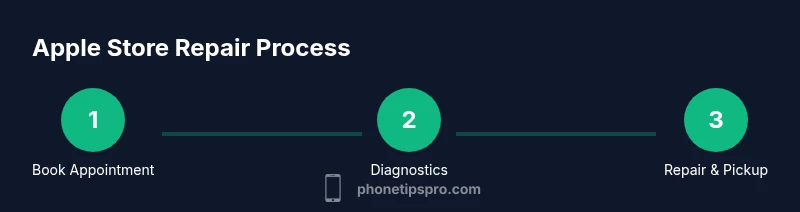
Schedule an appointment through Apple Support or the Apple Store app to minimize wait times. On the day, arrive a little early to complete check-in and provide any necessary documentation. Bring a government-issued photo ID if requested, and have your backup copies accessible. If you’re traveling with a family device, ensure you have permission to service the device and coordinate drop-off and pick-up times. After diagnosis, review the repair options, expected downtime, and any costs. If you need to adjust plans, communicate with the store ahead of time to reschedule.
After-service care and data security
When you pick up the device, perform quick functional checks with the technician present—screen responsiveness, touch accuracy, speaker clarity, and camera functionality. Confirm what data was reset or reconfigured and whether any apps require re-authentication. Restore your data from the backup and re-enable security features, including Find My iPhone and passcode settings. Keep the repair receipt and diagnostic summary for future reference and warranty claims. If you notice recurring issues, contact Apple Support promptly with the diagnostic report.
Alternatives and when to consider third-party repair
Third-party repair providers can be an option for non-warranty issues or when you’re seeking faster turnarounds. However, third-party parts may affect warranty coverage and device integrity. If your iPhone is under AppleCare, prefer an Apple Store repair to ensure the service remains covered and the repair meets Apple’s standards. For phones out of warranty or with restricted diagnostics, weigh the cost, part quality, and risk of future issues before proceeding with an off-brand repair. Always request a written quote and confirm that genuine Apple parts will be used if you choose to go external.
Tools & Materials
- iPhone with Apple ID(Ensure you know the Apple ID and password for account re-authentication after service)
- Backup copy (iCloud or computer)(Back up before service to prevent data loss)
- Charging cable and a charger(Helpful for on-site testing and backups if needed)
- Photo ID (optional but helpful)(Some locations may request ownership verification)
- List of observed issues(Bullet points with symptoms and timing)
Steps
Estimated time: Total time: 2-4 hours
- 1
Check warranty and repair eligibility
Visit Apple’s support pages to confirm warranty status and determine whether your issue is covered. Note any prior repairs and gather the device serial number for fast service checks.
Tip: Having your serial number ready saves time at the desk. - 2
Back up your iPhone
Back up to iCloud or a computer to protect data before any diagnostic or repair work. Ensure the backup is recent and accessible from your Apple ID.
Tip: A recent backup minimizes data loss risk if a reset is needed. - 3
Prepare a succinct symptom log
Document when the problem occurs, apps involved, and any relevant settings or iOS version. A short log helps the technician reproduce the fault.
Tip: Include timestamps if possible to aid diagnosis. - 4
Book an appointment
Schedule a Genius Bar visit via the Apple Support app or website; appointments reduce wait times and provide a defined path for diagnostics.
Tip: Choose a time when you can stay for the diagnostic and possible repair discussion. - 5
Bring necessary documentation
Carry any required ID or proof of ownership, and have your backup copies ready. If the store requests it, bring original packaging for verification.
Tip: Ask in advance what documents are needed to avoid delays. - 6
Attend the diagnostic
Genius Bar staff assess hardware and software to determine repair scope. They may propose a part replacement or software fix depending on the fault.
Tip: Request a written quote before any parts are ordered. - 7
Decide on repair options
Review repair options, estimated downtime, and costs. If applicable, ask about warranty coverage and whether a loaner device is available.
Tip: Clarify whether the repair requires data loss or resets. - 8
Test and collect your device
After service, verify key functions (touch, display, camera, speakers) with the technician, then complete pickup paperwork and secure data again.
Tip: Test immediately and report any issues before leaving the store.
FAQ
Do I need an appointment to visit the Apple Store for iPhone repair?
Most locations operate best with an appointment for Genius Bar repairs, but some walk-ins may be accommodated. Check current options in advance.
Yes, it's best to book a Genius Bar appointment to minimize wait times and ensure the right technician is available.
Will repairs be covered by AppleCare or warranty?
If your device is under AppleCare or a factory warranty, many repairs are covered or discounted. You’ll receive a quote after diagnostics.
If you have AppleCare or a warranty, the repair may be covered or discounted; you’ll get a quote after diagnostics.
Can I get a loaner device while mine is being repaired?
Some locations offer loaner devices for extended repairs; availability varies by store. Check ahead when you book.
Some stores provide loaners for longer repairs; availability varies—verify when you book.
How long does a typical screen replacement take?
Screen repairs often require a few hours to complete, depending on part availability and diagnostic complexity. In some cases, it can be scheduled for the same day.
Most screen replacements take a few hours; some cases may require a same-day appointment depending on parts.
What should I back up before repair?
Back up all data to iCloud or a computer to prevent data loss during diagnostics or potential resets.
Back up your data to iCloud or a computer to avoid data loss during service.
What should I bring to the appointment?
Bring your device, Apple ID credentials, appointment confirmation, backup proof, and any relevant accessories or documentation.
Bring your device, your Apple ID, the appointment details, and any backup documents.
Watch Video
Quick Summary
- Plan ahead with a clear symptom log.
- Back up your data before any service.
- Choose in-store repairs for faster diagnostics when possible.
- Ask for written estimates and part details.
- Verify device functionality after pickup.