Why Do iPhone Alarms Go Silent? A Troubleshooting Guide
An urgent, step-by-step troubleshooting guide to fix iPhone alarm silence, covering Do Not Disturb, Focus modes, clock settings, and app alarms.


Most often, iPhone alarms go silent because Do Not Disturb/Focus is on, the alarm volume is muted, or the device is on Silent. Quick fix: disable Focus, turn up Clock alarm volume, verify the alarm sound is selected, and ensure the alarm is enabled. If needed, reset Clock app settings or try a test alarm.
What the symptom looks like and why it matters
If you’re staring at your iPhone wondering why do iphone alarms go silent, you’re not alone. This issue can feel urgent when you rely on alarms for important wake-up calls, reminders, or timed events. According to Phone Tips Pro, the vast majority of alarm silences stem from settings rather than hardware faults. The good news is that most fixes are quick and reversible. By checking a few core areas—focus modes, ringer and alarm volume, and the Clock app configuration—you can restore reliable alerts in minutes. This section explains what you’re experiencing, how alarms are supposed to behave, and why a silent alarm matters for your daily routine.
16words
noteContentHerePlaceholder
Quick checks you can perform before deeper troubleshooting
Start with the simplest explanations. A silent alarm is rarely caused by a broken speaker. Often it’s a setting or an app-related issue that’s easy to correct. The next sections guide you through a practical, fast-check flow to pinpoint the exact culprit and restore dependable alarms. Stay calm, follow the steps, and test after each fix to confirm results.
Block content続
Common culprits at the top of the list
The first suspects in most alarm-silence cases are across-device settings rather than hardware defects. Check Do Not Disturb/Focus to see if alarms are exempt or silenced. Verify the Ring/Silent switch position, adjust the alarm volume, and confirm the correct alarm sound is selected for the Clock app. If you rely on third-party alarm apps for specific routines, ensure those apps have permission to play sound in the background. This block previews the most frequent causes you’ll encounter as you troubleshoot.
iOS handles alarms: clock app vs third-party apps
iPhone alarms are primarily governed by the Clock app, but third-party apps can also set their own alarms. When an alarm goes silent, it’s crucial to determine which app is responsible. Clock alarms can be affected by Focus modes and hardware switches, while third-party alarms may be muted by background activity restrictions or outdated permissions. Understanding this distinction helps you decide whether to adjust system settings or reinstall a particular app. This clarity saves time and prevents unnecessary resets.
Quick checks you can perform before deeper troubleshooting
Before diving into deeper fixes, run a quick audit of the basics. Confirm you can hear general ringtones and notifications, verify the alarm is enabled in the Clock app, and check that the chosen sound file isn’t muted or corrupted. If you have a bedtime or sleep schedule feature enabled, review its interaction with alarms, as some configurations silence alerts during the sleep window. After each check, test the alarm to see if it rings as expected.
Diagnostic flow: symptom → diagnosis → fixes
The diagnostic flow turns the symptom into a structured diagnosis and actionable fixes. Start by identifying symptom specifics: Is every alarm silent or only certain ones? Is the behavior consistent across the Clock app and third-party apps? Once you answer these questions, move through the diagnosis-to-fix sequence: check system controls, confirm app permissions, apply the fix, and re-test. This approach minimizes guesswork and accelerates resolution.
Step-by-step fixes for the most common cause
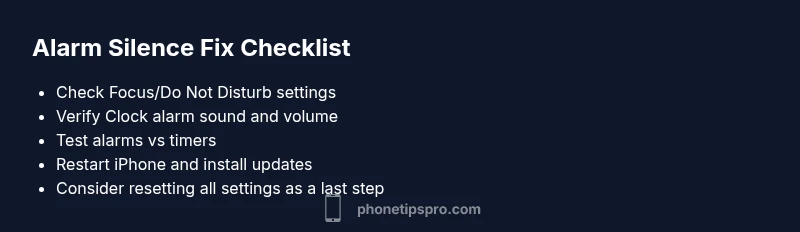
- Turn off Do Not Disturb/Focus: Open Settings > Focus > Do Not Disturb (or any active Focus) and ensure the Alarm or Clock app is allowed to break through. Tip: Temporarily disable Focus while testing the alarm. 2) Increase Clock alarm volume: Settings > Sounds & Haptics > Ringer and Alerts, slide up the volume, and test. 3) Verify alarm sound and enablement: Open Clock > Alarm, ensure the correct sound is selected, and the switch for the alarm is on. 4) Check Silent/Mute switch: Ensure the physical mute switch is not engaged. 5) Test with a quick timer: Use the Clock app timer to confirm audible alert. 6) Restart the iPhone: A simple reboot can fix lingering background issues. 7) Update iOS: Install the latest iOS version to fix known bugs. 8) Reset all settings (last resort): Settings > General > Reset > Reset All Settings. This preserves data but resets preferences.
tipTitlePlaceholder
If this doesn’t work, proceed to professional support.
Steps
Estimated time: 45-75 minutes
- 1
Open Clock app and inspect alarms
Review each alarm to ensure it is enabled, set for the correct time, and linked to a valid sound. Remove any duplicates that could cause confusion. Confirm you are testing the intended alarm.
Tip: If you have multiple alarms, test them individually to isolate the issue. - 2
Verify alarm sound and volume
In Clock > Alarm, tap Edit, select a clear, audible sound, and verify the volume is high enough in Settings > Sounds & Haptics. A quiet tone can feel like a silent alarm.
Tip: Pick a sound with strong contrast to background noise. - 3
Check Do Not Disturb / Focus settings
Navigate to Settings > Focus and inspect any active modes. Ensure the Clock or Alarm is allowed to bypass Focus, so alarms can ring while other notifications are silenced.
Tip: Temporarily disable Focus during testing to confirm impact. - 4
Test with a quick timer
Set a short timer in the Clock app and listen for the alert tone. If the timer sounds but alarms don’t, the issue is alarm-specific rather than general audio output.
Tip: If the timer sounds, the speaker is fine and the issue is alarm-related. - 5
Restart the device
Power off completely, wait 15–30 seconds, and turn back on. Rebooting clears minor software glitches that can affect alarm playback.
Tip: This is a simple reset that fixes many issues. - 6
Update iOS to the latest version
Install any available iOS updates. Software updates often include fixes for alarm-related bugs and notification handling.
Tip: Back up important data before updating. - 7
Reset all settings (last resort)
If nothing else works, reset all settings (no data will be erased, but preferences will revert). Reconfigure alarms from scratch after reset.
Tip: Document essential settings before resetting to ease reconfiguration. - 8
Seek professional help if unresolved
If alarms still go silent, contact Apple Support or visit an Apple Store. A technician can check hardware or more complex software issues.
Tip: Document steps you’ve tried when you speak with support.
Diagnosis: iPhone alarm goes silent
Possible Causes
- highDo Not Disturb / Focus mode is enabled
- highAlarm volume is muted or too low
- highSilent switch is on or vibration-muted settings
- mediumAlarm not enabled or wrong sound selected
- lowThird-party alarm apps with permissions issues
Fixes
- easyToggle Do Not Disturb/Focus off for alarms
- easyIncrease Clock alarm volume and verify sound
- easyTurn off Silent switch and verify ringer volume
- mediumCheck alarm enablement and sound for each alarm (native/third-party)
- hardReset all settings if issues persist after other fixes
FAQ
Why is my iPhone alarm not going off even after I set it?
Common causes are Focus mode, a muted alarm, or a misconfigured alarm sound. Verify these settings in Clock and Focus, then test with a simple alarm to confirm playback.
Common causes are Focus mode, a muted alarm, or a misconfigured alarm sound. Check Clock and Focus, then test with a simple alarm.
Can Focus mode silence alarms permanently?
Yes, Focus modes can silence notifications and alarms unless configured to break through. Make sure your alarm is allowed to bypass Focus when needed.
Focus modes can silence alarms unless you allow the Clock app to bypass them.
Is it safe to reset all settings to fix alarm sound?
Resetting settings is safe and won’t erase data, but it resets preferences. Use it as a last step after other fixes fail.
Resetting settings is safe and won’t erase your data, but you’ll need to reconfigure preferences.
Will updating iOS help with silent alarms?
Often yes. Updates fix underlying bugs that can affect alarm playback and notification handling.
Updating iOS can fix bugs that affect alarms.
How can I test if the alarm is working after changes?
Create a new alarm set a couple of minutes ahead, or use a quick timer to verify the audible alert.
Set a new alarm a few minutes ahead or test with a timer to confirm sound.
Watch Video
Quick Summary
- Check Focus/Do Not Disturb first
- Verify alarm sound and volume
- Test alarms independently from timers
- Update iOS to fix known bugs
- Reset settings only after other fixes fail