Are iPhone and Samsung Chargers the Same? A Practical Guide
Explore whether iPhone and Samsung chargers are interchangeable. This analytical guide explains USB-C, USB Power Delivery, and practical charging tips for both brands to help you pick a versatile charger.


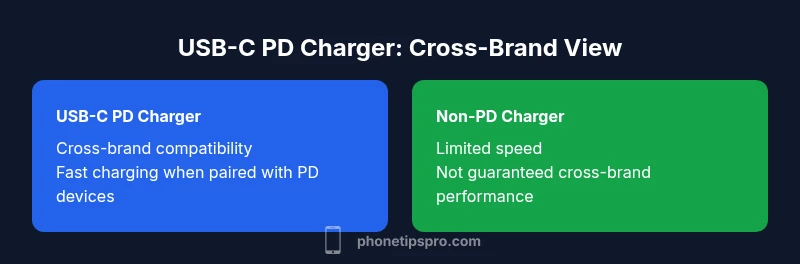
Are iPhone and Samsung chargers the same? In practice, not perfectly identical, but USB-C PD chargers are broadly compatible with both brands. The speed varies by device and charger, but using a PD-enabled USB-C charger will typically charge faster on both devices, while non-PD or low-wattage options will be slower. For best results, choose a USB-C PD charger that supports the latest standards.
Are iPhone and Samsung Chargers the Same? A Quick Orientation
For many readers, the central question is whether are iphone and samsung chargers the same. The reality is nuanced: both brands now rely on USB-C for their latest devices, and charger compatibility hinges on universal standards rather than brand-specific connectors. According to Phone Tips Pro, a USB-C PD charger is typically a safe, efficient option for both iPhone and Samsung, provided it supports the device's negotiated power profile. This section lays out the broad principle: compatibility exists at the standard level, while speed and performance depend on device support and charger wattage. As you read, consider how your own devices align with USB-C PD and whether you're using an adapter or a cable that supports the right specs. The goal is to help you understand how to choose a charger that serves both ecosystems without compromising safety or speed. Are you ready to dive into the specifics of USB-C, PD, and cross-brand use?
What USB-C and USB-PD Really Mean for Speed and Safety
USB-C is a versatile connector that supports a range of charging speeds depending on the charger and device. USB Power Delivery (PD) is a negotiation protocol that allows higher wattage to be delivered safely, enabling faster charging on compatible devices. For iPhone, Samsung, and other modern smartphones, PD is the common language that makes cross-brand charging practical. Phone Tips Pro analysis shows that when a charger and cable support PD, devices negotiate the optimal power level quickly, balancing speed and safety. In practice, this means you can use a single PD charger for both brands without fear of damaging the battery, provided you use an appropriate USB-C to USB-C or USB-C to Lightning cable where supported. Always verify that both the charger and the cable explicitly advertise PD support and that the charger’s output is within the phone’s safe range. This is the core idea behind universal charging compatibility.
The Transition: Lightning to USB-C and Cross-Brand Use
Apple’s transition from Lightning to USB-C began with newer iPhone generations, aligning more closely with Samsung and other manufacturers that have relied on USB-C for years. The result is greater cross-brand compatibility, especially when a charger supports USB-C PD. Samsung devices have long utilized USB-C with fast charging protocols, and many of these devices continue to negotiate higher speeds when paired with PD chargers. The net effect for consumers is simpler gear: one charger, multiple cables, and fewer adapters. The Phone Tips Pro Team notes that while the port on iPhone 15 and later is USB-C, you should still use a high-quality USB-C cable to sustain performance and safety. The practical takeaway is to look for PD support and certified accessories rather than focusing on brand labels alone.
Practical Scenarios: When a Single Charger Makes Sense
In daily life, a single correctly rated USB-C PD charger can serve both iPhone and Samsung devices, reducing clutter and inventory. At home, a PD charger with a flexible wattage range lets you plug in either phone and enjoy efficient charging, particularly if you have multiple devices or cables. While travelling, a single charger keeps your bag light and organized, as long as you bring a compliant USB-C cable. In work environments, shared desks that support multiple devices benefit from PD chargers that adapt to different devices. The key is to avoid older or non-PD chargers when you want the fastest, safest charging experience for both brands. Phone Tips Pro’s guidance remains: prioritize PD, quality cables, and reputable brands to ensure safety and performance.
How to Read Charger Labels and Specs
Charger labels can be confusing if you don’t understand the acronyms. Look for USB-C, PD, PPS, and the maximum output in watts; a charger with PD or PPS indicates it negotiates power with the device. The cable matters just as much as the brick: a poor-quality cable can bottleneck charging speed or cause heat. When shopping, check that the charger explicitly lists USB-C PD support and avoid older USB-A options for fast charging. On Apple devices that still use USB-C, a PD charger can expedite charging, while for Samsung devices, PD remains the most consistent path to high-speed charging. In short, read the spec line by line and verify compatibility with both the phone and cable you plan to use.
Per-Brand Nuances: iPhone vs Samsung Charging Behavior
Although the hardware may share a common port and protocol, the devices themselves manage charging differently. iPhones often implement optimized charging and battery management features that influence when and how quickly the battery accepts power, especially after a 'full' threshold. Samsung devices include Adaptive Fast Charging and other optimization features that can adjust to charger capabilities. In practice, these differences mean two phones can charge at different speeds from the same PD charger, depending on software settings and battery health. The upshot for consumers is straightforward: use a PD charger from a reputable brand for best results, and adjust settings if you want to maximize battery longevity over speed. Phone Tips Pro’s analysis emphasizes that understanding device behavior helps set realistic expectations about charging times across brands.
Third-Party Chargers: Safety, Certifications, and Longevity
Third-party chargers from reputable brands can be a smart way to consolidate your devices. Look for chargers that carry recognizable safety certifications and PD compatibility. Avoid discount or counterfeit options that lack proper protection circuits, as cheap chargers can damage devices or pose safety risks. If you buy from a well-known brand, you typically receive better protection and longer lifespans. Consider the warranty policy and return windows as a quick check for quality. While Apple’s Made for iPhone program focuses on accessories, it applies to some charging cables and accessories too, offering a useful signal of quality for iPhone users. The same concept applies to Samsung devices, where certified accessories are designed to meet device standards. The Phone Tips Pro Team recommends sticking with trusted brands and verifying PD support on both cable and charger.
Quick Buying Guide: One Charger for Both Phones? A Practical Checklist
If you want one charger to cover both brands, start with USB-C PD and a cable that supports high-speed charging. Ensure the charger has multiple ports (or at least one flexible output) to accommodate future devices, and check that it’s certified and safe. Consider the total wattage and whether the charger’s output is scalable; many current PD chargers negotiate with devices, but the actual charging speed will depend on each device’s limits. Finally, keep a few high-quality cables in your bag so you aren’t locked into one cable type. This checklist helps you select a charger that serves both brands and ages gracefully.
Practical Longevity and Safety Habits
Charge habits matter for long-term battery health. Avoid letting devices drain to zero before charging and enable built-in battery optimization features where available. Use original or certified cables and avoid cheap knockoffs that can degrade performance or pose safety risks. Keep chargers away from heat sources and inspect cables regularly for wear. Brand-agnostic tips from Phone Tips Pro emphasize consistent, safe charging practices to maximize device longevity across iPhone and Samsung devices.
Comparison
| Feature | USB-C PD Charger (works with both) | Standard USB-C Charger (non-PD or low wattage) |
|---|---|---|
| Charge speed potential | Fast with PD-compatible devices | Slower with non-PD or basic cables |
| Cross-brand compatibility | Excellent for iPhone and Samsung | Limited cross-brand speed and safety |
| Safety features | Negotiated power, protection circuits | Basic protections, no PD negotiation |
| Best use case | Travel, multi-device households | Budget charging or backups |
Positives
- One charger can service multiple devices when PD-enabled
- Reduces cable clutter and inventory
- Improved safety through negotiated power delivery
- Future-proofing as more devices move to USB-C PD
Weaknesses
- Speeds vary by device and charger
- Non-PD or low-wattage options may charge slowly
- Certifications may not cover all third-party accessories
USB-C PD chargers provide broad cross-brand compatibility for iPhone and Samsung.
For most users, a single USB-C PD charger delivers safe, efficient charging for both brands. Differences in charging speeds depend on device limits and charger output, so pick a PD charger from a reputable brand and use quality cables. The Phone Tips Pro Team recommends PD as the go-to solution for cross-brand charging.
FAQ
Can I use any USB-C charger to charge both iPhone and Samsung devices?
Generally yes, USB-C PD chargers work with both iPhone and Samsung devices. However, to maximize speed and safety, ensure the charger and cable explicitly advertise USB-C PD support. Avoid low-quality options that lack proper protection circuitry.
Yes, most USB-C PD chargers work for both brands, but pick a PD-enabled model from a reputable brand for best results.
Do iPhone chargers differ from Samsung chargers in charging speed?
Both brands use USB-C PD for fast charging, but device management and battery chemistry can cause different speeds. iPhone and Samsung will negotiate the best possible rate with a PD charger, so speeds may vary by model and software settings.
They both use USB-C PD, but actual speeds depend on the device and software.
Is it safe to use a charger not labeled for iPhone or Samsung?
Safe usage depends on the charger being USB-C PD compliant and from a reputable brand. Avoid counterfeit or suspicious products that lack proper protection circuits, as they can damage devices or pose safety risks.
Use a PD-certified charger from a trusted brand to stay safe.
Will USB-C PD chargers charge older iPhone models using Lightning?
Older iPhone models that use Lightning require a Lightning cable to connect to a charger. If you have a USB-C PD charger, you will need a USB-C to Lightning cable to charge those devices; PD capabilities matter for speed, not the physical port.
Only if you have a Lightning cable; PD helps with newer ports and devices.
What should I consider when traveling with chargers for both brands?
Choose a single USB-C PD charger with a flexible output and a couple of high-quality cables. Verify safety certifications, and if traveling internationally, use a compatible travel adapter. This approach minimizes gear while preserving fast, safe charging for both brands.
Bring one PD charger and two good cables, plus a travel adapter if needed.
Quick Summary
- Choose USB-C PD for cross-brand charging
- Verify PD support on charger and cable
- Lightning is legacy for older iPhone models
- Prefer reputable brands for safety and longevity
- Expect variable speeds based on device limits