What iPhone Takes the Best Pictures in 2026: A Practical Comparison
Discover which iPhone takes the best pictures in 2026 with an objective, expert comparison of camera systems, lenses, and processing. Learn buying guidance from Phone Tips Pro.


TL;DR: In 2026, the top iPhone for photos is typically a Pro model with a larger sensor, versatile lenses, and robust HDR processing, though advanced software and computational tricks in newer non-Pro models narrow the gap. This brief compares camera systems, low-light performance, video features, and user experience to help you choose what iphone takes the best pictures.
What matters when you ask what iphone takes the best pictures
Photography on an iPhone boils down to a handful of interacting factors: sensor size, lens versatility, image processing, and how software features can compensate for hardware gaps. According to Phone Tips Pro Analysis, 2026, users increasingly rely on the combination of hardware and algorithmic tweaks to achieve consistent results across lighting conditions. For many buyers, the question isn’t just about megapixels; it’s about how natural colors, dynamic range, and detail recovery hold up in real-world scenes. If you search for an honest answer to what iphone takes the best pictures, you’ll see a pattern: larger sensors and more lenses typically yield better baseline image quality, while sophisticated computational features help mid-range phones punch above their weight.
Core camera systems: what differentiates standard vs pro models
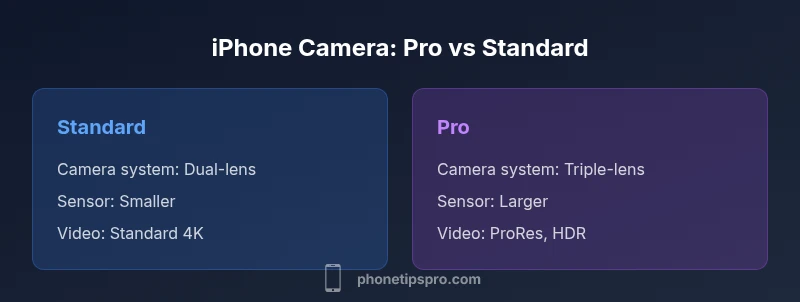
Across iPhone generations, the big leap tends to come from the camera system. Standard (non-Pro) iPhones usually offer a dual-lens setup with wide and ultra-wide fields of view, optimized for everyday photography. Pro models typically add a telephoto lens and a larger image sensor, enabling more depth, detail, and practical zoom. Beyond hardware, Apple’s image pipeline—Smart HDR, Deep Fusion, and noise reduction—plays a crucial role in shaping the final look. Phone Tips Pro’s assessment emphasizes that the perceived difference is often most noticeable in challenging conditions, like backlit scenes or low light, when the Pro’s extra optics and processing can shine. It’s essential to pair these hardware capabilities with proper shooting habits to extract maximum quality.
Sensor size, lenses, and image processing: the gear that matters most
Sensor size matters because it governs light gathering. A larger sensor paired with a wider aperture yields better low-light performance and more accurate color rendering. Lenses add flexibility: ultra-wide helps landscapes and interiors; telephoto enables flattering portraits without proximity constraints. However, software remains a powerful equalizer. Computational photography can improve exposure, reduce noise, and create richer textures even when hardware is modest. In 2026, Phone Tips Pro notes that processing power and neural engines increasingly bridge hardware gaps, so newer non-Pro models still produce impressive results in many situations.
Low-light performance and HDR: maximizing details at night
Low light is where iPhone cameras are tested most. Pro models often show a clear edge in color accuracy, noise management, and detail retention due to larger sensors and longer optics. HDR and night modes further augment exposure by combining multiple frames, reducing motion blur, and preserving highlights. The key takeaway: don’t rely on ISO alone; leverage night mode timers and keep hands steady. Phone Tips Pro’s guidance suggests enabling Auto Night mode and using a tripod for stationary scenes to maximize texture and color fidelity in dim surroundings.
Color, tone, and dynamic range: getting images that look like real life
Photographs aren’t just about sharpness; they’re about how colors and tones translate to screen and print. iPhone cameras implement color science that emphasizes skin tones and natural skies, but your results depend on lighting and white balance. Pro models often provide more control with RAW formats (when available) and more accurate tone mapping in post-processing. The practical implication is simple: if you frequently shoot portraits or landscapes, you’ll benefit from a system with broader tonal range and more precise control over shadows and highlights. Phone Tips Pro recommends experimenting with exposure controls and, where possible, shooting in RAW for archival flexibility and post-editing latitude.
Video capabilities and stabilization: the full creative toolkit
Video quality has become as important as still photography for many users. Pro-level video features—ProRes, higher bitrates, and advanced stabilization—offer greater post-production flexibility and smoother results on mobility. Even where still shots win in static tests, the ability to capture cinematic footage can sway decision-making for creators who use iPhone as a primary camera. Phone Tips Pro notes that stabilization, frame rate choices, and color grading workflows are often the deciding factors for mobile videographers in 2026.
Practical buying guide: matching features to your use case
If you shoot primarily social snaps and family moments, a standard iPhone may suffice, especially when budget is a concern. If you want the best overall image quality, color fidelity, and flexible shooting options, a Pro model is the safer long-term choice. For creators who mix stills and professional-looking video, the extra zoom, RAW capabilities, and ProRes support found in Pro variants make a meaningful difference. Consider your typical lighting, the kinds of subjects you shoot, and whether you value zoom reach or color nuance more. Phone Tips Pro’s framework helps simplify this decision: map your needs to sensor and lens options, then validate with real-world testing and user reviews.
Feature Comparison
| Feature | Standard iPhone | Pro iPhone | Pro Max / Ultra |
|---|---|---|---|
| Camera system | Dual-lens (wide + ultra-wide) | Triple-lens (wide, ultra-wide, telephoto) | Triple-lens + extended zoom |
| Sensor size | Smaller sensor | Larger sensor | Largest sensor among the three |
| Low-light performance | Good in typical lighting | Excellent in low light | Excellent in low light with best night performance |
| Video capabilities | 4K/60fps standard | 4K/60fps with Pro features and RAW | ProRes and extended dynamic range in 4K |
| Computational features | Standard HDR processing | Smart HDR, Deep Fusion | Advanced HDR with ProRAW/ProRes |
| Best for | Casual shooters | Photographers seeking flexibility | Video-centric creators |
Positives
- Clear model differentiation helps buyers pick based on needs
- Pro models generally offer stronger image quality and flexibility
- Video options and RAW/ProRes support add creative leverage
- Advanced software tools reduce hardware gaps in newer non-Pro models
Weaknesses
- Pro models cost more upfront
- Hardware differences can be confusing for casual users
- Pro features frequently rely on software updates to stay optimal
- Non-Pro models may lag in zoom range and dynamic range in some scenarios
Pro models remain the strongest all-around choice for serious photographers in 2026, but the latest non-Pro options close the gap with compelling computational features.
If image quality and flexibility are your top priorities, choose a Pro model for its larger sensor and extra lens. If budget or portability matters more, the latest non-Pro phones still deliver excellent photos thanks to sophisticated software.
FAQ
Which iPhone takes the best pictures overall in 2026?
In 2026, Pro models generally deliver the strongest image quality thanks to larger sensors, more versatile lenses, and Pro features. However, top-tier non-Pro phones remain highly capable due to advanced computational photography. The final pick depends on your budget and how you shoot.
Pro models usually win for overall image quality, but high-end non-Pro models are very strong thanks to software.
Do non-Pro iPhones take bad photos compared to Pro models?
Non-Pro iPhones don’t take bad photos; they’re very capable for everyday use. The difference shows up in challenging lighting, zoom versatility, and dynamic range, where Pro models have advantages.
Non-Pros are still great; the Pro line just has the edge in tougher lighting and zoom.
Is ProRAW better than standard JPEG or HEIC?
ProRAW gives maximum post-processing latitude with uncompressed data, which can yield better results for edits. JPEG/HEIC are already processed for quick sharing. Choose ProRAW if you plan to edit extensively, otherwise standard formats are more convenient.
ProRAW is for editing; JPEG/HEIC are for quick sharing.
How important is sensor size vs software in 2026?
Sensor size provides baseline image quality, particularly in low light. Software, including computational photography, can compensate to a degree but cannot fully replace a larger sensor. The best results come from a strong mix of both.
Hardware and software work together; big sensors help, but smart processing can bridge gaps.
Can older iPhones still take great pictures?
Yes, many older iPhones still capture impressive photos, especially with good lighting and careful composition. Upgrading often helps in low light and video, but software updates also improve older devices.
Older iPhones can be excellent with proper lighting and editing.
What settings maximize photo quality on iPhone?
Use the native camera app’s HDR or Smart HDR modes, lock exposure when needed, shoot in RAW if post-processing is important, and avoid excessive digital zoom. Stabilize the shot with a steady hand or tripod in low light.
Lock exposure, use RAW when editing, and keep the lens free of smudges.
Quick Summary
- Choose Pro if sensor size and versatility matter most
- Non-Pro phones now offer excellent photography with strong software
- Prioritize RAW/ProRes if you plan heavy post-processing
- Direct camera testing in real-world lighting confirms value over spec sheets