What iPhone to Buy in 2026: A Practical Comparison
A data-driven guide to choosing the right iPhone in 2026. Compare the iPhone 16 Pro, 16, 15, and 14 with practical buying tips from Phone Tips Pro.


To buy the right iPhone, start with your priorities: top photography and performance point to the latest Pro models (iPhone 16 Pro or Pro Max); a balanced mix of price and capability points to the iPhone 16 or iPhone 15; if you’re budget-focused, consider the iPhone 14 or earlier stock. In most cases, the iPhone 16 base or 15 Pro offers the best balance of features and software support.
What iphone to buy: framing the decision
When you ask what iphone to buy, you’re really deciding between several trade-offs: top-end performance and camera quality, long-term software support, upfront price, and how much you value features like a brighter display or better battery life. According to Phone Tips Pro, the best approach is to start with your primary use case and plan for 4-6 years of device life. If you expect heavy camera use or identify as a power user, you’ll lean toward the newest Pro models; if you want strong performance with a friendlier price, the latest non-Pro option is appealing; budget-friendly paths exist with older generations that still run iOS smoothly. The key is to map your needs to the runtime of the device and the probability of future software updates.
Core decision factors: camera, performance, software, price
Choosing an iPhone hinges on several core factors that influence long-term satisfaction. Camera quality and videography capabilities dictate how useful the device is for content creation. Performance matters for gaming, multitasking, and staying current with demanding apps. Software updates determine how long your device stays secure and feature-rich, while price affects your willingness to upgrade every few years. Battery life, display quality (brightness, color accuracy, and refresh rate), storage options, and ecosystem features (like seamless iPad or Mac integration) should all factor into your decision. In this section, we dissect how each model stacks up on these axes and how your usage pattern maps to a practical choice.
Model-by-model overview: the current lineup (16 Pro, 16, 15, 14)
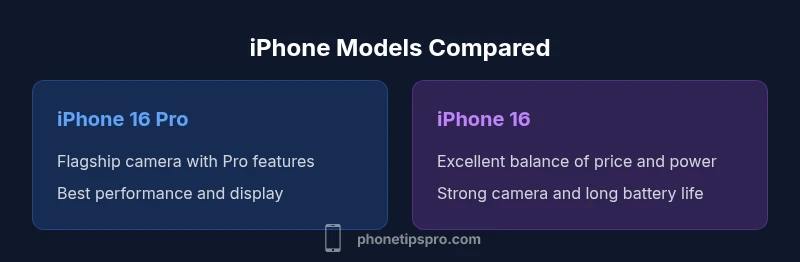
The flagship iPhone 16 Pro models are the most advanced in the lineup, featuring the strongest camera systems, top-tier performance, and future-proofing through the latest iOS features. The iPhone 16 offers a strong balance of performance and price with high-end capabilities, while the iPhone 15 remains a compelling all-rounder with many premium features at a lower entry point. The iPhone 14 continues to be a viable option for budget-conscious buyers or those who don’t need the latest generation but still want solid core performance. Each model targets a slightly different user segment, so understanding your typical tasks—photography, gaming, productivity, or simply daily communication—helps narrow the field.
Pro vs non-Pro: why the Pro line often costs more—and what you get in return
Pro models deliver marquee enhancements: superior cameras, advanced display technology, and faster processors. If you frequently shoot high-quality photos and videos, or you rely on peak performance for work or creative tasks, the Pro tier offers tangible benefits. Non-Pro models provide most of the flagship experience at a lower price, including strong cameras and fast performance, but with fewer high-end sensors and materials. For many users, the incremental gains between non-Pro and Pro are most noticeable in low-light photography, computational video features, and sustained performance under load.
Storage, RAM, and practical considerations
Storage choice matters more in memory-constrained ecosystems than in some other platforms. The latest iPhones typically offer multiple storage tiers to balance price and future-proofing; opting for higher capacity reduces the risk of running out of space when capturing high-resolution videos. RAM differences between generations are less publicly discussed but influence multitasking and app launch speed. Real-world usage—such as photo/video libraries, games, and large app caches—drives headroom more than theoretical specs. Plan your storage based on how often you shoot in RAW, keep long video clips, or maintain large music/video libraries.
Future-proofing and software updates: how long each model stays current
Apple’s update cadence is a key consideration. New iPhone models typically receive major iOS versions for many years, with older devices eventually tapering off support. If longevity matters, prioritize the latest models, which usually receive software updates longer than older generations. The gap between generations shrinks as Apple aligns hardware with software capabilities, but the newest devices consistently benefit from longer-term security patches, feature additions, and compatibility with upcoming services.
Battery life expectations and charging: what matters
Battery performance varies by model due to display technology, processor efficiency, and charging features. Pro models sometimes consume more power due to brighter displays and more demanding cameras, yet they also include efficient processors and optimized software. If you rely on all-day battery life, look for reviews that measure real-world endurance under your typical usage (streams, gaming, or travel). Also consider charging speed, MagSafe compatibility, and whether you prioritize wireless charging or wired fast charging based on your daily routine.
Resale value and ownership costs over time
iPhones generally retain strong resale value compared to many smartphones, especially for late-generation Pro models. If resale value matters to you, upgrading less frequently but selling at the right time can offset higher upfront costs. Ownership costs include accessories, extended warranties, and potential screen replacements. A model with a robust camera system and premium materials often commands a higher resale price, while older models may incur higher relative maintenance costs as parts become scarce.
Buying strategies: when to buy and where to shop
Timing can influence price and availability. New releases frequently restock popular models, and seasonal promotions may reduce the effective cost of last-generation devices. If you’re not chasing the latest features, buying just after a new launch can yield discount opportunities on previous-generation models. Compare official Apple offers with trusted retailers to balance warranty coverage and price. Always verify carrier compatibility and eSIM options if you travel or switch carriers.
Regional variability: carrier models, SIM, eSIM considerations
In many regions, iPhone variants are configured for specific carriers or regional networks. Understanding whether a device is SIM-only, supports dual SIM, or uses eSIM is essential for seamless service. If you travel or work across countries, ensure your chosen model supports the cells and bands you need. Check iOS region availability and ensure you’re selecting the correct model for your network environment to avoid compatibility issues.
Final checklist before you buy
Before purchasing, confirm your budget, intended use case, and preferred ecosystem features. Verify storage capacity and whether you want advanced camera features. Review software support timelines and consider whether a refurbished or discounted previous generation meets your needs. Finally, compare retailers for warranty options, return policies, and accessory compatibility to finish with confidence.
Feature Comparison
| Feature | iPhone 16 Pro | iPhone 16 | iPhone 15 | iPhone 14 |
|---|---|---|---|---|
| Camera quality | Best-in-class, advanced sensors, versatile modes | Excellent all-round camera with strong video | Solid camera with modern features for the price | Capable camera, excellent value for budget buyers |
| Performance (CPU/GPU) | Latest high-end SoC with best sustained performance | High-performance chip, close to flagship level | Strong performance suitable for most tasks | Adequate performance for everyday use |
| Display technology | Premium OLED with highest brightness and ProMotion | Bright OLED with smooth scrolling | High-quality OLED, great for daily use | Standard OLED with solid color and contrast |
| Battery life | Best endurance among current models | Excellent day-long battery for heavy use | Strong day’s use with mindful charging | Sufficient for typical daily tasks |
| Storage options | 128/256/512 GB options | 128/256/512 GB options | 128/256 GB options | 128/256 GB options |
| Software support (years) | Longest support horizon among current lineup | Long support window with regular updates | Solid support window for the price | Moderate support window |
| Best For | Power users, creators, and photographers | Performance-focused users seeking balance | All-round users seeking value with modern features | Budget-conscious buyers who still want reliability |
Positives
- Top-tier performance and photography on Pro models
- Strong resale value across newer generations
- Long software support extends device usefulness
- Excellent display and build quality on high-end models
Weaknesses
- Higher upfront cost for Pro models
- Pro sizes can be heavier and less pocket-friendly
- Older generations may be harder to find new stock
- Storage and upfront price can be prohibitive for some users
For most buyers, the iPhone 16 base or iPhone 15 Pro offers the best balance of capability, longevity, and price.
Choose the iPhone 16 base if you want near-flagship performance at a lower price. Opt for the iPhone 15 Pro if camera versatility and long-term updates are your priorities. The Pro Max variants are ideal for power users who want the absolute best in photography and screen quality.
FAQ
What is the best iPhone to buy in 2026?
The best iPhone to buy in 2026 depends on your priorities. For the most advanced camera and performance, the latest Pro model is ideal. If value and balance are your goals, the base Pro line or the iPhone 16 offers a compelling mix. For budget-conscious buyers, older generations or refurbished units provide solid functionality with long-term support.
If you want the most capability, go for the latest Pro. For value, consider the base model or iPhone 16. If budget is crucial, look at refurbished or older generations with solid updates.
Is the iPhone 16 Pro worth upgrading from the iPhone 16?
Upgrading from the iPhone 16 to the Pro variant makes the most difference in camera versatility, display features, and sustained performance under heavy use. If you rarely use advanced camera modes or need the absolute fastest performance, the non-Pro 16 is typically sufficient.
If you shoot lots of photos or videos and want the best display, go Pro. If you’re content with strong performance, the 16 is plenty.
How long do iPhones typically receive software updates?
Apple generally provides multi-year iOS updates for recent models. Newer devices tend to receive updates longer, while older devices will eventually stop receiving major releases. This timeline influences your decision if you plan to keep the phone five years or more.
Newer iPhones usually get updates longer. If you want five years of updates, lean toward the latest models.
Should I buy new or refurbished?
Refurbished devices can offer substantial savings with recent hardware and warranty coverage. If you value maximum warranty and the newest features, buying new is worth the premium. Always verify seller warranties and return policies when shopping refurbished.
Refurbished can save money and still give you a near-new experience. Check warranty and return terms.
Which iPhone is best for photography?
Typically the latest Pro models deliver the best photography capabilities, including advanced sensors, better low-light performance, and more versatile video options. If you don’t need the absolute best, the non-Pro but current-gen options still deliver excellent results.
For photos, go Pro if you want the top-end camera; otherwise, the latest non-Pro still performs exceptionally well.
Do I need 128GB or more storage for most users?
Most users can start with 128GB and upgrade if you store lots of high-res photos, 4K videos, or large apps. If you frequently shoot raw video or maintain large libraries, 256GB or more is worth considering.
If you shoot a lot of high-res video or store big libraries, pick 256GB or more.
Quick Summary
- Prioritize your use case to narrow models quickly
- Pro models deliver peak performance and cameras, at a higher price
- Future software support favors newer devices
- Storage choice matters for media-heavy use
- Consider refurbished or previous-gen devices to save money