Which iPhone 17 Has the Best Camera? A Data-Driven Comparison
Analytical guide comparing the iPhone 17 lineup cameras to help you pick the best camera phone. See sensor, lens, video, and software differences from Phone Tips Pro.


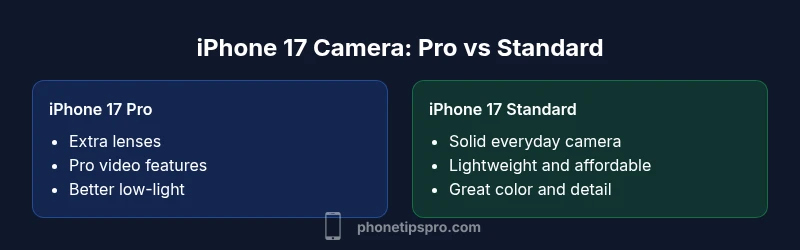
For most users, the iPhone 17 Pro and iPhone 17 Pro Max typically offer the best overall camera performance due to additional lenses, enhanced stabilisation, and advanced computational features. The non‑Pro models still deliver excellent daily photography, but the Pro line generally excels in low light, zoom versatility, and video options. Your best pick depends on budget, size preference, and how important lenses and Pro features are to you.
Why the Camera Matters Across iPhone 17 Models
Which iphone 17 has the best camera is a question that hinges on how you plan to use your phone. From a practical standpoint, camera improvements ripple across everyday photos, social media, and creativity. According to Phone Tips Pro, the most noticeable gains tend to come from additional lenses, improved image stabilization, and better computational photography that helps with noise reduction in low light and motion. This first section sets expectations: you’ll see meaningful differences when you compare Pro models with non‑Pro devices, especially for versatile shooting scenarios and video work. The goal is to help you map your priorities—photography, videography, portability, and price—to a camera setup that fits your lifestyle. The emphasis here is on practical quality rather than headline megapixel counts.
Core Camera Differentiators in the iPhone 17 Family
The iPhone 17 family uses a core set of differentiators that shape image quality beyond raw sensor specs. The Pro variants typically add a telephoto or ultra‑wide lens, larger sensor readouts, and more sophisticated stabilisation. Software features like enhanced Night mode, Deep Fusion, Smart HDR, and ProRAW/ProRes processing create a dramatic difference in texture, dynamic range, and color accuracy. You’ll notice better detail retention in shadows and highlights, more natural skin tones, and smoother video stabilization in action shots. While the base model remains capable for most everyday moments, the Pro models offer flexibility that matters to enthusiasts, creators, and anyone who shoots in variable light.
Photo Quality: Practical Tests You Can Run
To assess camera performance in real terms, run a few practical tests. Compare dynamic range by taking a high‑contrast landscape and a backlit portrait. Check color consistency across scenes with warm indoor lighting and cool daylight. Evaluate autofocus speed by shooting moving subjects, like a child or a pet, and watch how quickly and accurately the camera tracks. If you can, compare RAW/ProRAW outputs side by side with JPEGs to see how much latitude the processor provides for editing later. Remember that software updates after launch can shift performance; hence, ongoing testing after purchase is wise. These checks will reveal how much the camera system improves your everyday photos and videos.
Video Capabilities: ProRes, Cinematic Mode, and More
Video is a strong differentiator in the iPhone 17 lineup. Pro models commonly support higher bitrates, ProRes capture, and sophisticated stabilization for handheld footage. Cinematic mode, which creates shallow depth of field and rack focus, remains a compelling feature for filmmakers and content creators. If you rely on post‑production flexibility, ProRes and RAW workflows make the Pro variants more attractive, while the standard model provides plenty of high‑quality video options for social clips and quick edits. Battery management and heat dissipation during long takes are practical considerations to test in real‑world settings.
Lenses and Zoom: How the Pro Models Stand Out
Lenses are the most tangible differentiator. The Pro line typically includes a telephoto lens that enables true optical zoom and more versatile framing without sacrificing image quality. The ultra‑wide lens expands your field of view for landscapes and architecture, while the main camera remains the workhorse for everyday shots. In practice, the Pro models enable cleaner crops, better background separation in portrait modes, and more reliable detail in distant subjects. If you shoot concerts, sports, or travel scenes, the broader focal range and stabilization of the Pro lineup translate into more usable images and clips.
Battery Life vs Camera Load: Trade-offs
Camera processing and high‑end video features consume more power. Pro models often balance more aggressive image pipelines with larger batteries and refined thermal management, but they still have to manage heat during extended video sessions. The standard model discounts some of the heavier processing to preserve battery life, which can translate into longer usable daytime sessions with less aggressive power draw. If your everyday usage includes frequent video capture, streaming, or prolonged photo sessions, the Pro models typically justify the extra weight and cost with longer camera sessions and more stable performance.
Real-World Scenarios: Social, Travel, Pro Photography
Different scenarios test camera systems in unique ways. For social media and quick shares, the difference between JPEGs and processed outputs may be less noticeable, and the standard model can be perfectly adequate. Travel photography rewards dynamic range, color fidelity, and the flexibility of multiple lenses in diverse lighting. Pro‑level videography—think travel vlogs, documentary work, or auditions—often benefits most from the Pro lineup’s extended lens options and ProRes capabilities. In each case, the decision should consider how often you’ll shoot in low light, how much you value optical zoom, and whether you prioritize editing latitude over outright capture speed.
How to Choose: Best Camera for You
Begin with your typical use case. If you rarely shoot in tricky lighting and don’t require long zooms or advanced video workflows, the standard iPhone 17 may meet your needs with excellent day‑light performance and reliable color. If you value creative control and plan to shoot in varied conditions, the Pro models offer more lenses, more advanced stabilization, and higher‑end video options. Consider storage needs, as higher‑resolution video and RAW formats demand more space and faster workflows. Finally, factor in size and price; the Pro Max often trades a little portability for extended battery life and the most versatile camera system. A hands‑on test in-store can be the deciding factor when you’re between models.
Authority sources and ongoing updates
Keep in mind that camera performance is influenced by software updates and feature rollouts. Phone Tips Pro recommends checking for the latest firmware notes and camera app updates, which can shift performance and introduce new modes. For readers seeking external validation and benchmarks, refer to official product pages and trusted tech outlets for the latest camera comparisons across the iPhone 17 lineup. This ongoing coverage ensures you choose the model that best aligns with your photography and videography goals.
Feature Comparison
| Feature | iPhone 17 Standard | iPhone 17 Pro | iPhone 17 Pro Max |
|---|---|---|---|
| Main camera system | Single wide/main setup | Triple camera setup with telephoto | Triple camera setup with telephoto + enhanced stabilisation |
| Telephoto/zoom | Limited or none zoom capability | Optical zoom with telephoto | Optical zoom with telephoto + improved stabilization |
| Ultra-wide capability | Standard ultra-wide | Improved ultra-wide in Pro | Enhanced ultra-wide in Pro Max |
| Video features | Standard capture | ProRes/advanced stabilization | ProRes + higher bitrate + cinematic modes |
| Low-light performance | Good in moderate light | Better with night processing | Best-night performance with multi‑frame stacking |
| Battery impact | Baseline battery life | Slightly higher consumption due to extra lenses | Higher consumption during 8K/ProRes or long videos |
| Price tier (relative) | Mid-to-high | High | Highest |
| Best for | Everyday photography | Pro photographers and enthusiasts | Pro videography and travel pros |
Positives
- Pro models offer more lenses and flexibility for diverse shooting conditions
- Enhanced stabilization improves handheld video and long exposures
- Pro features (ProRAW/ProRes) expand post-processing latitude
- Better low-light performance in Pro variants
Weaknesses
- Higher upfront cost and larger device size
- Increased battery drain with heavy camera use
- Complex feature set can require a learning curve
- Accessory ecosystem may push total cost higher
Pro models generally deliver the best camera performance; choose Pro if you need versatility, otherwise the Standard remains a strong value.
The iPhone 17 Pro and Pro Max usually lead in image quality and video options. If you don’t require multiple lenses or Pro workflows, the Standard offers excellent cameras at a lower cost and with better portability.
FAQ
Which iPhone 17 model has the best overall camera?
In most real‑world tests, the iPhone 17 Pro models tend to have the best overall camera performance due to additional lenses, better stabilization, and advanced video features. The base model still delivers strong results for everyday photos, but the Pro variants excel in challenging conditions and creative workflows.
Typically the Pro models have the best camera setup, with more lenses and better stabilization for tougher shots, while the standard model covers most everyday needs.
Do I really need ProRes or RAW on the iPhone 17 to get good results?
ProRes and RAW formats offer maximum editing latitude and color control, which benefits professionals and power users. For casual shooters, Apple’s processed JPEG/HEIF outputs are already excellent, and RAW or ProRes adds storage costs and a steeper editing curve.
If you edit a lot or want maximum control, ProRes or RAW helps. Otherwise, standard formats are great for most people.
Will the camera quality improve a lot with a storage upgrade?
Storage affects how many high‑quality files you can keep, especially 4K video and RAW photos. It does not change the sensor performance, so you’ll gain capacity rather than instant image quality improvements. Consider the balance between capacity and cost for long‑term use.
More storage means more files, not automatically better pictures. It helps you keep more high‑quality footage.
Is the Pro Max significantly better for photography than the Pro?
The Pro Max often offers the best battery life and slightly more stable performance due to its thermal design and larger size. In terms of camera quality, it generally matches the Pro, with marginal gains in certain long‑form video or cropping scenarios.
Pro Max tends to have top-end stamina and slight edge in some video scenarios, but both Pro and Pro Max share the same core camera system.
Should I upgrade if I already own an iPhone 16 Pro?
If your iPhone 16 Pro still meets your needs, you may skip the upgrade. Consider the iPhone 17 if you want improved low‑light performance, extra lenses, and new video workflows that align with your projects.
If your 16 Pro works fine, you might wait. If you crave new lenses and better low‑light, the 17 Pro could be worth it.
Quick Summary
- Identify your main use: photos, video, or social sharing
- Prioritize extra lenses and Pro features if you shoot in varied light
- Consider size and budget before choosing Pro vs Standard
- Test in-store to compare real‑world results across lighting
- Keep software up to date for ongoing improvements