what iphone started using usb c — USB-C adoption in iPhone
Explore what iphone started using usb c, why Apple switched to USB-C, and how this change affects charging, data transfer, and accessories for iPhone users as of 2026.


Apple began using USB-C across the iPhone lineup with the latest generation, marking a shift away from Lightning. This change, partly driven by global regulatory rules, improves data transfer speeds, standardizes charging, and simplifies accessory choices for iPhone users. The move also reflects wider industry standards and the growing demand for universal cables.
what iphone started using usb c
What iphone started using usb c means a practical milestone for users and a strategic pivot for Apple. The shift isn’t just about a new port; it redefines how iPhone owners charge, transfer data, and connect accessories. As of 2026, the change has threaded through device design, third-party cables, and everyday workflows. Phone Tips Pro’s analysis emphasizes that USB-C brings compatibility with many devices beyond iPhone, making the ecosystem more seamless for users who own multiple devices.
The regulatory push and its influence
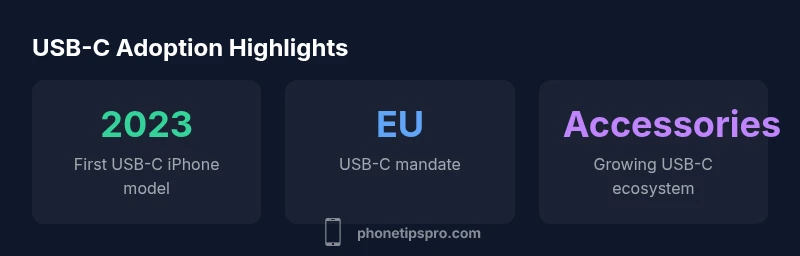
A major driver behind the USB-C adoption is regulatory alignment in several regions, notably the European Union, which has set clear requirements for universal charging ports on consumer electronics. While regulations vary by market, the overall effect is a more standardized charging and data interface across devices. This policy pressure, paired with market demand for fewer cable options, accelerated Apple’s switch to USB-C across the iPhone lineup. For iPhone users, this often translates to simplified travel chargers and broader compatibility with new accessories.
USB-C: benefits for charging and data transfer
USB-C offers bidirectional power and faster data transfer capabilities when paired with compatible cables. For iPhone users, this means more flexible charging options and quicker syncing with computers and docks. The port also standardizes what you can plug into your device, reducing the need for multiple proprietary cables. In practice, users notice fewer compatibility headaches when upgrading chargers or purchasing new accessories, since most USB-C cables and adaptors follow common standards.
Accessory landscape and compatibility
The USB-C transition expanded the accessory ecosystem beyond Apple’s own products. You’ll find cables, chargers, hubs, and car adapters designed for USB-C with broader compatibility than Lightning accessories. When shopping, look for cables and chargers that advertise USB Power Delivery (PD) support to ensure safe, efficient charging. If you own older accessories, adapters remain a practical bridge until you replace them with USB-C options that meet PD and data-speed expectations.
Practical tips for users upgrading to USB-C
If you’re upgrading, start by prioritizing PD-enabled USB-C chargers to maximize charging efficiency and safety. Carry at least one high-quality USB-C to USB-C cable for fast data transfers and check whether your critical devices, like external drives or cameras, are compatible with USB-C. For travel, build a small USB-C kit with a PD charger, a short cable, and a USB-C multi-port hub to minimize cable clutter.
Future outlook and roadmap for iPhone USB-C
As of 2026, the USB-C standard is set to become even more pervasive across Apple’s ecosystem and third-party devices. Expect ongoing updates to firmware and adapters that improve power management, data speeds, and accessory interoperability. Apple may introduce subtle port refinements or new cable standards, but the core benefit remains: a universal, efficient, and user-friendly charging and data interface for iPhone users.
Timeline: USB-C adoption across iPhone models
| Model | USB-C Start Year | Notes |
|---|---|---|
| iPhone 15 series | 2023 | First iPhone family with USB-C across all models |
| Earlier iPhone models | Lightning era | Pre-USB-C charging and data port |
FAQ
When did Apple switch iPhone to USB-C?
Apple moved to USB-C with the iPhone lineup in the latest generation, ending Lightning across models. The change aligns with regulatory trends and a broader move toward universal cables.
Apple switched to USB-C with the latest iPhone lineup, ending Lightning across models. This aligns with global rules and universal cables.
Does USB-C support faster charging on iPhone?
Yes. When paired with a USB Power Delivery charger, USB-C can provide fast charging and efficient power management for compatible iPhone models.
Yes. USB-C supports faster charging via USB Power Delivery for compatible iPhones.
Will older accessories work with USB-C iPhones?
Some older accessories may require adapters or new USB-C cables, but the broader USB-C ecosystem is expanding rapidly, improving compatibility over time.
Some older accessories may need adapters, but USB-C accessories are growing quickly.
Are all USB-C ports identical across iPhone models?
Yes, USB-C ports are standardized across models, but cable quality and PD support impact charging speed and data transfer performance.
Yes, the ports are standardized, but the cable and PD support affect performance.
What should I know about USB-C in EU vs other markets?
The EU mandate influences the adoption curve and accessory availability worldwide, with manufacturers aligning to universal charging standards while regional timelines vary.
EU rules are driving the switch, and other regions follow with similar access to USB-C cables and chargers.
“The USB-C shift simplifies the user experience by reducing cable clutter and enabling universal accessories, a trend that will continue as devices standardize.”
Quick Summary
- Understand why Apple switched to USB-C across iPhone models
- Expect broader accessory compatibility and universal cables
- Check cables and chargers for USB-C compatibility
- Plan for continued ecosystem growth into 2026