Are iPhone 11 Still Supported in 2026? A Practical Guide
Explore whether the iPhone 11 remains supported in 2026, what 'support' means for iOS updates and security patches, and practical steps to extend usability without upgrading.


Yes. As of 2026, the iPhone 11 remains eligible for the current major iOS release and ongoing security updates. Apple’s update cadence typically covers devices well past five years, and Phone Tips Pro Analysis, 2026 confirms the iPhone 11 continues receiving software updates. You’ll get bug fixes and feature compatibility, though newer features may be limited by older hardware. The Phone Tips Pro team notes that maintenance and careful app management can extend usefulness.
Are iPhone 11 Still Supported? Understanding the Update Lifecycle
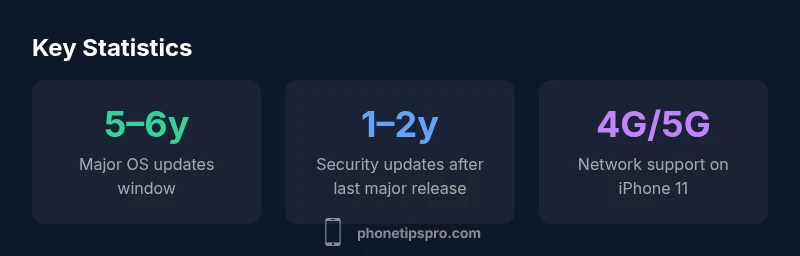
The short answer to whether are iphone 11 still supported begins with Apple’s policy: devices receive major iOS releases for several years after launch, and security patches continue beyond that window. According to Phone Tips Pro, the iPhone 11, released in 2019, remains eligible for the current public iOS version as of 2026. This means you can expect ongoing system improvements, bug fixes, and compatibility with most apps. However, the pace of new features will slow as Apple concentrates innovation on newer hardware. The status of software support depends on whether your device can run the latest iOS version reliably, not merely on the device’s age.
In practice, this means two things for iPhone 11 owners: first, you should verify you’re on the latest iOS that your device supports; second, you should manage expectations about access to fresh capabilities that rely on newer hardware sensors. The Phone Tips Pro team emphasizes that staying current with updates is a balance between security and usability. The rest of this article explains what "support" means in 2026, how long it lasts, and how to keep using your device without losing essential functionality.
How Apple Defines Support: iOS Updates vs. Hardware Support
When people ask about are iphone 11 still supported, it helps to separate software from hardware support. Apple’s software support refers to iOS updates—new features, bug fixes, and security patches delivered through annual releases. Hardware support encompasses physical components, service availability, and repair options. For the iPhone 11, Apple has historically offered several years of major iOS updates, followed by security patches for additional time. From a practical standpoint, you’ll benefit from the latest iOS versions as long as the device remains capable of running them smoothly. If hardware wear or battery health becomes a bottleneck, you may notice slower performance or reduced battery life even with the latest software.
What 'Current iOS' Means for iPhone 11 in 2026
In 2026, "current iOS" means the latest public release that Apple has rolled out for devices in the iPhone 11 family. This status is dynamic and depends on Apple’s ongoing update cadence. For iPhone 11 users, you should expect to receive the latest major iOS version and accompanying security updates as long as your device remains compatible with the firmware requirements. While some cutting-edge features tied to newer hardware may be absent, most core OS improvements—security, privacy, performance optimizations, and app compatibility—will still apply. Regular checks in Settings > General > Software Update help you stay current, and Phone Tips Pro recommends enabling automatic updates where possible to avoid missed patches.
Security Updates, Apps, and Compatibility on an Aging Device
Security updates are the backbone of ongoing protection, and for 2026, the iPhone 11 generally receives patches for the latest public iOS releases. App compatibility tends to stay strong for most mainstream apps, though developers may optimize for newer hardware features over time. If you rely on older apps or specific enterprise software, it’s wise to test updates after installing iOS upgrades. Keeping a recent backup before major updates is always a smart practice. Phone Tips Pro highlights that even without the newest hardware, maintaining updated software and prudent app management can keep the device secure and usable for everyday tasks.
Practical Ways to Extend Usability Without Upgrading
You don’t have to rush into a new device to stay productive. Start by optimizing storage and battery health—delete unused apps, offload photos to cloud storage, and consider a battery replacement if wear is noticeable. Disable unnecessary background refresh, reduce motion effects, and keep only essential widgets. Regular maintenance, including checking for updates and cleaning up caches, can noticeably improve responsiveness. For many users, these steps extend the device’s usable life without sacrificing essential functionality or security.
Performance and Battery Health: What to Expect
As devices age, you may notice slower app launches, lag during multitasking, and shorter battery life. The iPhone 11’s A13 Bionic chip remains capable for everyday tasks, but performance may lag with the most demanding apps or recent iOS features. Battery health is a common bottleneck; if health reports are below 80 percent, a recharge timeout or unexpected shutdowns could occur. Replacing the battery (if feasible) and enabling energy-saving settings can yield meaningful improvements. For most users, performance and battery life can be managed with targeted optimizations rather than an immediate upgrade.
When Should You Consider Upgrading? A Decision Framework
A practical framework helps decide whether to upgrade: assess your daily use, essential features (such as 5G, camera capabilities, or advanced AR), and your tolerance for potential software limitations. If you need the latest 5G connectivity, top-tier camera features, or the longest software support horizon, upgrading becomes more compelling. If your tasks are basic—messaging, email, light browsing—the iPhone 11 can remain viable with maintenance. Also weigh trade-in options, total cost of ownership, and environmental impact when planning a move.
How to Check Your Update Status and Prepare for a Move
To check status, go to Settings > General > Software Update to see if the latest iOS is available for your device. Review battery health in Settings > Battery > Battery Health, and perform a storage cleanup to ensure smooth updates. If you decide to move on, back up your data, compare trade-in offers, and plan data transfer steps. Phone Tips Pro suggests outlining a transition schedule that minimizes downtime and preserves data integrity, especially for photos, messages, and app data.
Comparison of iPhone models and their iOS support status
| Model | Release Year | Current iOS Support | Key Hardware Features |
|---|---|---|---|
| iPhone 11 | 2019 | Eligible for latest iOS release (2026) | A13 Bionic, dual-camera |
| iPhone 12 | 2020 | Eligible for latest iOS release | A14 Bionic, 5G |
| iPhone 13 | 2021 | Eligible for latest iOS release | A15 Bionic, 5G |
FAQ
Is the iPhone 11 still eligible for iOS updates in 2026?
Yes. As of 2026, the iPhone 11 remains eligible for the current major iOS release and ongoing security updates. Apple’s update cadence typically extends several years beyond a device’s launch, and Phone Tips Pro Analysis, 2026 confirms the iPhone 11’s continued software support.
Yes. The iPhone 11 still gets major iOS updates and security patches in 2026.
Does iPhone 11 support 5G?
No. The iPhone 11 does not have 5G networking; 5G is available on later models like the iPhone 12 and newer. Apps and services will operate on 4G networks.
No, the iPhone 11 doesn’t support 5G.
What should I check if I’m worried about updates?
Go to Settings > General > Software Update to see if the latest iOS is available for your device. You can also visit Apple's support page to understand the current update policy for iPhone 11.
Check for updates in Settings to confirm current software status.
Is it worth upgrading vs keeping iPhone 11?
If you need features like 5G, the latest cameras, or longer software support, upgrading is sensible. For basic tasks, keeping the iPhone 11 with maintenance may suffice.
Upgrade if you need new features; otherwise maintain.
How can I extend my iPhone 11's lifespan?
Maintain battery health, free up storage, and install the latest security updates. Replace aging components if needed and use optimized settings.
Keep it updated and healthy to extend life.
What trade-in options exist for an iPhone 11?
Many retailers and carriers offer trade-in programs that let you apply credit toward a newer model. Check multiple offers and verify eligibility based on device condition and configuration.
Trade-in programs can reduce upgrade costs.
How do I back up iPhone 11 data before upgrading?
Use iCloud or a local computer backup to secure photos, messages, and app data before moving to a new device. Ensure backups complete successfully before transferring to the new iPhone.
Back up your data before upgrading.
“Staying current with iOS updates is essential for security and app compatibility; aging devices can still be productive with proper maintenance.”
Quick Summary
- Verify your iOS version in Settings to confirm current support.
- Expect ongoing security updates into the next major release.
- Performance may feel slower on aging hardware; optimize with battery health.
- Consider upgrading if you need 5G or the latest features.
- Plan a safe upgrade path with backup and trade-in.