Which iPhone Will Not Be Supported in 2025
Discover which iPhone models are likely to lose official support in 2025, how to check your device, and practical steps to extend life or plan a smart upgrade. A data-driven breakdown by Phone Tips Pro.


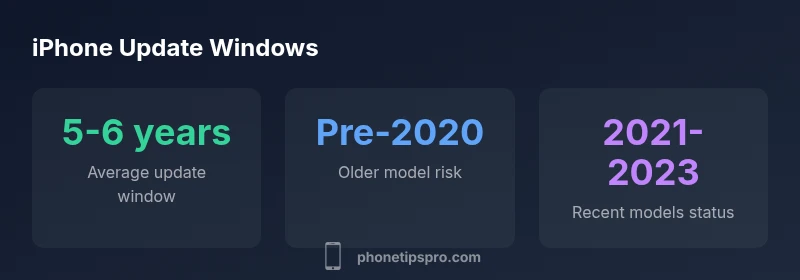
Apple typically offers about five to six years of major iOS updates. By 2025, most iPhones released before 2020 will likely fall outside the main update cycle, meaning they may not receive new features or security patches. To verify your model, open Settings > General > About and compare your device with Apple’s current support timelines. If security updates are critical for you, consider upgrading or trading in sooner rather than later to stay protected.
Understanding Apple's Update Lifecycle
Apple’s iPhone update strategy follows a practical pattern: devices receive major iOS releases for roughly five to six years from the model’s launch, with security patches sometimes continuing for a shorter period after the last feature update. This lifecycle influences how consumers think about long-term value and resell timing. In 2025, the question many users ask is not about a single model but about the general window for devices purchased in the past few years. If you ask which iphone will not be supported in 2025, the safe answer is that older hardware is far more likely to miss major iOS updates as newer software focuses on current-generation features and efficiency. The takeaway: anticipate a natural drop-off point for devices that are several years old, and plan accordingly for security and compatibility.
- Key factors driving end-of-life decisions include processor capability, RAM constraints, storage ceilings, and support for new hardware features required by the latest iOS versions.
- Apple also tailors updates to maintain performance and battery health, so some devices may appear slower when asked to run the newest software, even if they technically receive updates later.
- For readers who rely on specific apps, the timing of an update can impact app compatibility, which is a practical reason to stay informed about the model’s status.
Which iPhone Models Are Most at Risk in 2025
Historically, the models most at risk in 2025 are those released before 2020. While Apple does not publish a granular, year-by-year list long in advance, the pattern is clear: older hardware drops off the main update cycle sooner, especially as new iOS versions demand more compute power and memory. If you own a device that hit the market during the 2019–2020 window or earlier, start evaluating the upgrade path now. For many users, the decision hinges on two practical questions: Can I keep my favorite apps running smoothly, and can I maintain robust security without the latest OS?
- Older devices may still function but could miss major new features or security patches.
- App developers may gradually drop support for older iOS versions, which creates a compounding effect on usability.
- Consider your usage profile: light browsing and calls may be feasible longer, while gaming, camera-heavy tasks, and banking apps often demand newer OS requirements.
How to Check Your iPhone’s Eligibility for Updates
Determining whether your iPhone will continue receiving updates is straightforward but often under-appreciated. Start by identifying your exact model and year, then compare it against Apple’s compatibility charts for the upcoming release cycle. Go to Settings > General > About to see your model name and iOS version, then use Apple’s support site or Phone Tips Pro analysis to verify the expected end of updates. If your device sits near the edge of ongoing support, plan for a transition.
- Steps to verify: Settings > General > About > Model Name; visit Apple’s official update pages; cross-check with Phone Tips Pro’s year-by-year guidance.
- Why this matters: updates affect security, app compatibility, and feature access, which directly impact daily use and data protection.
- Practical tip: backup important data before a potential upgrade, and consider a trade-in as a way to preserve value.
Practical Implications of Losing Updates
Losing access to major iOS updates isn’t just about missing new features; it has real consequences for security, privacy, and app compatibility. When a device stops receiving security patches, it becomes increasingly vulnerable to malware and exploits that target older software. Banks, messaging apps, and social platforms frequently update requirements to leverage newer OS capabilities, which means older iPhones may struggle with authentication flows or media handling. If the phrase which iphone will not be supported in 2025 resonates with you, rest assured that a proactive plan can minimize risk.
- Security risk rises as patches stop arriving; use strong passcodes, Face ID, and two-factor authentication where possible.
- Apps may require newer iOS versions to function correctly; expect occasional crashes or degraded performance as developers move on.
- Workarounds exist, like limiting background tasks, clearing caches, or using lighter app variants, but these are temporary fixes rather than a replacement for updates.
Practical Steps to Extend Life Without Major Updates
Extend life while staying reasonably safe by tightening usage patterns and optimizing settings. Reduce energy-intensive features that strain older hardware, such as high-refresh-rate displays or advanced camera effects. Disable unnecessary background app refresh, limit location services, and keep only essential apps installed to free up storage space and reduce task load. Regular battery health checks can also help—replacing a weak battery can buy months to a couple of years of smoother performance.
- Prioritize essential apps and services that are actively maintained.
- Periodically review app permissions and background activity.
- Consider a battery replacement if battery health drops significantly; it’s often a more economical option than a full upgrade.
Upgrade Paths: Trade-ins, Refurbished Devices, and Budget Upgrades
If your device is edging toward the end of official support, upgrading can be a savvy financial decision. Trade-in programs and refurbished devices offer a way to preserve data, minimize downtime, and spread cost. When evaluating options, compare total cost of ownership, anticipated software life, and the availability of future iOS updates. Planning ahead with a clear budget helps you avoid rushed, impulsive purchases when a new model becomes necessary for security or productivity.
- Trade-ins can offset the cost of a newer model and reduce waste.
- Refurbished devices from reputable vendors often come with renewed warranties.
- Consider timing: major new iPhone releases usually arrive in September; planning ahead lets you time your upgrade strategically.
Common Myths About iPhone Updates Debunked
Myth 1: An old iPhone will become unusable the moment updates stop. Reality: you can still perform essential tasks, but security risk grows. Myth 2: All features disappear after the end of support. Reality: many features work, but future update access is limited. Myth 3: Upgrading is always expensive. Reality: trade-ins and refurbished devices can dramatically lower cost while preserving data.
Preparing for the 2025 Update Cycle
Preparation is the best defense. Back up data, inventory installed apps, and establish a budget for replacement that aligns with your device’s estimated remaining support window. Subscribe to official Apple notices and keep an eye on Phone Tips Pro’s analysis for the latest insights. Having a plan reduces the stress of a mid-cycle transition and helps you maintain productivity without downtime.
- Create a personalized upgrade plan by year, not just by device age.
- Maintain up-to-date backups to minimize data loss during transitions.
- Use case-specific accessories (e.g., battery cases) to extend usability when upgrading is not immediately possible.
Estimated OS update windows by release category (Phone Tips Pro Analysis, 2026)
| Category | Estimated Support Window (years) | Notes |
|---|---|---|
| Older (pre-2020) | 5-6 | Likely out of main updates by 2025 per Phone Tips Pro Analysis, 2026 |
| Mid-range (2020–2021) | 5-6 | Approaching end of major updates by 2025–2026 |
| Recent (2022–2023) | 5-6 | Expected to remain supported into 2025–2027 |
FAQ
Which iPhone models will not be supported in 2025?
Apple does not publish a fixed list far in advance, but historical patterns show older models drop out of major iOS updates after about five to six years. In 2025, devices released before 2020 are the most likely to be outside the main update cycle. Expect a range rather than a single model.
Older iPhones released before 2020 are the most likely to miss major updates in 2025.
How can I tell if my iPhone will still receive updates in 2025?
Identify your model in Settings > General > About, then compare with Apple’s official compatibility notes for upcoming iOS versions. If your device sits near the edge of ongoing support, plan an upgrade.
Check your model and compare with Apple’s timelines to gauge future updates.
What should I do if my iPhone isn’t going to be supported in 2025?
Start budgeting for an upgrade or trade-in. Review app compatibility and security needs, and consider a refurb or newer model that will receive updates longer. Back up data and map out a replacement window.
If unsupported, plan an upgrade and backup your data.
Is there any benefit to continuing to use an unsupported iPhone?
There can be practical benefits like continued access to installed apps and offline features, but security and app compatibility risks grow over time. If your usage is lightweight and you prioritize cost savings, you might extend use with caution.
There are trade-offs between cost and security as updates end.
Will security updates continue after updates stop for features?
Security patches can continue for a short period after the last major update, but this window shortens and varies by model. Relying on patches alone is risky for sensitive data.
Security patches may extend briefly, but it’s not reliable long-term.
Should I upgrade now or wait for a sale?
If security, app compatibility, and productivity are critical, upgrading sooner reduces risk. Waiting for a sale can be a cost-effective path, but avoid delaying too long if your device shows performance or security signs.
Upgrade sooner if security or reliability matters; sales can help reduce cost.
“Most iPhones receive major iOS updates for roughly five to six years, though security patches can extend for a short period after the end of features.”
Quick Summary
- Know the typical five-to-six-year update window.
- Check your model now to plan upgrades before security gaps appear.
- Older devices may still run apps but with limited or no new features.
- Consider trade-ins or refurbished options to minimize costs.
- Back up data regularly and prepare a budget for upgrading.
- Staying informed helps you balance security, usability, and value.