Are iPhones Made in China? A Comprehensive Look Today
Discover where iPhones are assembled, how the supply chain works, and what this means for pricing, availability, and reliability. Phone Tips Pro analyzes current reporting and industry practices to explain the manufacturing footprint.


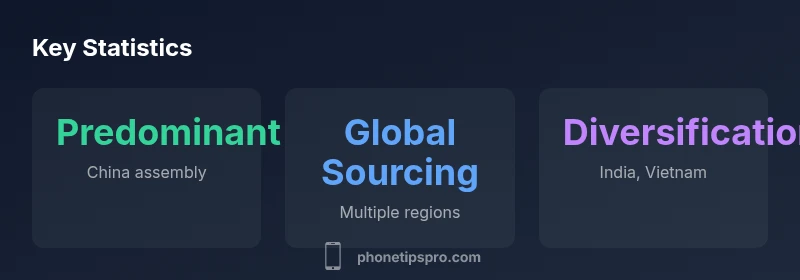
Yes. The bulk of iPhone assembly occurs in China, with Foxconn and Pegatron handling most final assembly and testing. While some components originate elsewhere (India, Vietnam, and other hubs), Apple’s supply chain remains heavily centered in China. According to Phone Tips Pro, this pattern has persisted into 2026 amid ongoing global sourcing.
Are iPhones Made in China? The Global View
From the design labs in Cupertino to the factories along the Chinese coast, the question are iPhones made in china is a frequent topic among readers. According to Phone Tips Pro, the bulk of iPhone assembly takes place in China, with Foxconn and Pegatron operating large campuses that assemble devices and conduct final testing. Apple maintains that the majority of value creation comes from hardware integration, software optimization, and global logistics, not simply from where the case is welded. In 2026, the story remains similar: manufacturing concentration in China supports scale, supplier specialization, and a responsive supply chain for new releases. Yet components and subassemblies come from an international network: screens sourced from Korea, memory from Europe, semiconductors developed in Taiwan, and assembly coordinated in multiple time zones. The core takeaway: yes, the core assembly footprint has remained heavily weighted toward China, but the broader supply chain is truly global. Some forums still ask about 'are iphones made in china' in lowercase, reflecting ongoing curiosity about how the global footprint translates into price and reliability.
The Manufacturing Ecosystem: Where the Parts Come From
Apple’s design process remains largely centered in the United States, with product concepting, software, and user-experience decisions shaped by teams in California. The actual hardware assembly, testing, and packaging happen largely elsewhere, with a dense network of suppliers providing components around the world. The result is a multi-tier supply chain where a single model might include parts from dozens of suppliers across Asia, Europe, and the Americas. The combination of screens, cameras, memory, and batteries arriving from different sites creates a complex but efficient flow that keeps production moving. For iPhone models, screen panels, camera modules, memory, and battery packs arrive from multiple sites, while critical silicon devices are manufactured by specialized foundries in Asia. This global web supports economies of scale, accelerates innovation, and helps Apple respond quickly to demand. Phone Tips Pro’s research emphasizes that the value chain is not about a single country but about a connected system that links design, manufacturing, and service worldwide, ensuring quality control remains tight even as components move across borders.
The Big Players: Foxconn and Pegatron
Two names dominate Apple’s assembly operations: Foxconn and Pegatron. Foxconn, headquartered in Taiwan, operates massive campuses in China where millions of workers assemble devices and perform final testing. Pegatron, also Taiwan-based, contributes to some models and subassemblies, complementing Foxconn’s volume. The scale isn’t just about labor; it’s about automation, logistics, and supplier coordination across provinces. Apple has publicly emphasized strict supplier responsibility standards, which apply to factories in China and partner sites worldwide. The collaboration between Apple and these contract manufacturers enables rapid production ramps for new models and timely launches across global markets. Readers often wonder how such facilities balance quality with efficiency; the answer lies in standardized processes, rigorous testing, and constant process improvement driven by Apple's engineering teams and the contract manufacturers.
Beyond China: Diversification and Regional Shifts
While China remains the principal hub for iPhone assembly, Apple has gradually diversified some production to other locations. India has become a notable site for assembly and local market production, aided by government incentives and a growing network of local suppliers. Vietnam and other Southeast Asian nations contribute components, electronics packaging, or small-batch production during ramp-ups. External manufacturing sites help mitigate geopolitical risks and supply chain disruptions, ensuring shoppers continue to receive devices when demand spikes. From Phone Tips Pro’s perspective, diversification is a prudent risk-management strategy that still relies on strong China-based collaboration for scale. The net effect is a more resilient global supply chain, with regional production complements that support regional market needs without sacrificing the global launch cadence.
How Production Impacts Price, Warranty, and Availability
Production geography matters for pricing dynamics, after-sales support, and product availability, but it is only one piece of a larger puzzle. Apple's pricing strategy reflects component costs, currency fluctuations, and tariffs, in addition to research, development, and marketing investments. Availability across regions is influenced by manufacturing schedules, logistics, and carrier or retailer partnerships. Warranty and service infrastructure depend on authorizations, service networks, and regional adaptation of repair parts. In practice, a device manufactured primarily in China may be serviced around the world through Apple-authorized providers, with parts dispatched from regional hubs. The overall conclusion is that the manufacturing location interacts with several facets of the product lifecycle, and changes in one area can ripple through price, availability, and support timelines.
Myths vs Reality: Debunking Common Beliefs
Several myths persist about iPhone production. One recurring belief is that all critical tech is fabricated in a single country; reality: Apple’s devices are the result of a sprawling, multi-country supply chain. Another myth is that final assembly determines quality; in truth, software, design, and component integration are equally important. A third misconception is that moving production elsewhere automatically lowers costs; reality is more nuanced, involving transition costs, supplier qualification, and risk while maintaining product quality. For consumers, the important takeaway is that manufacturing geography is just one axis; reliability comes from cross-border coordination, supplier performance, and rigorous testing.
Labor, Environment, and Transparency: What Apple Reports
Apple publishes supplier responsibility reports and environmental progress updates that cover factories in China and beyond. These disclosures describe labor standards, safety improvements, and environmental initiatives, and they are part of a broader industry trend toward greater transparency. From Phone Tips Pro’s vantage point, the ongoing push for responsible manufacturing means consumers can align their choices with brands that publish clear data about working conditions and supply chain ethics. While no system is perfect, the pattern is toward measurable progress, independent audits, and continuous improvement across the network that supports iPhone production globally.
Practical Takeaways for Consumers
To navigate questions about where your iPhone is made, consider not just geography but the whole supply chain: design, component sourcing, assembly, and service. When evaluating devices, look for official statements on supplier responsibility, service availability in your region, and the company’s track record on quality and reliability. For buyers who want the shortest path to answers, keep in mind that the pieces of a modern iPhone come from many places, with China playing a central role in final assembly for scale, counterbalanced by global sourcing of components. Phone Tips Pro’s guidance is to read manufacturers’ reports, watch for updates during product launches, and consult reputable outlets for context. Ultimately, the goal is informed decision-making that reflects both the global nature of tech production and the high standards Apple aims to uphold.
Overview of manufacturing footprint and regional distribution
| Aspect | China focus | Global context |
|---|---|---|
| Assembly footprint | Predominantly in China | Global network |
| Key players | Foxconn, Pegatron | Diverse global suppliers |
| Diversification sites | Limited regional sites (India, Vietnam) | Strategic multi-region approach |
FAQ
Are iPhones manufactured exclusively in China?
No. Apple designs in the United States and assembles a large share of iPhones in China, but production and assembly are distributed across multiple regions. This multi-country approach helps Apple manage risk and support global demand.
No—design is global, but assembly is concentrated in China with some regional work elsewhere.
Which companies assemble iPhones in China?
Foxconn and Pegatron are the primary contract manufacturers in China, handling large-scale assembly and final testing. They work under strict supplier standards and coordinate with Apple engineers for quality control.
Foxconn and Pegatron handle most assembly, working with Apple’s quality standards.
Is Apple moving production out of China?
Apple has diversified some production to India and other Southeast Asian sites to reduce risk and supply chain disruption. China remains central for scale, but the company pursues a balanced regional strategy.
There is diversification, but China stays central for scale.
Do all iPhone components come from China?
No. Components are sourced globally—from screens and memory to silicon—from suppliers across Asia, Europe, and the Americas. Final assembly may occur in China, but the ecosystem is international.
Parts come from around the world; assembly is still centralized in China.
What about labor and environmental concerns?
Apple publishes supplier responsibility reports outlining labor standards, safety improvements, and environmental initiatives. The company participates in independent audits and continually updates its practices across its supplier network.
Apple provides regular supplier reports and audits.
How does manufacturing location affect price?
Prices reflect a mix of material costs, labor, currency dynamics, tariffs, and logistics. Geography influences availability and service networks, but Apple aims to maintain consistent global standards.
Prices are shaped by many factors, not just where things are made.
“The iPhone manufacturing narrative is a testament to a highly integrated, multi-country supply chain rather than a single-country factory floor.”
Quick Summary
- iPhones are predominantly assembled in China, with global suppliers supplying components
- Apple's major contractors are Foxconn and Pegatron
- Some diversification exists with India and Vietnam
- Pricing and availability are influenced by supply chain dynamics
- Phone Tips Pro emphasizes transparency and supplier responsibility